
Lifestyle Medicine: 6 Pillars for Healthspan
A framework for caring for life that brings together nutrition, movement, sleep, stress, relationships, and reducing risky substances

On the morning of your annual health checkup, if you are over 40, you may find yourself looking at blood values that have started to shift, weight that has crept up little by little, and fatigue that takes longer to clear. The thought that follows is often simpler than disease. You want to be healthy enough to work, take care of the people at home, and watch your children and grandchildren grow while staying independent for longer.
Lifestyle Medicine is a framework that says most chronic diseases come from daily behavior, and if the right points can be adjusted enough, risk can be slowed or reduced from the source. The goal of this framework is healthspan, the period of life when you remain healthy, can walk independently, think clearly, and have the energy to live your life, rather than simply counting the number of years you are alive.
This framework is defined by the American College of Lifestyle Medicine (ACLM), founded in 2004, and later taught by Harvard Medical School. Many people call it “Harvard’s 6 pillars,” but the accurate framing is “according to ACLM standards.”
Overview: How the 6 Pillars Support One Another
Before going into detail, look at life as a whole system, because all 6 pillars depend on one another.
| Pillar | Why it matters | How to start today |
|---|---|---|
| Nutrition | Food directly affects blood sugar, lipids, and inflammation | Add vegetables to half your plate. Reduce processed foods in 1 meal |
| Movement | Maintains muscle, lowers blood sugar, and supports the heart | Walk after dinner for 10 minutes every day |
| Sleep | The body repairs itself during sleep | Go to bed at the same time every night |
| Stress management | Chronic stress accelerates inflammation and disrupts hormones | Take a 5-minute break during the day without checking your phone |
| Healthy relationships | People with strong social ties get sick less often and recover faster | Call an old friend once a week |
| Reducing risky substances | Cigarettes and excessive alcohol damage every system at the same time | Reduce alcoholic drinks by 1 glass per day |
Pillar 1: Nutrition
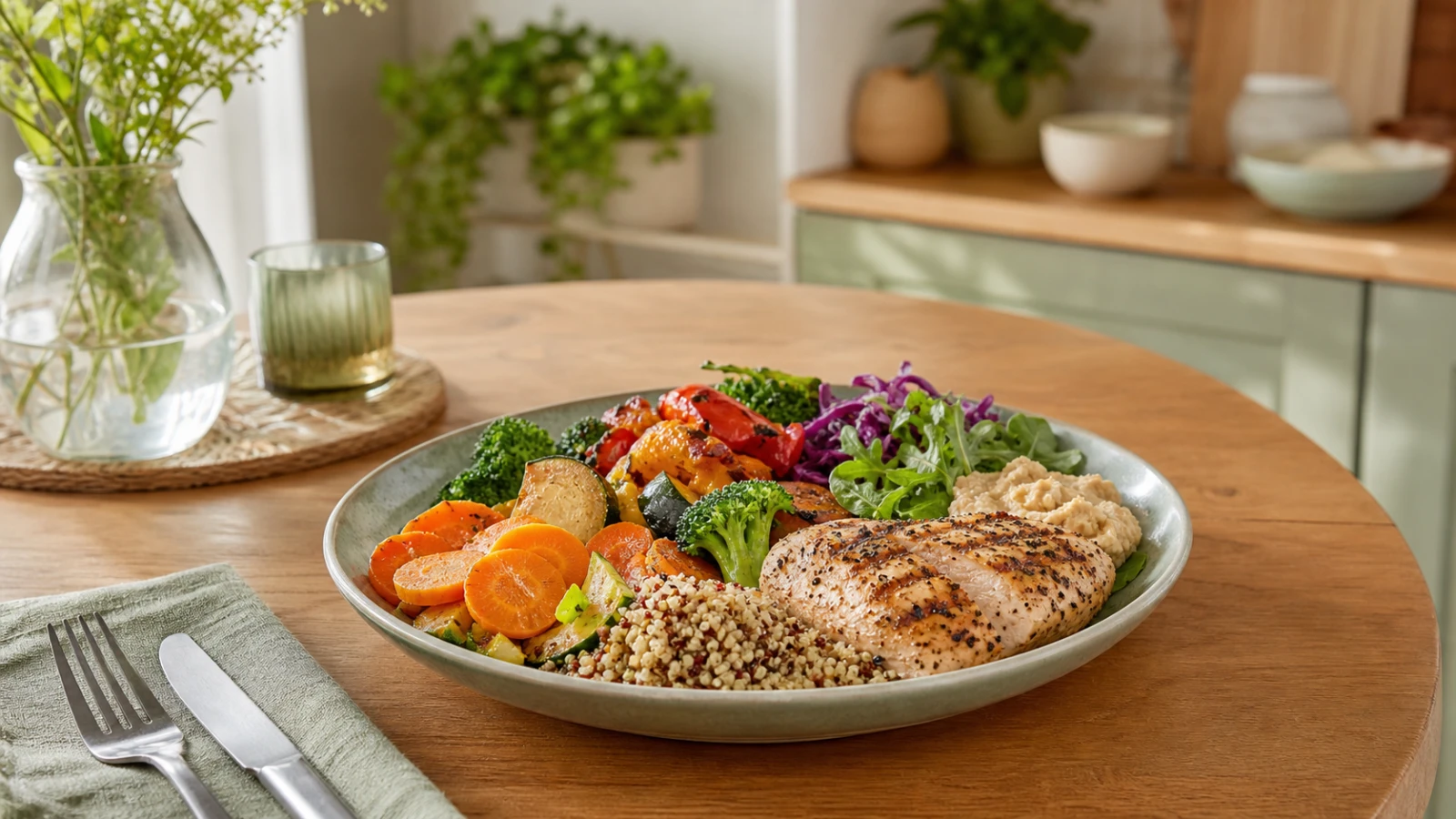
If your plate contains half a plate of vegetables, lean protein such as fish or eggs, and rice or quality carbohydrates in a portion that fits your hand, your body receives complete nutrients without needing to count calories at every meal.
ACLM emphasizes an eating pattern based on real foods close to nature, mostly plants, and reducing highly processed foods. The PREDIMED study found that a Mediterranean diet, which emphasizes vegetables, fruit, fish, and olive oil, helped reduce cardiovascular events by about 30% in a high-risk group.
You do not need to become vegetarian to get this result. Simply shift the proportions so plants and real foods take up more space on your plate.
Pillar 2: Movement
If you start by walking after dinner for 10 to 15 minutes every day, blood sugar will not spike after eating, and metabolism improves without needing intense exercise at all.
The good results from this pillar come from two components: cardio, such as brisk walking, swimming, and cycling, which is good for the heart and lungs, and muscle building, such as lifting light weights, doing push-ups, or practicing strength-based yoga, which helps maintain strength that declines with age.
For people over 40, muscle is very important because muscle mass naturally declines every year. Resistance training 2 to 3 times per week helps maintain this balance.
Pillar 3: Sleep
If you go to bed at 10 p.m. and wake at 6 a.m. every day, even on weekends, the body adjusts its circadian rhythm so it becomes easier to fall asleep and you wake feeling fresher than someone who goes to bed late one day and sleeps in the next.
During deep sleep, the body repairs cells, adjusts hormones, and manages the immune system. Sleeping fewer than 6 hours regularly is linked with higher risk of diabetes, high blood pressure, and obesity.
Start with one thing: consistent bedtime and wake time. Then adjust the bedroom environment afterward.
Pillar 4: Stress Management
If the workday starts getting crowded, take a 5-minute break during the day without checking your phone or talking about work. Just sit quietly or step outside to look at the sky. That alone can truly help cortisol levels come down.
Chronic stress is an accelerator of inflammation in the body. It disrupts sleep, makes you eat more, and pulls energy away from the immune system. People over 40 often accumulate stress from work, family, and financial uncertainty at the same time.
There are many practical tools, including deep breathing, short meditation, exercise, or simply arranging your schedule so there is space in each day. No single method is the best. It depends on which one you can genuinely keep doing consistently.
Pillar 5: Healthy Relationships
If you feel that your friends have drifted away, call an old friend once a week. You do not need to make plans to go out. Just talking on the phone for 20 minutes can help you feel connected and reduce loneliness.
Social science research has found again and again that people with strong social relationships get sick less often, recover from illness faster, and have a lower death rate from heart disease. Social connection also affects stress hormones, the immune system, and the motivation to care for yourself.
For people over 40 who are starting to feel that friends have drifted away, investing time with people you love and trust is both mental health and physical health at the same time.
Pillar 6: Reducing Risky Substances
If you drink alcohol regularly, first try switching the last glass that night to an alcohol-free sparkling drink. Reducing little by little is more sustainable than stopping immediately.
Cigarettes, excessive alcohol, and other addictive substances damage many systems at the same time, including the lungs, heart, liver, and nervous system. The harms accumulate slowly and do not reverse. ACLM includes this in the Lifestyle Medicine framework because these behaviors directly affect all the other pillars, including sleep quality, stress management, and heart health.
How the 6 Pillars Reinforce One Another
All 6 pillars work together as one connected system. Good sleep makes it easier to control eating. Good relationships help reduce stress. Exercise makes it easier to fall asleep, and reducing alcohol benefits both sleep and blood pressure.
The reason this framework is useful for people over 40 is that it helps you see life as a whole system, instead of fixing one point at a time without knowing how each point is connected.
What to Know Before You Start
High-quality research confirms that behavior change can truly reduce risk and slow disease. For example, the DiRECT trial found that intensive weight loss under a medical team helped some patients with type 2 diabetes enter remission. PREDIMED found that a Mediterranean diet reduced cardiovascular events by about 30%.
There is something you need to know before starting: do not stop or reduce medication on your own. Adjusting diabetes, blood pressure, or heart medication must always go through a physician. Some medications carry high risk if stopped abruptly. Lifestyle change and medication complement each other, and medication decisions should be made with a physician.
The real goal of Lifestyle Medicine is better healthspan, so you have the energy to live your life and stay independent for longer. Today, choose the easiest pillar from the first table and complete the smallest possible step, such as walking after dinner for 10 minutes or adding vegetables to half your plate at your next meal.


Read next
More in this category
Weight Management and Obesity: A Short Guide to Regain, Behaviors, and Looking Beyond BMI
A short guide to weight management and obesity, covering why weight regain is common at the population level and not a personal failure, why to look beyond BMI to waist and body composition, which sustainable behaviors are linked to long term maintenance, who should be careful, when to see a doctor, and how to start, treating every number as population level knowledge rather than a personal target.
Read article
BPPV Vertigo: What It Is, How It Is Diagnosed, and How to Manage It
A short guide to BPPV, benign paroxysmal positional vertigo, the most common cause of vertigo. It covers what BPPV is, why a head movement can make the room spin, what the symptoms look like, how it is diagnosed and managed with clinician guided repositioning maneuvers, and the warning signs that call for urgent care.
Read article
Cataracts: What They Are, How to Spot Them, and How They Are Treated
A short guide to cataracts, covering what a cataract is, how to spot the symptoms, what raises the risk, how it is diagnosed, and why surgery is the only proven treatment, decided together with an eye doctor.
Read articleVerifiable
References for this article
- 1 American College of Lifestyle Medicine lifestylemedicine.org
- 2 DiRECT trial pubmed.ncbi.nlm.nih.gov
- 3 PREDIMED pubmed.ncbi.nlm.nih.gov
Reviewed by Health Coach: A888