
Cataracts: What They Are, How to Spot Them, and How They Are Treated
A short guide to cataracts, covering what a cataract is, how to spot the symptoms, what raises the risk, how it is diagnosed, and why surgery is the only proven treatment, decided together with an eye doctor.
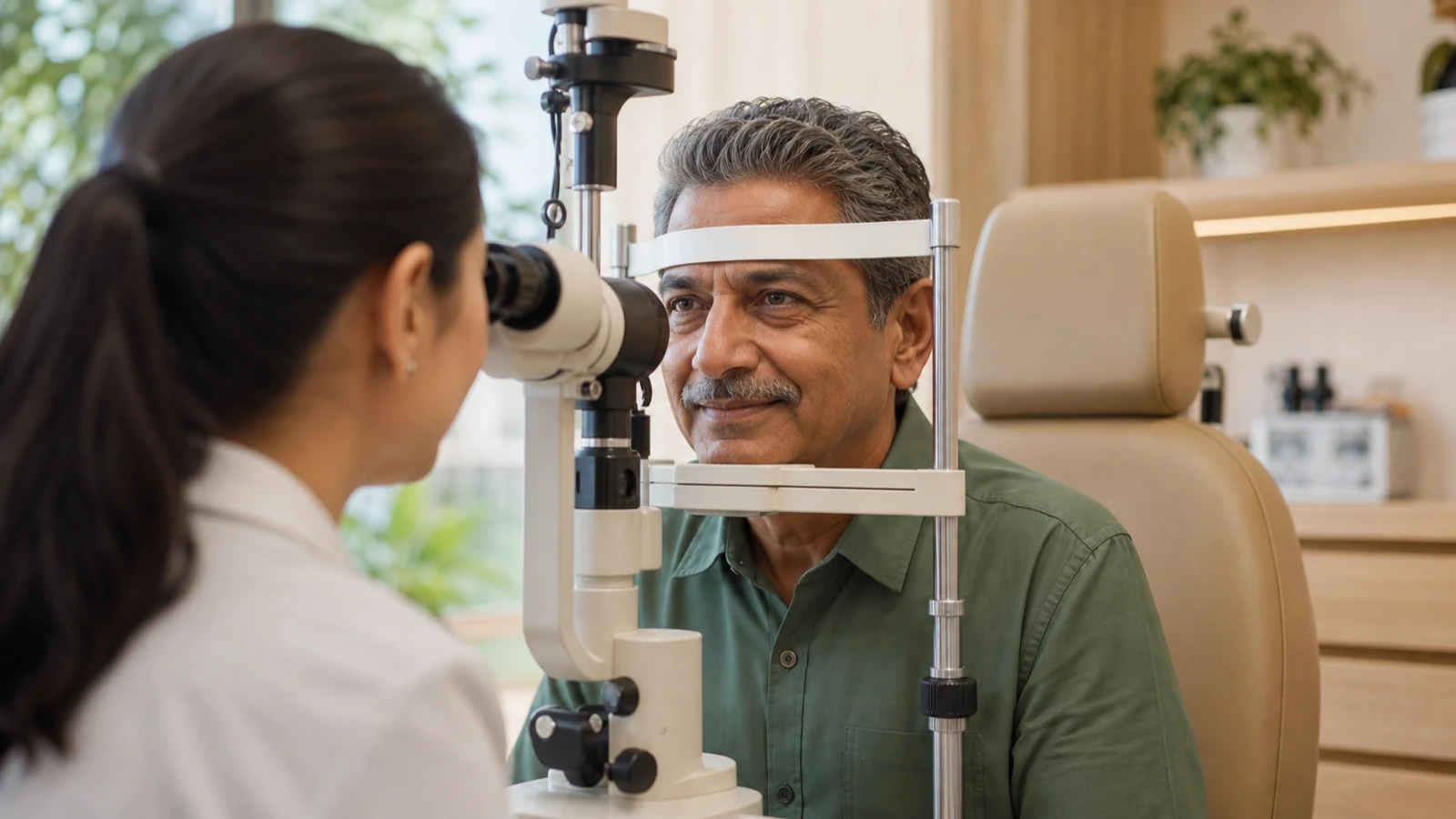
What You May Be Noticing
Lately everything looks a little hazy, as if there is a thin film you cannot wipe away. Driving at night, oncoming headlights and streetlights flare into halos that leave you dazzled. Colors seem faded or yellowed, you need brighter light just to read, and glasses you got recently already do not feel sharp. These can be signs of a cataract, which becomes very common as we age. The reassuring news is that cataracts are very treatable.
What a Cataract Actually Is
Inside each eye is a clear lens, just behind the pupil, that focuses light so you see sharply. A cataract is when that normally clear lens gradually clouds over, scattering and blocking light so vision turns hazy, like looking through a fogged up window. The most common cause is aging, as the proteins in the lens slowly change and clump together. Cataracts are a leading cause of vision impairment worldwide, but unlike many eye conditions they are treatable, and vision often improves a great deal once they are treated.
Symptoms That Build Slowly
Cataract symptoms usually come on so gradually, over months or years, that people adjust without noticing. Watch for blurry or cloudy vision, more sensitivity to glare and halos around lights, especially when driving at night, colors looking faded or yellowed, needing more light to read, and changing your glasses prescription more often than usual.
What Raises the Risk
The biggest factor is simply getting older. Others include diabetes, smoking, heavy alcohol use, years of sun and UV exposure, certain medications such as long term steroids, and eye injury. Having these does not guarantee a cataract, but some are within your control, such as not smoking, protecting your eyes from the sun, and managing diabetes.
How It Is Diagnosed and Managed
A cataract is diagnosed through an eye exam, where a doctor checks your vision and looks at the lens after dilating the pupil, which also helps rule out other eye conditions. Early on, stronger glasses and better lighting may help you cope, but they do not make the cataract go away. The only treatment that addresses the root cause is surgery, which removes the clouded lens and replaces it with a clear artificial one. It is one of the most common operations and generally very effective, but the timing is decided with an eye doctor based on how much your vision affects daily life, not by a number alone. It is worth knowing there is no eye drop, supplement, or exercise proven to reverse or dissolve a cataract, so be wary of products that claim to.
Start Tomorrow
Book an eye exam if your vision is turning cloudy or glare prone, especially as you age. Protect your eyes with UV blocking sunglasses, do not smoke, and if you have diabetes keep your blood sugar in the range your doctor advises. And do not waste money on drops or products claiming to dissolve cataracts, because there is no evidence behind them.
This content is general information for health care, not advice that replaces seeing a doctor. Diagnosing a cataract and any decision about surgery should always be done together with a doctor.
This summary is for understanding, not medical advice, and should be reviewed by a professional before being applied in real life. The full version includes complete reasoning and research.


Summary complete
This was the key-points summary
Want to understand why, and the research behind it? Read the full version.
Read the full reasoning and researchRead next
More in this category

Weight Management and Obesity: A Short Guide to Regain, Behaviors, and Looking Beyond BMI
A short guide to weight management and obesity, covering why weight regain is common at the population level and not a personal failure, why to look beyond BMI to waist and body composition, which sustainable behaviors are linked to long term maintenance, who should be careful, when to see a doctor, and how to start, treating every number as population level knowledge rather than a personal target.
Read article
BPPV Vertigo: What It Is, How It Is Diagnosed, and How to Manage It
A short guide to BPPV, benign paroxysmal positional vertigo, the most common cause of vertigo. It covers what BPPV is, why a head movement can make the room spin, what the symptoms look like, how it is diagnosed and managed with clinician guided repositioning maneuvers, and the warning signs that call for urgent care.
Read article
Dry Eye Disease: What It Is, Why It Happens, and How to Manage It
A short guide to dry eye disease, covering what it is, why some people have too few tears while others have tears that evaporate too fast, why dry eye can make your eyes water, what triggers it, how it is diagnosed, and how to start looking after yourself alongside an eye doctor.
Read articleVerifiable
References for this article
- 1 Liu YC et al. Cataracts (Lancet 2017, PMID 28242111) pubmed.ncbi.nlm.nih.gov
- 2 StatPearls (NCBI Bookshelf NBK539699): Cataract ncbi.nlm.nih.gov
- 3 National Eye Institute (NIH): Cataracts nei.nih.gov
Reviewed by Health Coach: A888