
Cataracts: Why the Lens of Your Eye Clouds Over with Age, and How It Is Treated
A cataract is a clouding of the eye's normally clear lens, most often from aging, and a leading cause of vision impairment worldwide even though it is treatable. This article explains what a cataract is, how to spot the symptoms, what raises the risk, how it is diagnosed, and why surgery is the only proven treatment, decided together with an eye doctor.
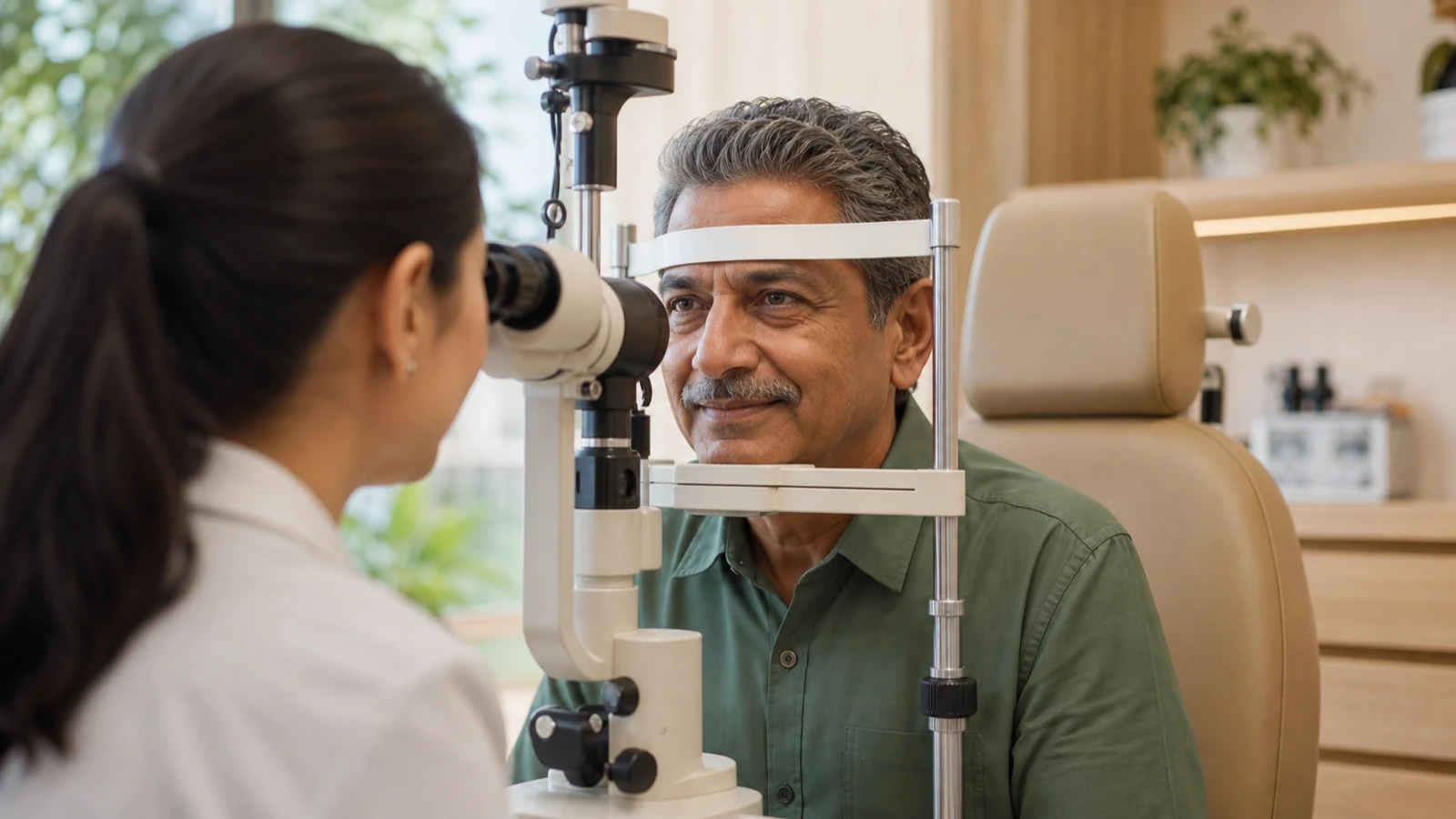
Lately everything looks a little hazy, as if there is a thin film you can never wipe away. Driving at night, the headlights of oncoming cars and the streetlights flare and scatter into halos that leave you dazzled. Colors that used to look vivid seem faded or yellowed, you need brighter light than before just to read, and the glasses you got not long ago already do not feel sharp anymore. These can all be signs of a cataract, a condition that becomes very common as we get older.
Cataracts can sound frightening, but the reassuring news is that they are not hard to understand and, these days, they are very treatable. This article walks you through it one layer at a time: what a cataract is, why it happens, how to spot the symptoms, how it is diagnosed, and what the options are for managing it, with the decision about surgery being something you plan together with an eye doctor.
A Cataract Is a Clouding of the Lens Inside Your Eye
Inside each eye sits a clear lens, just behind the pupil, that focuses light onto the retina so you see a sharp image. A cataract is when that normally clear lens gradually clouds over. As the lens clouds, light passing through it scatters and is partly blocked, so your vision turns hazy, like looking through a frosted or fogged up window.
The most common cause is aging. Over the years the proteins in the lens gradually change and clump together, clouding it. Cataracts are a leading cause of vision impairment worldwide, but what sets them apart from many other eye conditions is that they are treatable, and once treated, vision often improves a great deal.
The Symptoms Usually Come On So Slowly You May Not Notice
One hallmark of cataracts is that the symptoms tend to build very slowly, over months or years, so many people quietly adjust without realizing their sight is getting worse. Common symptoms include:
- Blurry or cloudy vision, as if a film is always in the way.
- More sensitivity to glare, and seeing halos around lights, especially when driving at night as oncoming headlights and streetlights become dazzling.
- Colors looking faded or more yellow than they used to.
- Needing more light than before to read or do close work.
- Needing to change your glasses prescription more often than usual.
Because the change is so gradual, regular eye exams help catch it earlier, particularly as you age.
What Raises the Risk of Cataracts
Several factors are linked with developing cataracts. The main ones include:
- Getting older, which is the single biggest factor.
- Diabetes, where chronically high blood sugar affects the lens.
- Smoking.
- Heavy alcohol use.
- Prolonged exposure to sunlight and UV radiation over the years.
- Certain medications, such as long term use of steroids.
- Eye injury.
Having these risk factors does not mean you will certainly get a cataract, and for many people aging alone is the main reason. But knowing the risks shows that some things are within your control, such as not smoking, protecting your eyes from the sun, and managing diabetes well.
How Cataracts Are Diagnosed
A cataract is diagnosed through an eye exam by an eye doctor or eye care professional. The exam usually includes checking how well you see and looking at the lens with special instruments after dilating the pupil, to see how cloudy the lens is and where. This also helps tell whether worsening vision is from the cataract alone or whether another eye condition is involved, such as glaucoma or a retinal problem, which is why the assessment should be done by a doctor rather than concluded from symptoms alone.
How Cataracts Are Managed
How a cataract is managed depends on how much it interferes with your daily life.
Early on, when symptoms are still mild, small adjustments may make life more comfortable, such as updating your glasses to match a changing prescription, adding brighter light for reading, or using sunglasses and a wide brimmed hat to cut glare. These do not make the cataract go away, but they help carry your vision through a stage when surgery is not yet needed.
The treatment that actually addresses the root cause is surgery, which removes the clouded lens and replaces it with a clear artificial one. Cataract surgery is one of the most commonly performed operations and is generally very effective at restoring clearer vision. Even so, when to have it done is not decided by a number for how cloudy the lens is, but by whether the loss of vision interferes enough with your daily routine, such as driving, reading, or working. That decision is one you talk through and plan together with an eye doctor.
One important point to underline: there is currently no eye drop, supplement, or eye exercise proven to reverse or dissolve a cataract once it has formed. Surgery is the only thing that genuinely treats a cataract.
A point of caution: be wary of products that claim to clear cataracts without surgery.
There is currently no eye drop, supplement, or eye exercise with evidence that it reverses or dissolves a cataract once it has formed, so be wary of products advertised that way, because they can waste your money and delay seeing a doctor. Surgery is the only thing that genuinely treats a cataract, and while it is generally very safe and effective, it is still a decision to make together with an eye doctor, based on how much your vision affects daily life. Sources: National Eye Institute (NIH), StatPearls.
When to See a Doctor, and What You Can Start Tomorrow
See an eye doctor if you notice your vision becoming hazy, more glare or halos around lights, especially if it starts to affect driving, reading, or daily life, or if you find yourself changing your glasses prescription unusually often.
What you can start doing as early as tomorrow:
- Book an eye exam if your vision is turning cloudy or glare prone, especially as you get older.
- Protect your eyes from the sun with UV blocking sunglasses and a wide brimmed hat.
- If you smoke, quitting helps your eyes and your overall health.
- If you have diabetes, keeping your blood sugar within the range your doctor advises is also caring for your eyes.
- Do not waste money on eye drops or products that claim to dissolve cataracts, because there is no evidence behind them.
This content is general information for health care, not advice that replaces seeing a doctor. Diagnosing a cataract and any decision about surgery should always be done together with a human eye doctor or specialist.


Read next
More in this category

Weight Management and Obesity: A Short Guide to Regain, Behaviors, and Looking Beyond BMI
A short guide to weight management and obesity, covering why weight regain is common at the population level and not a personal failure, why to look beyond BMI to waist and body composition, which sustainable behaviors are linked to long term maintenance, who should be careful, when to see a doctor, and how to start, treating every number as population level knowledge rather than a personal target.
Read article
BPPV Vertigo: What It Is, How It Is Diagnosed, and How to Manage It
A short guide to BPPV, benign paroxysmal positional vertigo, the most common cause of vertigo. It covers what BPPV is, why a head movement can make the room spin, what the symptoms look like, how it is diagnosed and managed with clinician guided repositioning maneuvers, and the warning signs that call for urgent care.
Read article
Dry Eye Disease: What It Is, Why It Happens, and How to Manage It
A short guide to dry eye disease, covering what it is, why some people have too few tears while others have tears that evaporate too fast, why dry eye can make your eyes water, what triggers it, how it is diagnosed, and how to start looking after yourself alongside an eye doctor.
Read articleVerifiable
References for this article
- 1 Liu YC et al. Cataracts (Lancet 2017, PMID 28242111) pubmed.ncbi.nlm.nih.gov
- 2 StatPearls (NCBI Bookshelf NBK539699): Cataract ncbi.nlm.nih.gov
- 3 National Eye Institute (NIH): Cataracts nei.nih.gov
Reviewed by Health Coach: A888