
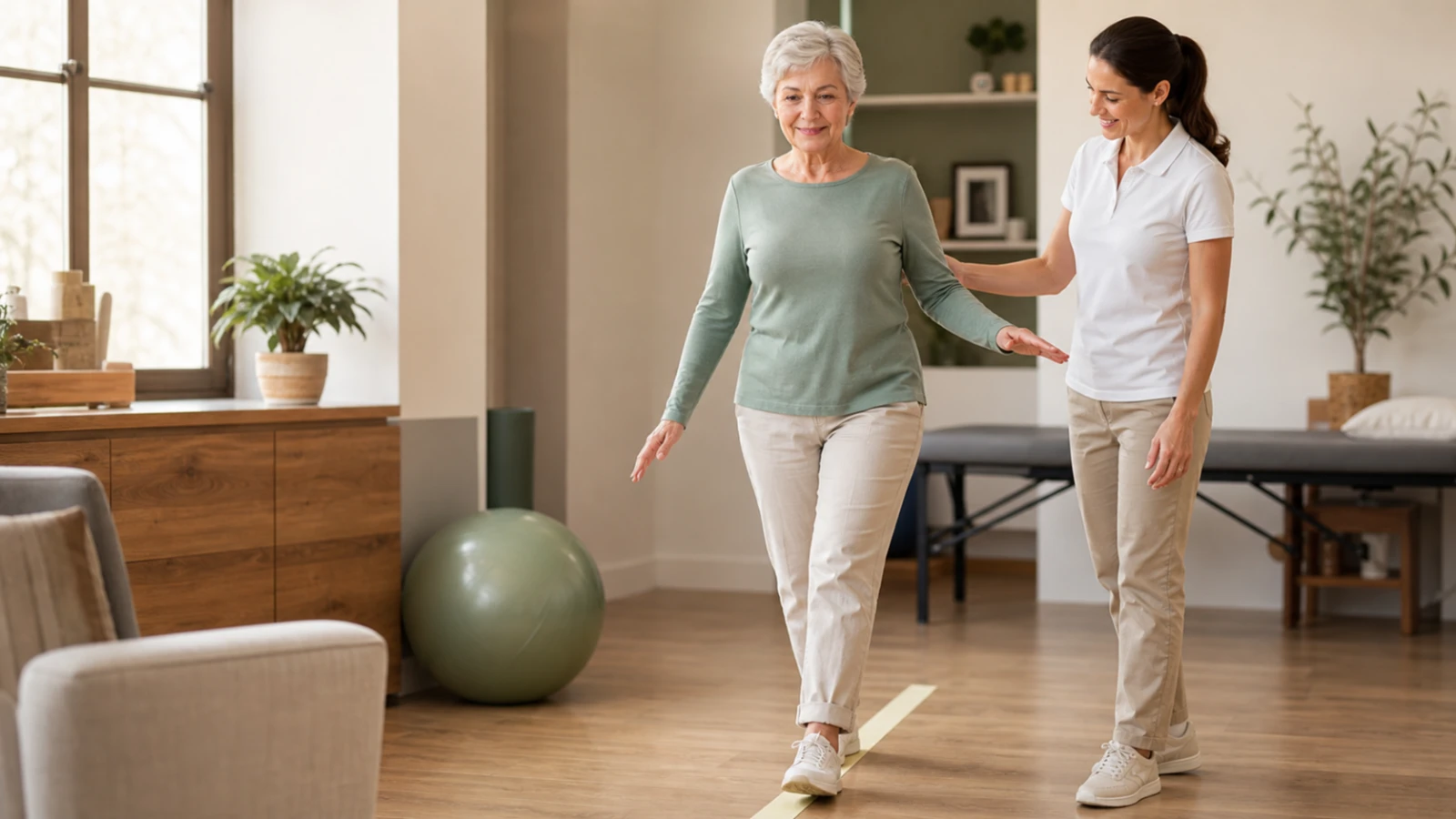
After 40, a fall is not something that only happens to “old people.” Often it starts with something tiny: your toe catches the edge of a rug, you misjudge a step going down the stairs, you turn too fast in the kitchen. Whether you catch yourself in time comes down to balance, strength, and how you walk, and those are exactly the anchors that global fall-prevention programs are built around.
The evidence here points in one fairly clear direction. Structured exercise, especially programs that train balance and real, functional movement, cuts both how often people fall and their overall risk of falling among older adults living in the community. Just read the claims precisely. Some of the evidence shows an association, not a promise that a particular activity will keep your bones from breaking.
The Short Version
- The strongest evidence is for structured exercise, especially balance and functional training, to cut falls in older adults living in the community.
- Global guidelines call for a multifactorial risk assessment for older adults at risk of falling, plus programs tailored around balance, strength, and gait training.
- Tai Chi has evidence for lowering fall risk and how often people fall, while light activity and resistance training help in their own ways but should not be oversold.
Falls Have More Than One Cause
The global guidelines for preventing and managing falls in older adults call for a multifactorial risk assessment for anyone at risk, meaning you look at several causes at once. The answer is rarely just “weak legs” or “not careful enough.”
Within this research, what the guidelines keep stressing is an exercise program tailored to the person that pulls together balance, strength, and gait training.
For anyone 40 and up, the practical takeaway is to start treating balance as a skill you can train, not something you only notice once your risk is already high. If you have been told you are at risk of falling, or you are worried about your balance, have a doctor or physical therapist check that a program suits you before you push hard.
The Strongest Evidence: Balance and Functional Training
A 2019 Cochrane review found that exercise programs for older adults living in the community, especially ones with balance and functional training, cut both the rate of falls and the risk of falling.
In everyday terms, a good program is more than isolated strength work. It should touch balance, functional movement, and walking, in line with what the evidence and the guidelines emphasize.
The overall evidence for this topic sits at strong, backed by systematic reviews, randomized controlled trials, and global guidelines. But “strong” means structured exercise matched to your own risk, not one magic move that works for everyone.
Tai Chi: A Balance Option With Evidence Behind It
A 2023 systematic review and meta-analysis of randomized controlled trials found that Tai Chi lowers fall risk and how often people fall, and improves measures of functional mobility in older adults.
The takeaway is that Tai Chi has been studied specifically as a way to prevent falls and build balance in older adults. Even so, the difficulty needs to fit the person, especially anyone already flagged as at risk of falling.
⚠️ Caveat: The evidence supports Tai Chi in general, but that does not mean every class or every level suits every person. If you are already at risk of falling, get guidance from a professional before you start in earnest.
Walking, Housework, and Light Movement: Useful, but It Is an Association
A 2019 JAMA Network Open study found that regular physical activity, including light walking and housework, was linked to fewer hip fractures in women after menopause.
Light daily movement may well have a place in keeping your bones and mobility healthy. But hold onto that word, linked. Evidence like this should not be told as proof that walking or housework on its own will keep your hip from breaking.
So think of light activity as the base layer of moving through your day. Actually cutting falls still calls for more deliberate balance, strength, and gait training, which is where the strongest evidence sits.
Resistance Training: Good for Balance, Less Clear on Fractures
Progressive resistance training, where you build load gradually, has evidence for improving dynamic balance and functional mobility in people at risk of osteoporotic fractures.
Here is the careful part: whether it directly lowers how many fractures actually happen is still uncertain in this evidence. So it should not be described as clearly proven to prevent fractures.
The more honest read is that resistance training may be an important piece of a program, because it supports how well you move and some parts of your balance. If you are at risk of osteoporotic fractures, work with a doctor or physical therapist to pick the right load and format.
Reading the Evidence Without Overselling It
| Topic | What the research says | Confidence for readers |
|---|---|---|
| Structured exercise programs | Especially balance and functional training reduce rate of falls and risk of falling in community-dwelling older adults | Strong |
| Global guidelines | People at risk should receive multifactorial assessment and tailored programs with balance, strength, and gait training | Strong within guideline scope |
| Tai Chi | Reduces fall risk and fall frequency and improves functional mobility measures | Fairly strong |
| Light activity | Walking and household activities are associated with lower hip fracture incidence in postmenopausal women | Moderate; read as association |
| Progressive resistance training | Improves dynamic balance and functional mobility in people at risk of osteoporotic fractures | Moderate |
| Fracture reduction from resistance training | Direct effect on fracture incidence remains uncertain | Limited |
Overall, the evidence is strong that structured exercise lowers fall risk. The thing to keep straight is that “fewer falls” is not the same as “definitely fewer fractures” across every kind of training.
How to Start Safely in Real Life
If you are 40 or older, the evidence-based place to start is not some secret exercise. It is asking whether your program covers three anchors: balance, strength, and walking or real movement.
If you do not have a clear, raised risk, you can begin with safe, steady activity and add balance work or Tai Chi at a level that fits you. If you have been flagged as at risk of falling or at risk of osteoporotic fractures, check with a doctor or physical therapist first so the program matches your real risk.
The goal is not to spend your life afraid of the floor. It is to turn balance back into a skill you can start protecting today.
This article is for general understanding only and is not personal medical advice. If you have been flagged as at risk of falling, are worried about your balance, or are at risk of osteoporotic fractures, talk to a doctor or physical therapist before starting a serious exercise program.
Read next
More in this category
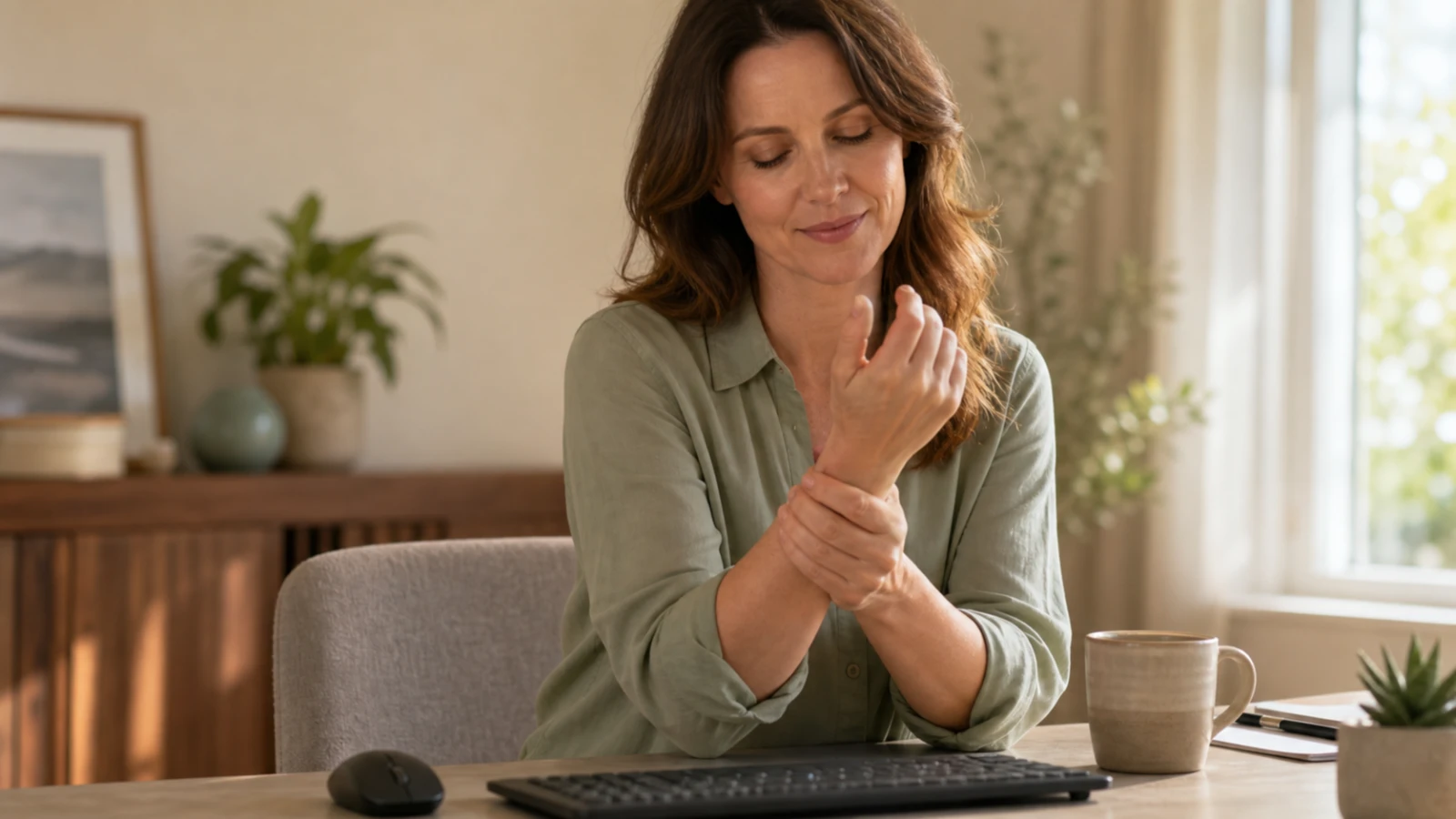
Carpal Tunnel Syndrome: What It Is, What Causes It, and How to Manage It
A short guide to carpal tunnel syndrome, covering what it is, why the thumb, index, and middle fingers go numb especially at night, who is at risk, how a doctor diagnoses it, management from wrist splinting to surgery, and how to start caring for your wrist.
Read article
Chronic Low Back Pain: What It Is, Why the Scan Is Not the Answer, and How to Manage It
A short guide to chronic low back pain, covering what it is, why an X-ray or MRI is often not the answer, which red flags need prompt care, why staying active beats bed rest, and how the ACP guideline puts non-drug care first.
Read article
Knee Osteoarthritis: What It Is, What It Feels Like, and How to Manage It
A short guide to knee osteoarthritis, covering what it is, what it feels like, how it differs from rheumatoid arthritis, what raises the risk, and why movement is the first line of care you build alongside your doctor.
Read articleVerifiable
References for this article
- 1 Exercise for preventing falls in older people living in the community - Sherrington et al., Cochrane Database of Systematic Reviews (2019, PMID 30703272) pubmed.ncbi.nlm.nih.gov
- 2 World guidelines for falls prevention and management for older adults: a global initiative - Montero-Odasso et al., Age and Ageing (2022, PMID 36178003) pubmed.ncbi.nlm.nih.gov
- 3 Association of Physical Activity and Fracture Risk Among Postmenopausal Women - LaMonte et al., JAMA Network Open (2019, PMID 31651972) pubmed.ncbi.nlm.nih.gov
- 4 Effects of exercise intervention on falls and balance function in older adults: a systematic review and meta-analysis - Yu et al., PeerJ (2025, PMID 41122235) pubmed.ncbi.nlm.nih.gov
- 5 Tai Chi for fall prevention and balance improvement in older adults: a systematic review and meta-analysis of randomized controlled trials - Chen et al., Frontiers in Public Health (2023, PMID 37736087) pubmed.ncbi.nlm.nih.gov
Reviewed by Health Coach: A888