
Knee Osteoarthritis: What It Is, What It Feels Like, and How to Manage It
A short guide to knee osteoarthritis, covering what it is, what it feels like, how it differs from rheumatoid arthritis, what raises the risk, and why movement is the first line of care you build alongside your doctor.
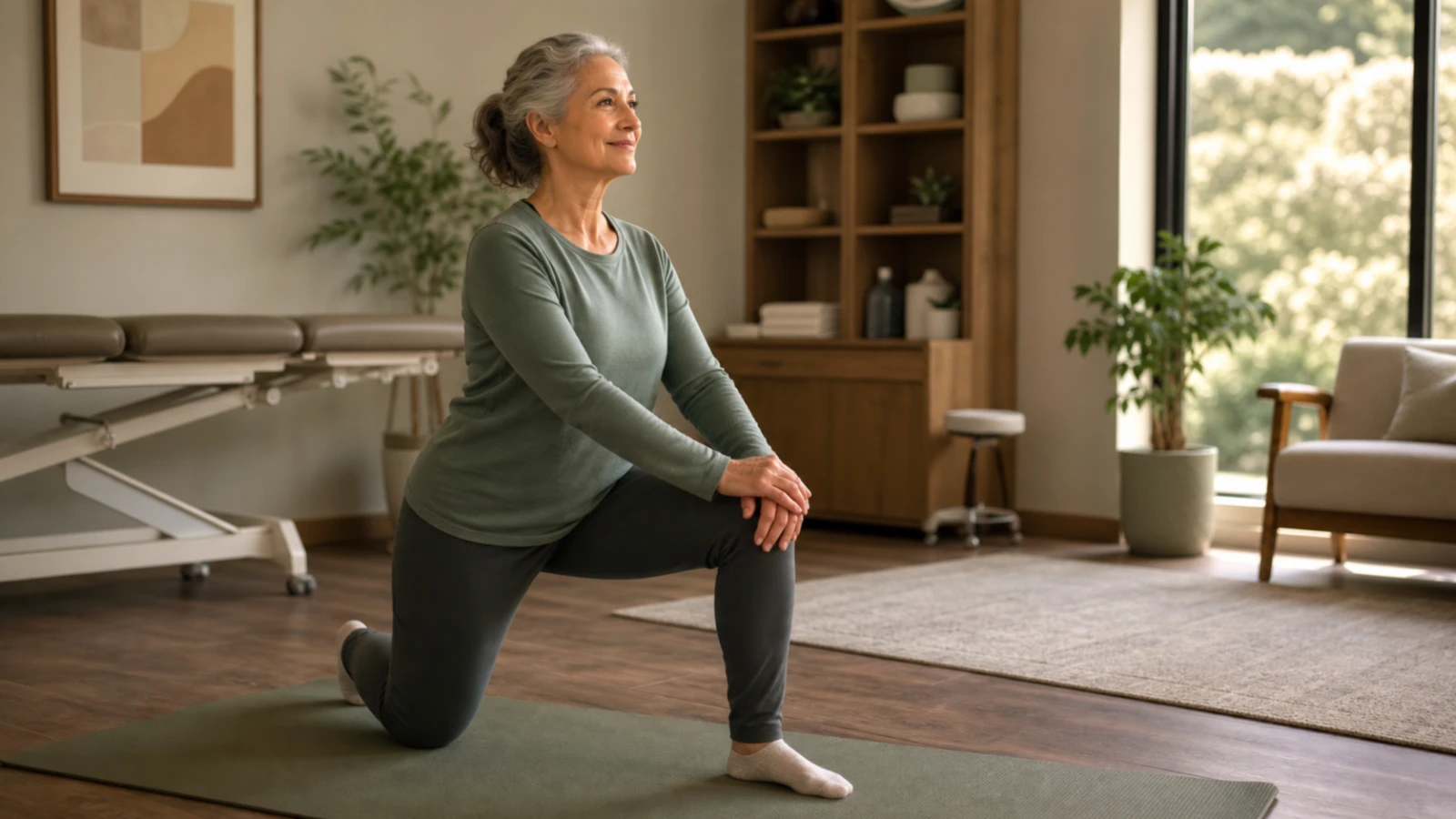
What You May Be Living With
You feel a twinge or a dull ache in your knee going up the stairs, you hear a grinding sound when you get out of a chair, your knee is stiff for a while in the morning before it loosens up, or it hurts more after heavy use and eases off once you rest. These things show up more often as the years add up, and many people start to worry the knee will only get worse.
Knee osteoarthritis is the most common joint disease. The good news is it can be managed, and what the research recommends first is usually not medication or surgery, but appropriate movement.
What Knee Osteoarthritis Is
It comes from the cartilage that cushions the ends of the bones in a joint gradually wearing thin over time, along with changes in the bone and tissue around the joint. The knee is a frequent site because it carries your body weight nearly the whole time you stand or walk. It is a process shaped by several factors, not age alone, and it does not mean you have to stop using the knee.
What It Feels Like, and How It Differs from Rheumatoid Arthritis
The common symptoms are pain with activity that eases with rest, morning stiffness that usually does not last long, generally under about 30 minutes, reduced range of motion, and a grinding sensation in the joint. What sets it apart from rheumatoid arthritis is that knee osteoarthritis comes from wear and accumulated use, not from the immune system turning on the joint itself the way it does in rheumatoid arthritis, which tends to bring longer morning stiffness across several joints symmetrically. Telling the two apart matters, and it needs a diagnosis from a doctor.
What Raises the Risk
Factors commonly linked to it include older age, a past knee injury, excess body weight, repeated joint use or regularly bearing heavy loads, and genetics. Some are within your control, like body weight, and some are not, like age, but you can still manage the effects by tending to the parts that are in your hands.
It Can Genuinely Be Managed, Starting with Movement
The 2019 guideline from the American College of Rheumatology and the Arthritis Foundation strongly recommends exercise, weight loss for those who are overweight, and self-management as the core of care. Strengthening the muscles around the joint, especially the quadriceps, helps support the knee and eases symptoms rather than wearing the joint out faster the way many people fear. In some cases a doctor may consider topical or oral medicines, a joint injection, or, for advanced disease, knee replacement surgery, all of which are decisions made together with a doctor. Do not self prescribe.
One thing to keep in mind is that how severe a knee looks on an X-ray does not always match how much it hurts, and nothing can regrow cartilage that has already worn away, so it is worth being cautious about products or methods that claim to cure it for good, because the best supported care right now is appropriate movement, which is safe and genuinely helps.
Start Tomorrow, One Step First
Choose low impact movement you can keep up, such as walking within a comfortable distance, gentle cycling, or exercising in water, then gradually build in strengthening for the quadriceps to support the knee, keep your body weight within a range the joint can handle, and choose supportive, cushioning footwear over stiff or high heeled shoes. These small steps work on the upstream driver of knee osteoarthritis directly.
This content is general information for health care, not advice that replaces seeing a doctor. Diagnosing and managing knee osteoarthritis should always be done together with a doctor.
This summary is for understanding, not medical advice, and should be reviewed by a professional before being applied in real life. The full version includes complete reasoning and research.

Summary complete
This was the key-points summary
Want to understand why, and the research behind it? Read the full version.
Read the full reasoning and researchRead next
More in this category

Carpal Tunnel Syndrome: What It Is, What Causes It, and How to Manage It
A short guide to carpal tunnel syndrome, covering what it is, why the thumb, index, and middle fingers go numb especially at night, who is at risk, how a doctor diagnoses it, management from wrist splinting to surgery, and how to start caring for your wrist.
Read article
Chronic Low Back Pain: What It Is, Why the Scan Is Not the Answer, and How to Manage It
A short guide to chronic low back pain, covering what it is, why an X-ray or MRI is often not the answer, which red flags need prompt care, why staying active beats bed rest, and how the ACP guideline puts non-drug care first.
Read article
Plantar Fasciitis: What It Is, Why It Hurts on the First Steps, and How to Manage It
A short guide to plantar fasciitis, covering what it is, why it hurts most on the first steps of the day, who is at risk, how it is diagnosed, why heel spurs are usually not the culprit, and how to start looking after yourself.
Read articleVerifiable
References for this article
- 1 Kolasinski SL et al. 2019 American College of Rheumatology/Arthritis Foundation Guideline for the Management of Osteoarthritis of the Hand, Hip, and Knee (Arthritis Care Res 2020, PMID 31908149) pubmed.ncbi.nlm.nih.gov
- 2 StatPearls (NCBI Bookshelf NBK482326): Osteoarthritis ncbi.nlm.nih.gov
- 3 NIAMS (NIH): Osteoarthritis niams.nih.gov
Reviewed by Health Coach: A888