
Sarcopenia: When Muscle Slips Away With Age, Why It Matters, and How to Manage It
Sarcopenia is the age related loss of muscle mass, strength, and function. This article explains why it matters for balance, walking, and independence, how the EWGSOP2 consensus frames assessment, what drives it, and how it can genuinely be managed with strength training and nutrition alongside your doctor.
You start noticing that jars are harder to open than they used to be. Getting up from a low chair takes a hand on the armrest, you walk a little slower than the people you are with, a few flights of stairs leave you winded, and carrying a heavy bag makes your arms shake when it never used to. Now and then you catch a foot or nearly stumble for no clear reason. These small changes are easy to write off as just part of getting older, but often they are signs of something with a name and a real path to care: sarcopenia.
Sarcopenia is the gradual loss of muscle mass, strength, and function that comes with age. This article walks you through it one layer at a time: what sarcopenia is, why it matters for daily life more than you might think, how doctors assess it, what drives it, and what you can start doing for yourself as early as tomorrow. The reassuring news first: losing muscle with age is common, but it is not something you simply have to accept as unavoidable, because it can be slowed, and partly reversed, with training at any age.
Sarcopenia Is More Than Getting Thinner or Just Getting Older
The word sarcopenia comes from roots that roughly mean a loss of flesh, but the way doctors use it today is about more than muscle mass alone. It refers to muscle declining on several fronts at once: the amount of muscle, the strength to exert force, and the ability to perform, such as walking, keeping your balance, and standing up.
Many people think of muscle as something for those who want to look strong or enjoy lifting weights. In truth muscle does far more than lift things. It holds your body up, supports balance, plays a role in metabolism, and acts like a reserve your body draws on when you are ill. So when muscle slips away, what it affects is not just your shape. It is your ability to get through everyday life.
Why Losing Muscle Matters More Than You Might Think
The reason sarcopenia is worth paying attention to is not the muscle figure on a chart. It is the effect on real life. When muscle weakens, walking slows, balance gets shakier, and the risk of a fall goes up. A fall in an older person can lead to a fracture, especially of the hip, which is an event that can change quality of life a great deal.
Beyond falls, having less muscle turns tasks that used to be easy into hard ones, such as rising from a chair, carrying groceries, or climbing stairs. As these become harder, independence in looking after yourself shrinks. Another key point is that muscle acts as a reserve when the body has to fight off illness. People with less muscle often recover more slowly from sickness, surgery, or a hospital stay. Holding on to muscle is like keeping a reserve set aside for your body in the days ahead.
How Doctors Assess Sarcopenia
A widely referenced framework, from Europe, is EWGSOP2, the revised consensus from a group of experts that sets out how sarcopenia is defined and diagnosed. What stands out about it is that it places low muscle strength as the primary marker, not muscle quantity alone.
In plain terms, the framework weighs three layers. The first is low muscle strength, which can be gauged with simple measures such as grip strength or how well you can rise from a chair repeatedly. The second is reduced muscle quantity or quality, which helps confirm the diagnosis. The third is physical performance, such as gait speed, which indicates how severe it is. Putting strength first reflects the fact that what affects real life is the ability to exert force, not just a number for muscle mass.
All of this is why assessing sarcopenia should be done by a doctor or specialist, rather than concluded from a feeling of weakness alone, because measuring it properly and ruling out other causes takes a systematic evaluation.
What Makes Muscle Slip Away
Sarcopenia rarely comes from a single cause. It is usually the sum of several factors arriving together. The underlying one is age, which naturally slows how the body builds and repairs muscle. What accelerates it is moving less, because muscle is tissue that follows a use it or lose it rule.
Other contributors include not getting enough protein and nutrition, which leaves the body short of the raw material to build muscle, certain chronic diseases that wear the body down over time, ongoing inflammation, and the hormonal changes that come with age. These factors tend to reinforce one another, so when several stack up, muscle declines faster. Understanding that it comes from many directions helps explain why care has to look at several angles at once, rather than fixing just one thing.
It Starts Earlier Than People Think
Many people assume muscle loss is only for the very old, but muscle mass actually begins to decline gradually from around midlife, and the rate then picks up as you get older, especially during stretches of bed rest from illness or a lack of movement.
The good news here has two sides. First, the earlier you start looking after it, the better, because building and keeping muscle from midlife gives you a larger reserve in later years. Second, even if you start when you are already older, it is not too late, because the body responds to strength training at any age. There is no point at which it is too late to begin moving.
It Can Genuinely Be Managed, With Training and Nutrition at the Core
What research and guidelines agree on is that the backbone of preventing and managing sarcopenia is not a drug. It is resistance exercise and getting enough nutrition.
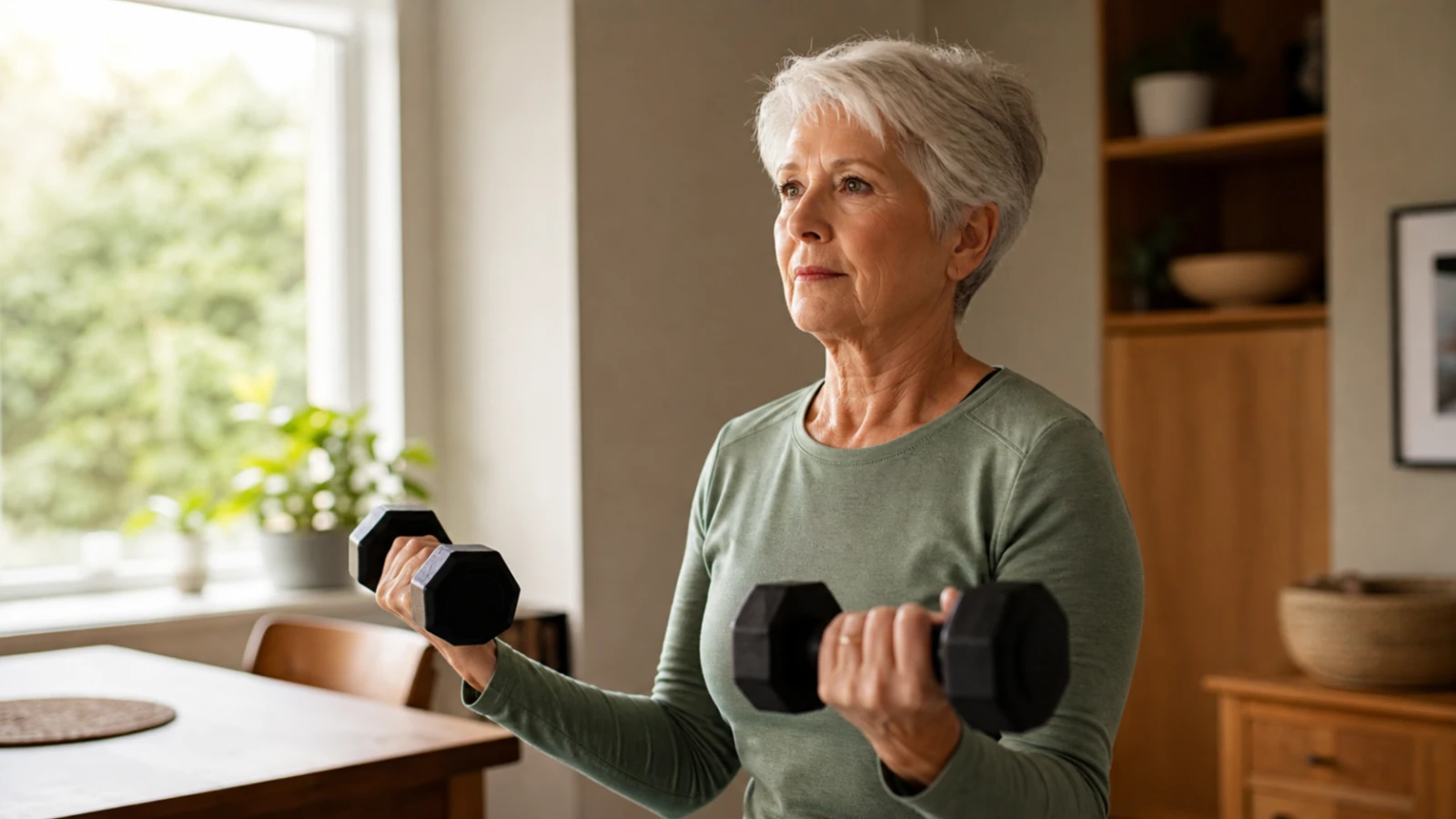
Resistance exercise is the heart of care. Training that makes muscles work against a load, whether that is your own body weight, resistance bands, or weights suited to you, prompts the body to build and hold on to muscle in a way that walking or aerobic exercise alone does not match. The right form and intensity should build up gradually and be tailored to each person’s condition.
Adequate nutrition, especially getting enough protein spread across your meals, gives the body the raw material to build muscle. The amount that suits you depends on many factors, such as body weight, kidney function, and any medical conditions, so it is best set with help from a doctor or dietitian rather than aiming at one number that is the same for everyone.
On medication: at present no drug is approved specifically to treat sarcopenia. Resistance exercise and nutrition remain the main approaches with evidence behind them. If you have underlying conditions or other factors, a doctor is the one to assess them and plan what fits you.
A point of caution: age related muscle loss is not a fate you simply have to accept, and no pill replaces exercise.
Losing muscle as you age is common, but it is not something to give up on as unavoidable. Research shows it can be slowed and partly reversed with regular strength training, even in older age. And at present there is no drug or supplement proven to replace exercise, so be wary of muscle in a pill claims that promise to build muscle from a tablet or supplement alone. Resistance exercise and adequate nutrition remain the mainstays that actually work. Sources: EWGSOP2 consensus (PMID 30312372), StatPearls.
When to See a Doctor
See a doctor if you or your family notice these signs:
- Feeling clearly weaker, such as struggling to open jars or no longer being able to carry heavy things the way you used to.
- Needing to push up with your hands to rise from a chair, or finding it harder to stand up than before.
- Walking noticeably slower, or having shaky balance.
- Falling or nearly falling more often for no clear reason.
- Losing weight or muscle without meaning to, especially after an illness or a hospital stay.
Assessing sarcopenia takes a history, a physical exam, and measures of strength or physical performance, together with ruling out other causes, so it should be done by a doctor rather than concluded from how you feel alone.
What you can start doing as early as tomorrow is to begin resistance training a couple of times a week in a way that suits your body, aim to get enough protein spread across your meals, move and stay generally active through the day, and see a doctor if you notice yourself getting weaker or falling more often. The specifics of the exercise and the protein amount that fit you are best tailored with a doctor or dietitian. Small steps you can keep up are what actually protect your muscle over the long term.
This content is general information for health care, not advice that replaces seeing a doctor. Assessing and managing sarcopenia, including planning the exercise and nutrition that suit you, should always be done together with a human doctor or specialist.


Read next
More in this category
Carpal Tunnel Syndrome: What It Is, What Causes It, and How to Manage It
A short guide to carpal tunnel syndrome, covering what it is, why the thumb, index, and middle fingers go numb especially at night, who is at risk, how a doctor diagnoses it, management from wrist splinting to surgery, and how to start caring for your wrist.
Read article
Chronic Low Back Pain: What It Is, Why the Scan Is Not the Answer, and How to Manage It
A short guide to chronic low back pain, covering what it is, why an X-ray or MRI is often not the answer, which red flags need prompt care, why staying active beats bed rest, and how the ACP guideline puts non-drug care first.
Read article
Knee Osteoarthritis: What It Is, What It Feels Like, and How to Manage It
A short guide to knee osteoarthritis, covering what it is, what it feels like, how it differs from rheumatoid arthritis, what raises the risk, and why movement is the first line of care you build alongside your doctor.
Read articleVerifiable
References for this article
- 1 Cruz-Jentoft AJ et al. Sarcopenia: revised European consensus on definition and diagnosis (EWGSOP2) (Age Ageing 2019, PMID 30312372) pubmed.ncbi.nlm.nih.gov
- 2 StatPearls (NCBI Bookshelf NBK560813): Sarcopenia ncbi.nlm.nih.gov
Reviewed by Health Coach: A888