
Plantar Fasciitis: Why Your Heel Hurts on the First Steps of the Day, and How to Manage It
Plantar fasciitis is the most common cause of heel pain, and it typically hurts most on the first steps of the day. This article explains what it is, who is at risk, how it is diagnosed, why heel spurs are usually not the culprit, and how it can genuinely be managed with stretching, supportive footwear, and time, alongside your doctor when needed.

The first step of the day, when you climb out of bed and put your foot down, brings a sharp stab in your heel, as if something is digging into it. Some people limp through the first few steps before it eases off. After you move around for a while it seems to settle, but then you sit for a stretch, stand up to walk again, and the same pain is right there waiting. If that sounds familiar, you are far from alone.
This kind of heel pain has a name: plantar fasciitis, and it is the single most common cause of heel pain. This article walks you through it one layer at a time: what it is, why it hurts most on those first steps, who is at risk, how it is diagnosed, and what you can start doing for yourself. The reassuring news first: most people with plantar fasciitis get better with conservative care when they give it time.
Plantar Fasciitis Is Irritation of the Tissue Along Your Sole
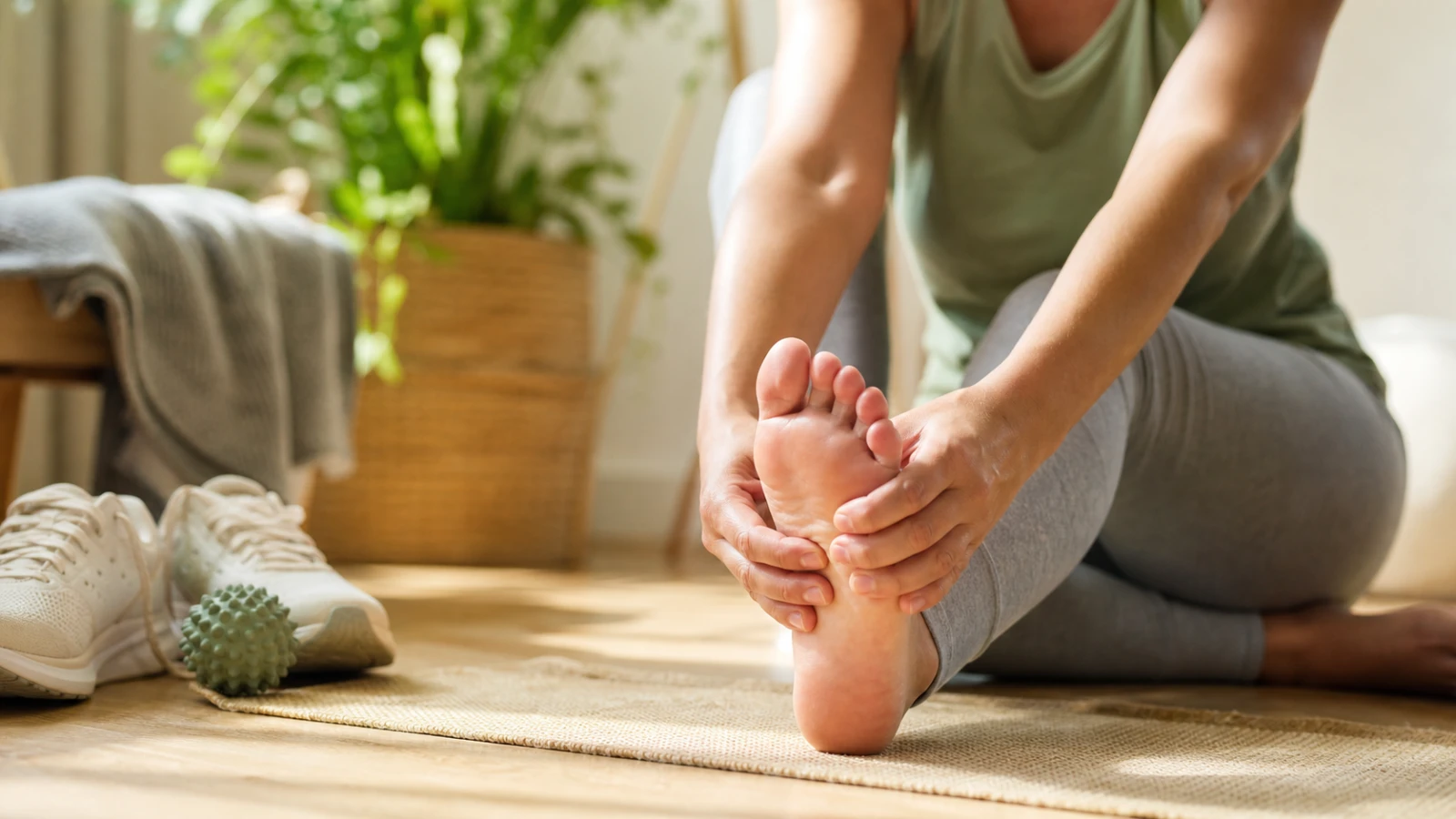
The plantar fascia is a tough band of tissue that runs along the sole of your foot, from the heel bone to the base of the toes. It works like a supporting strap that holds up the arch and absorbs shock every time you take a step. When this band is overloaded or takes repeated strain, the point where it attaches to the heel bone becomes irritated and starts to break down, and that is where the pain comes from.
Although the name ends in “itis,” which usually means inflammation, more recent research suggests that what actually happens is often degeneration of the tissue from repeated use rather than the sharp inflammation we tend to picture. This is one reason care focuses on rehabilitating the tissue and reducing the load on it, rather than only trying to shut down inflammation.
Plantar fasciitis is the most common cause of heel pain, and it turns up both in regular exercisers such as runners and in people who simply stand or walk for long stretches. Knowing your heel pain has a name and a clear path of care is the first step toward looking after it in the right way.
What the Symptoms Usually Feel Like
The hallmark of this condition is a sharp pain in the heel during the first few steps after you wake up in the morning, or after you have been sitting still for a while and then stand to walk. Many people describe it as feeling like a pin or a hard object pressing into the heel.
What is telling is that the pain often eases as you walk for a bit, because the tight fascia loosens and warms up. But if you are on your feet hard all day, or stand and walk for too long, the pain tends to return later in the day. The sore spot is usually toward the inner part of the heel where it meets the sole, and it is often tender when pressed.
Who Is at Risk
This condition usually comes from several factors adding up, all of which load the plantar fascia beyond what it can handle or strain it repeatedly. Common risk factors include:
- Standing or walking on hard surfaces for long periods, especially in jobs that keep you on your feet all day.
- Increasing your running or walking suddenly, faster than your body can adapt.
- Tight calf muscles and a tight Achilles tendon, which add to the pull on the plantar fascia.
- Foot shapes such as flat feet or very high arches.
- Shoes that do not support the arch or heel well.
- Higher body weight, which adds load to the sole with every step.
The more of these that stack up, the greater the chance the plantar fascia is carrying more than it should. Understanding your own risk factors helps you see which ones you can adjust, and gives you useful information to talk through with your doctor.
How It Is Diagnosed, and the Truth About Heel Spurs
Diagnosing plantar fasciitis usually rests on the history and a physical exam. A doctor typically asks about that first step pain of the day and presses to find the tender spot on the heel. In most ordinary cases, no X-ray or other imaging is needed to confirm it.
Here is a common misunderstanding: heel spurs, the little bony growths sometimes seen on an X-ray of the heel. Many people assume a spur is what is causing the pain, but in reality a large number of people who have spurs have no pain at all, and many people with heel pain have no spur. A heel spur is usually an incidental finding, not the direct cause of the pain.
How It Is Managed
Evidence-based care for plantar fasciitis (Cole 2005 and StatPearls) centers on conservative treatment together with time, because the condition usually resolves on its own over weeks to months.
Stretching. Stretching the calf muscles and the plantar fascia is the backbone of care, because it reduces the tension pulling on the point where the fascia attaches. Many guidelines suggest doing it consistently every day, especially before those first steps in the morning.
Footwear and inserts. Choosing shoes that support the arch and heel well, along with supportive inserts or orthotics, helps spread the load and take strain off the sole.
Activity modification. Easing off the activities that provoke pain for a while, and avoiding sudden jumps in how much you run or walk, gives the tissue a chance to rest and recover.
Options a doctor may consider. For cases that are persistent or do not improve with the steps above, a doctor may consider other options, such as night splints or injections. These decisions belong under a doctor’s assessment and care, and are not something to do yourself or to self prescribe.
A point of caution: a heel spur is usually not the culprit, and recovery takes time.
If an X-ray shows a heel spur, do not jump to the conclusion that it is the source of your pain, because many people have spurs with no symptoms at all. Care is aimed at rehabilitating the plantar fascia, not at removing a spur. On top of that, recovery from this condition is usually gradual, taking weeks to months, so being consistent with your stretching beats chasing quick fixes. Sources: Cole 2005 (PMID 16342847), StatPearls.
When to See a Doctor
Even though most cases improve with self care, you should see a doctor if you notice these signs:
- Pain that does not improve at all after consistent self care for a while, or that gets worse.
- Pain severe enough to interfere with walking or daily life.
- Numbness or a pins and needles feeling in the foot, which can point to a nerve problem.
- Heel pain that comes on suddenly after an injury, or that comes with swelling, redness, or warmth.
What you can start doing today is to fold a few small habits into each day. Begin with gently stretching your calves and plantar fascia before your first steps in the morning, choose shoes that support the arch and heel well, avoid sudden jumps in how much you walk or run, and if your weight is on the higher side, gradually managing it helps ease the load on your soles. These small, repeatable steps are the heart of care. And if things are not improving as they should, if the pain is severe, or if you feel numbness, see a doctor for a closer look.
This content is general information for health care, not advice that replaces seeing a doctor. Diagnosing and managing heel pain, including any decision about injections or procedures, should always be done together with a human doctor or specialist.

Read next
More in this category
Carpal Tunnel Syndrome: What It Is, What Causes It, and How to Manage It
A short guide to carpal tunnel syndrome, covering what it is, why the thumb, index, and middle fingers go numb especially at night, who is at risk, how a doctor diagnoses it, management from wrist splinting to surgery, and how to start caring for your wrist.
Read article
Chronic Low Back Pain: What It Is, Why the Scan Is Not the Answer, and How to Manage It
A short guide to chronic low back pain, covering what it is, why an X-ray or MRI is often not the answer, which red flags need prompt care, why staying active beats bed rest, and how the ACP guideline puts non-drug care first.
Read article
Knee Osteoarthritis: What It Is, What It Feels Like, and How to Manage It
A short guide to knee osteoarthritis, covering what it is, what it feels like, how it differs from rheumatoid arthritis, what raises the risk, and why movement is the first line of care you build alongside your doctor.
Read articleVerifiable
References for this article
- 1 Cole C et al. Plantar fasciitis: evidence-based review of diagnosis and therapy (Am Fam Physician 2005, PMID 16342847) pubmed.ncbi.nlm.nih.gov
- 2 StatPearls (NCBI Bookshelf NBK431073): Plantar Fasciitis ncbi.nlm.nih.gov
Reviewed by Health Coach: A888