
Gut-Brain Axis and Postbiotics: How the Gut Talks to the Brain, and What Has Actually Been Proven
The gut and brain are wired together through the vagus nerve and SCFAs. The core mechanisms are well established, while strain-specific clinical effects still require caution.

After age forty, you may have days when your stomach feels bloated from the morning, your brain feels drained by afternoon, and before an important appointment, you feel so unsettled that you cannot sleep. These three things seem to belong to different systems in the body. But deep down, you have probably wondered why on days when your gut feels off, your mood and concentration seem to suffer too.
Research over the past ten years suggests that the gut and brain really do communicate through a pathway called the Gut-Brain Axis, a two-way communication system between the gut and the brain. One term that often appears alongside this topic is postbiotics.
This matters for people aged 40+ because it connects daily energy, mood, and digestive comfort. But before believing advertising claims that say “take this and stress will disappear,” you should first know which parts are firmly supported by science and which still need caution.
What Are Postbiotics, and How Are They Different from Probiotics and Prebiotics?
People often confuse three or four similar-looking terms. This table separates them clearly in one place.
| Type | What it is | Status |
|---|---|---|
| Probiotics | Live microorganisms | Must survive to reach the gut |
| Prebiotics | Food for beneficial microorganisms, such as fiber | Not microorganisms themselves |
| Synbiotics | Probiotics combined with Prebiotics | A combination of two things |
| Postbiotics | Non-living microorganisms, including their components and metabolites | Do not need to be alive |
According to the ISAPP 2021 definition, postbiotics are preparations of inanimate microorganisms and/or their components, such as cell walls, membranes, and short-chain fatty acids (SCFAs), that confer a health benefit
The key difference with postbiotics is that they do not need to be alive to have an effect. The microorganisms are intentionally killed with heat or another process, yet they may still provide benefits through their cell walls, membranes, and substances they produced while alive. This definition is strongly confirmed by more than three sources, including ISAPP’s own consensus document.
3 Pathways Through Which the Gut Talks to the Brain
The simple overview is that the gut can send signals to the brain through three pathways. Some are firmly proven. Others are still incomplete pieces of a larger puzzle.
Pathway 1: vagus nerve
The vagus nerve is the longest direct line in the body, running from the brainstem down to the gut. Nerve endings detect SCFA signals through the GPR41 and GPR43 receptors, then send signals back up to the brainstem. The concept is that this signal may help reduce inflammation and regulate stress hormones.
This point needs caution because the complete circuit has not yet been fully proven. See the details in the “Points That Need Caution” section below.
Pathway 2: SCFAs, metabolites from microorganisms
The three main SCFAs are butyrate, acetate, and propionate. They are produced when gut microorganisms digest the fiber you eat. These substances really can cross the blood-brain barrier through the MCT1 and MCT2 transporters, and they have been measured in human cerebrospinal fluid.
In the brain, SCFAs inhibit the enzyme histone deacetylase (HDAC), which promotes BDNF, a protein that supports nerve cells, and reduces inflammation in microglia. This provides a mechanistic reason why gut health can affect brain fog and mood. This part is firmly supported by multiple studies.
Another important effect is that butyrate stimulates the Tph1 gene in enterochromaffin cells in the gut, where more than 90% of the body’s serotonin is produced. These cells draw tryptophan from the blood and convert it into serotonin. This is why many people call the gut the “second brain,” even though the phrase is somewhat oversimplified.
Pathway 3: modulation of neurotransmitters
Some microbial strains directly produce or stimulate neurotransmitters such as GABA and dopamine, which are linked to relaxation and positive mood.
What Is Firmly Established, and What Still Needs Caution
This table summarizes what was checked in the original source, clearly separating firmly established basic mechanisms from strain-specific clinical effects that still require caution.
| Issue | Status |
|---|---|
| ISAPP 2021 definition of postbiotics | Firmly established, more than 3 sources |
| SCFAs cross the BBB, inhibit HDAC, promote BDNF, reduce microglial inflammation | Firmly established |
| More than 90% of serotonin is produced in the gut, butyrate stimulates Tph1 | Firmly established |
| vagus: SCFA via GPR41/43 releases acetylcholine and suppresses inflammation | Still unclear |
| B. bifidum MIMBb75 reduces IBS symptoms | Still unclear |
| L. gasseri CP2305 reduces stress and improves sleep | Still unclear in part |
The first three items are the core mechanisms on which basic research is aligned. You can trust that the gut and brain really are connected through SCFA and gut serotonin. The lower three items are human outcomes that still need to be read with caution.
Points That Need Caution
vagus nerve: the full circuit is not yet complete
Each individual piece can be measured: SCFA binds to GPR41 and GPR43 receptors on vagus nerve endings, signals travel to the brainstem, and there is a separate cholinergic anti-inflammatory pathway in which acetylcholine suppresses the inflammatory cytokines TNF-alpha and IL-1beta on macrophage cells, according to the work of Tracey 2002.
The problem is that no single study has shown the full circuit in sequence, from SCFA binding to the receptor all the way to acetylcholine release suppressing inflammation. In addition, vagal afferents normally use glutamate, not acetylcholine directly, and propionate under some conditions may activate NLRP3, causing IL-1beta to increase rather than decrease. In short, this pathway is an interesting direction, but it is not yet a fully closed conclusion.
B. bifidum MIMBb75 and IBS: real numbers, selectively told
An RCT of 443 people found that the microbial intervention group had a response rate of 34% (74 out of 221 people), compared with 19% (43 out of 222 people) in the placebo group. Both sets of numbers are correct, but advertising claims that cite p less than 0.0001 overstate the result. The actual p value was 0.0007.
Another point to know is that the primary endpoint of this study was a composite score: at least a 30% reduction in abdominal pain for at least 4 consecutive weeks, plus overall relief of IBS symptoms. It was not “less bloating” as a single isolated symptom, as headlines often suggest. The research was funded by the company that made the product. A published commentary pointed out limitations, and systematic reviews from 2024 to 2025 rated the certainty of evidence for postbiotics in IBS as “very low.”
L. gasseri CP2305: stress was truly reduced, but cortisol did not fall as claimed
The part that can be confirmed is that anxiety decreased, measured by the STAI scale, with statistical significance in Nishida 2019, and sleep quality improved. This is good news for people with chronic stress.
But the claim that cortisol clearly decreased conflicts with the data in the main paper itself, because salivary cortisol showed no statistically significant difference. The authors themselves stated that the study did not find suppression of basal cortisol. The marker that actually decreased was salivary chromogranin A, which is different from cortisol. When you see advertising claim that this “reduces the stress hormone cortisol” in this context, know that it goes beyond the evidence.
Safety: A Strength of Postbiotics That Still Needs More Checking
The reason postbiotics are interesting for vulnerable groups is that the microorganisms are not alive. In theory, this should reduce the risk of microorganisms escaping into the bloodstream or causing bloodstream infections, a risk that live probiotics might pose in immunocompromised patients.
This point has not yet been checked against two full sources in this original review, so it should be treated as an interesting direction, not a confirmed conclusion. Several issues also remain unchecked and must not be used as confirmed claims, such as the effect of sodium butyrate tablets on IBS, the effect of L. paracasei PS23 on brain fog in long COVID, and safety in cancer patients or ICU patients.
The key principle emphasized by ISAPP is strain specificity. Results from one strain cannot be applied to another strain. If you are actually choosing a product, you need to look for the strain name and code that match the research being cited, not just the word postbiotics on the label. The open question is whether product labels on the market provide enough detail to choose correctly.
How to Read This Topic in a Way That Actually Helps
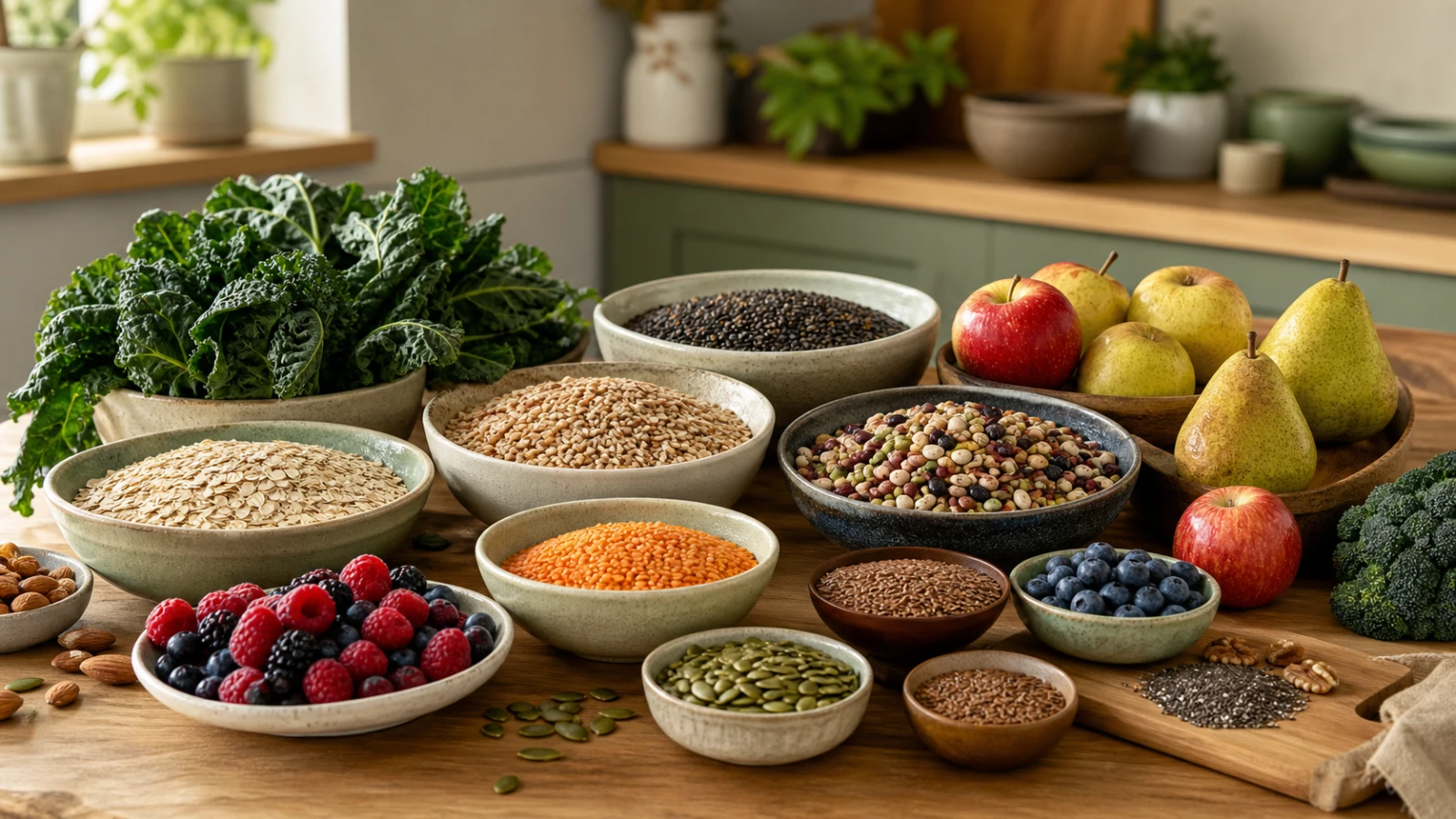
The strongest part of this whole topic is the basic mechanism. The gut and brain really are connected through SCFA and gut serotonin, and SCFA is produced when microorganisms digest the fiber you eat. This is why high-fiber foods and a diverse gut help both digestion and mood, without requiring expensive supplements.
3 steps you can take from this topic
- Eat a variety of fiber from vegetables, fruits, beans, and whole grains so microorganisms have the raw materials to produce SCFA.
- When you see a postbiotics product, look for the strain name and code that match the research, and read numerical claims with caution.
- If you are in a vulnerable group, such as a cancer patient undergoing chemotherapy, someone after abdominal surgery, or someone who is immunocompromised, consult a physician before starting any supplement.
Start today with one meal. Try adding vegetables or beans to your plate, then observe your digestion and energy the next day. The gut-brain connection does not need a magic product. It needs food that the beneficial microorganisms in your body can actually use.


Read next
More in this category
Dietary Fiber, the Gut, and Metabolic Health: A Short Guide to LDL, Post-Meal Glucose, Microbes, and Fullness
A short guide to dietary fiber, the gut, and metabolic health, covering how soluble and viscous fiber is linked to lower LDL cholesterol, gentler post-meal glucose, short-chain fatty acids from gut microbes, and greater fullness, with the population-level effect sizes, the limits, who should be careful, and how to start adding fiber gradually with water, while treating every number as guidance to adjust with a doctor or dietitian.
Read article
Caffeine and Health: What It Is, How Much Is Reasonable, and Who Should Be Careful
A short guide to caffeine and health, covering how caffeine works, where it hides, the amount often cited as reasonable for most healthy adults, why too much or too late disrupts sleep and causes jitteriness, who should have less or none, and how to start looking after yourself, while treating every number as guidance a doctor tailors to you.
Read article
Celiac Disease: What It Is, How It Is Diagnosed, Why You Must Be Tested Before Quitting Gluten, and How to Manage It
A short guide to celiac disease, covering what it is, what gluten does to the small intestine, how wide the symptoms can be, how it is diagnosed, why testing must happen while you are still eating gluten, and how to start looking after yourself.
Read articleVerifiable
References for this article
- 1 Salminen et al. 2021, Nat Rev Gastroenterol Hepatol (นิยาม postbiotics ISAPP) doi.org
- 2 Erny et al. 2015, Nature Neuroscience (SCFA กับ microglia) doi.org
- 3 Yano et al. 2015, Cell (serotonin ในลำไส้ และ Tph1) doi.org
- 4 Andresen et al. 2020, Lancet Gastroenterol Hepatol (B. bifidum MIMBb75 กับ IBS) doi.org
- 5 Nishida et al. 2019, Nutrients (L. gasseri CP2305 กับความเครียด) doi.org
Reviewed by Health Coach: A888