
Gut-Brain Axis and postbiotics: What to Know Before Believing the Marketing
A concise version of Gut-Brain Axis and postbiotics, summarizing the mechanisms that are well supported and the clinical findings that still require caution for adults 40+

The Problem You Might Really Be Facing
Picture a morning when you wake up already bloated before the day even starts. By early afternoon your brain feels foggy, as if a thin haze has settled over your head. Then, as an important meeting nears, your mind will not stay still, and by night you struggle to fall asleep.
Many people treat these as three separate problems: the gut is one thing, the brain another, and stress a matter of the heart. But if you have paid attention to yourself, you may have felt for a long time that on days your gut is unhappy, your mood and focus tend to slide with it.
Research over the past ten years says this is not your imagination. The gut and the brain really do have ways to talk to each other, like two houses linked by a phone line, a delivery pipe, and messengers running back and forth. The word that keeps coming up here is postbiotics, or put plainly, microorganisms that are no longer alive, along with their fragments and the substances they made, which may offer a health benefit. By the end, you will know what to act on and what to take with a grain of salt.
What People Get Wrong, and What Is True
The marketing wants you to believe that if the gut and brain can talk, then swallowing some product will surely ease your stress or your gut symptoms.
The reality is a good deal finer than that.
What is firmly established is that the gut and brain really are connected, and that some key substances come from microorganisms fermenting the fiber you eat. These are called SCFAs, or short-chain fatty acids. Think of them as the good stuff your microorganisms make after being fed with vegetables, fruit, legumes, and whole grains. These substances really can reach the brain’s systems, they have been measured in human cerebrospinal fluid, and they are tied to nourishing nerve cells and calming inflammation in the brain.
Also well established is that butyrate, one of the short-chain fatty acids, stimulates serotonin production in the gut, the substance linked to mood, and the gut makes more than 90% of the body’s serotonin. This is one reason gut health ties into mood and mental fatigue.
What you have to watch is taking these mechanisms and concluding that one supplement will fix stress, bloating, or brain fog for everyone. You cannot say that yet. A mechanism proven in a test tube and a real effect in you are two separate steps.
Points to Watch Before You Buy
The gut-to-brain nerve pathway still has gaps in the evidence. There is a large nerve called the vagus nerve that runs from the brainstem down to the gut, and there are pieces of evidence that short-chain fatty acids pass signals through receptors named GPR41 and GPR43. But no single study has connected the whole circuit from start to finish to show it fully dampens inflammation. In some conditions, propionate, another short-chain fatty acid, may even stir up more inflammation instead of easing it.
B. bifidum MIMBb75 and IBS need the numbers read in full. IBS is irritable bowel syndrome. A study of 443 people found the microorganism group responded 34%, compared with 19% on placebo. Those numbers are real, but the actual p value was 0.0007, not the less than 0.0001 some ads claim, and the main result was an overall score, not “bloating reduced” pulled out on its own. The study was also paid for by the product’s own manufacturer, and systematic reviews from 2024 to 2025 rated the certainty of postbiotics evidence for IBS as “very low.”
L. gasseri CP2305 and stress has both good news and limits. The good news is that anxiety fell and sleep improved for real on the STAI scale. But the claim that cortisol, the stress hormone, clearly dropped goes past the evidence, because salivary cortisol did not differ significantly. The authors said themselves they found no suppression of basal cortisol. What actually fell was chromogranin A, another salivary marker, and a different thing from cortisol. When you see a label here claiming it “lowers the stress hormone,” recognize that it is walking past the evidence.
Safety, Seen From All Sides
postbiotics are interesting for vulnerable groups because the microorganisms are not alive. In theory that means they do not carry the bloodstream-infection risk that live probiotics may pose in people with impaired immunity.
But this point has not been fully checked across two sources in this round, so treat it as an interesting direction, not a settled conclusion. There is still plenty that should not be overstated, like sodium butyrate tablets for IBS, L. paracasei PS23 for brain fog in long COVID, or safety in cancer patients and people in the ICU, the intensive care unit.
Another principle that matters a great deal is that the effects of one microbial strain cannot stand in for another. If a study used one strain, you cannot claim it for a different strain. So when you read a label, check that the strain name and code match the actual study, rather than seeing the word postbiotics and relaxing.
What You Can Do Right Now
The most solid part of all this starts on your plate, well before any pricey supplement.
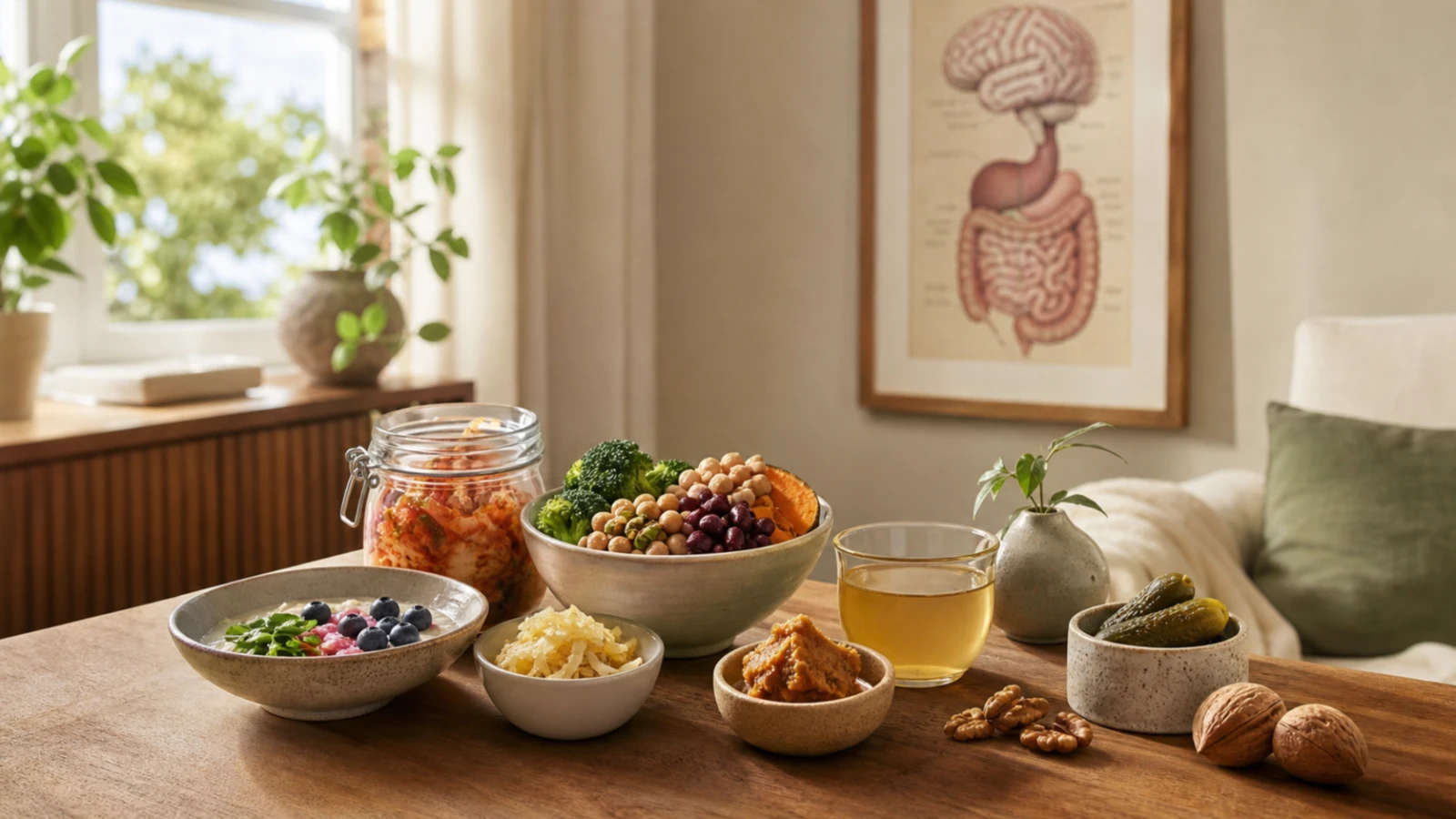
Because short-chain fatty acids come from microorganisms fermenting the fiber you eat, the concrete place to begin, if you want to give your gut raw material to work with, is adding a variety of fiber-rich foods like vegetables, fruit, legumes, and whole grains.
3 steps you can take:
- Add fiber to a real meal. Put at least one vegetable, fruit, legume, or whole grain on your plate so your microorganisms have material to make short-chain fatty acids.
- Read the label deeper than the word postbiotics. Look for the strain name and code that match the research, and read any numbers with caution.
- If you are in a vulnerable group, talk to a doctor first. Cancer patients during chemotherapy, people after abdominal surgery, or those with impaired immunity should consult a doctor before starting any supplement.
Start Tomorrow, One Step First
You do not have to overhaul your whole life in a day. Tomorrow, pick just one meal and try adding vegetables or legumes to your plate, then notice your gut, your mood, and your energy the next day.
The gut and brain rarely need something miraculous. Often it starts with feeding the good microorganisms already in you so they can actually work, and then reading the marketing with a calmer eye.
This summary is for general understanding, not medical advice, and should be reviewed by a qualified professional before being applied in practice. The full version contains the complete rationale and research

Summary complete
This was the key-points summary
Want to understand why, and the research behind it? Read the full version.
Read the full reasoning and researchRead next
More in this category
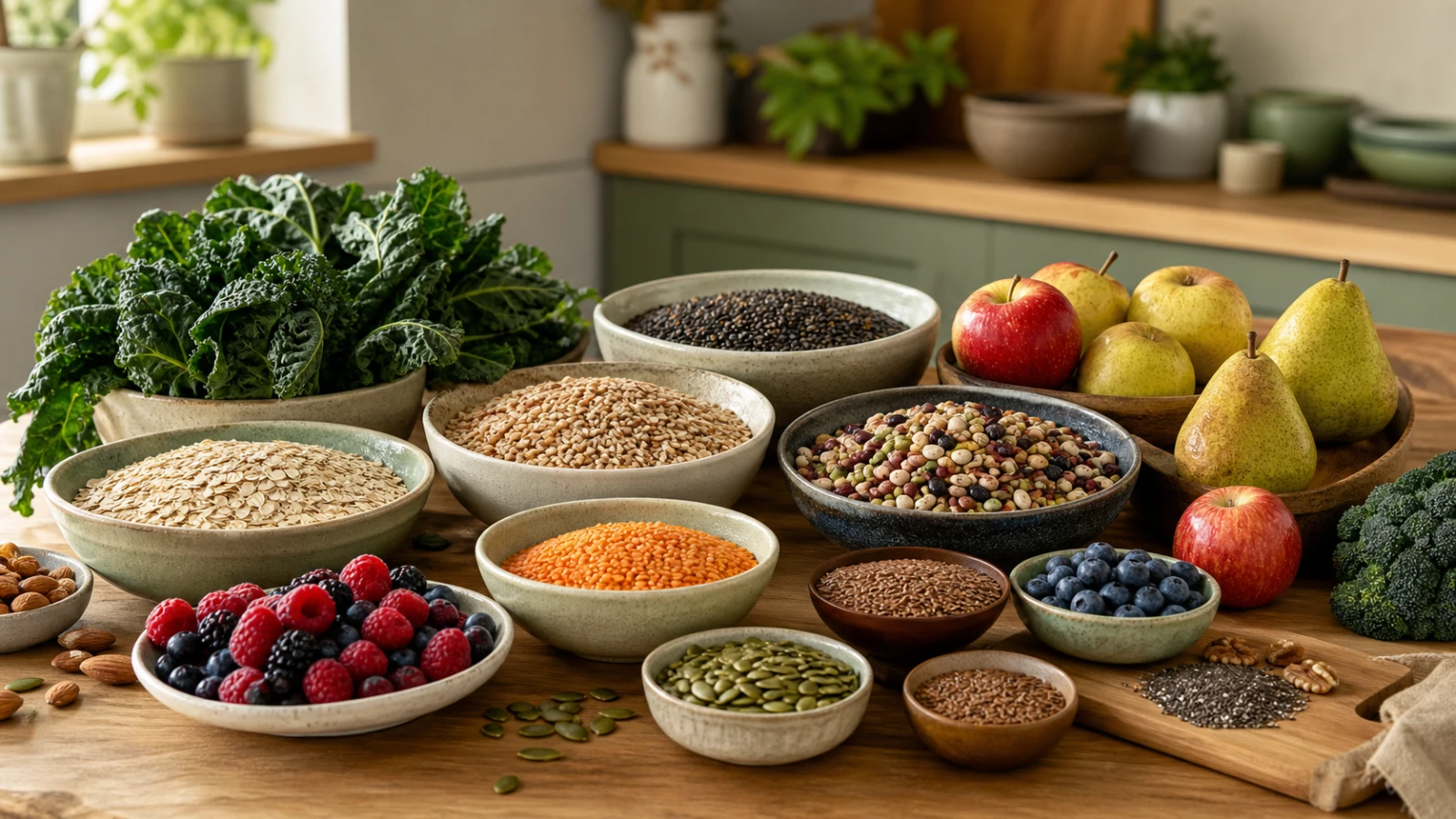
Dietary Fiber, the Gut, and Metabolic Health: A Short Guide to LDL, Post-Meal Glucose, Microbes, and Fullness
A short guide to dietary fiber, the gut, and metabolic health, covering how soluble and viscous fiber is linked to lower LDL cholesterol, gentler post-meal glucose, short-chain fatty acids from gut microbes, and greater fullness, with the population-level effect sizes, the limits, who should be careful, and how to start adding fiber gradually with water, while treating every number as guidance to adjust with a doctor or dietitian.
Read article
Caffeine and Health: What It Is, How Much Is Reasonable, and Who Should Be Careful
A short guide to caffeine and health, covering how caffeine works, where it hides, the amount often cited as reasonable for most healthy adults, why too much or too late disrupts sleep and causes jitteriness, who should have less or none, and how to start looking after yourself, while treating every number as guidance a doctor tailors to you.
Read article
Celiac Disease: What It Is, How It Is Diagnosed, Why You Must Be Tested Before Quitting Gluten, and How to Manage It
A short guide to celiac disease, covering what it is, what gluten does to the small intestine, how wide the symptoms can be, how it is diagnosed, why testing must happen while you are still eating gluten, and how to start looking after yourself.
Read articleVerifiable
References for this article
- 1 Salminen et al. 2021, Nat Rev Gastroenterol Hepatol (นิยาม postbiotics ISAPP) doi.org
- 2 Erny et al. 2015, Nature Neuroscience (SCFA กับ microglia) doi.org
- 3 Yano et al. 2015, Cell (serotonin ในลำไส้ และ Tph1) doi.org
- 4 Andresen et al. 2020, Lancet Gastroenterol Hepatol (B. bifidum MIMBb75 กับ IBS) doi.org
- 5 Nishida et al. 2019, Nutrients (L. gasseri CP2305 กับความเครียด) doi.org
Reviewed by Health Coach: A888