
Glaucoma: What It Is, Why It Is So Silent, How It Is Detected, and How It Is Managed
A short guide to glaucoma, covering what it is, why the most common form is so silent, which form is an emergency, who is at risk, how it is detected, and how to start looking after your eyes.
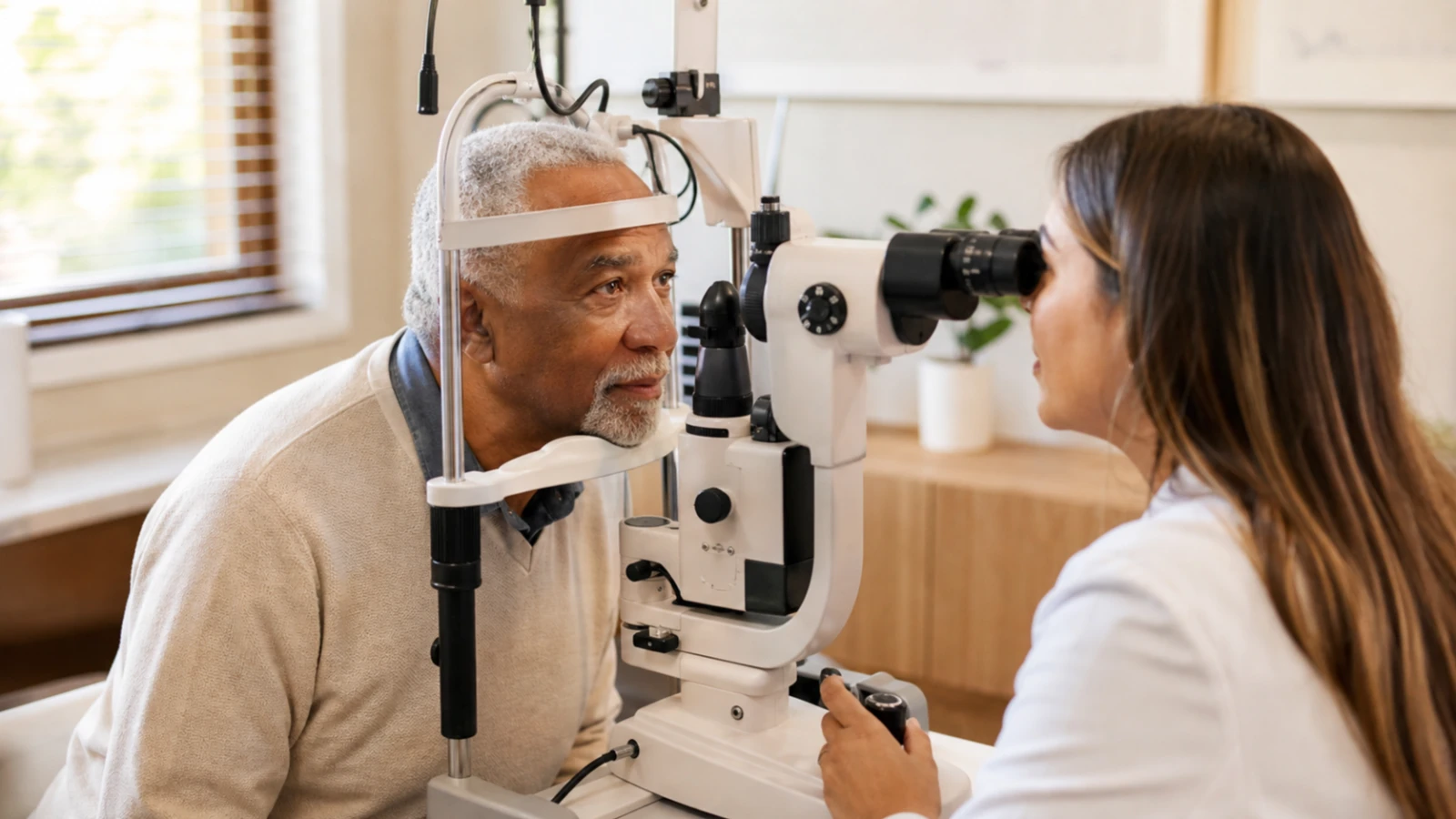
What You May Not Notice
Your eyes may feel completely fine. You see clearly, you read without trouble, you drive as you always have. Then one day an eye doctor tells you that you have glaucoma, and that part of your side vision is already gone, without your ever having noticed. This really happens, because the most common form of glaucoma usually gives no early warning.
Glaucoma is a group of eye diseases that damage the optic nerve, and it is a leading cause of irreversible vision loss. The reassuring news first: catching it early and managing it with an eye doctor can slow or stop further damage.
What Glaucoma Is
The optic nerve carries images from your eye to your brain. Glaucoma is a group of diseases that gradually damage this nerve, often linked to pressure inside the eye running higher than the optic nerve can tolerate. When the eye’s fluid drainage is impaired, pressure builds and slowly compresses the nerve. But glaucoma is not only about eye pressure: some people develop it even with normal pressure, so it is really about the overall health of the optic nerve.
Why the Most Common Form Is So Silent
The most common form, open-angle glaucoma, is gradual and painless. Early on it usually causes no symptoms, and what it erodes first is your side vision. Because the brain fills in the picture and central vision stays sharp, most people do not notice the loss until it is well advanced. This is the single biggest reason regular eye exams matter. And because a damaged optic nerve does not heal, vision lost to glaucoma cannot be recovered, so be wary of any claim to cure it completely or restore sight to what it once was.
The Form That Is an Emergency
Acute angle-closure glaucoma is the opposite of the open-angle type: dramatic and severe. The warning signs to memorize are a sudden painful red eye, blurred vision, halos of colored light around bright lights, headache, and sometimes nausea and vomiting. If these happen, get urgent care from an eye doctor or the emergency room right away. Do not wait it out or reach for over-the-counter eye drops.
Who Is at Risk, and How It Is Detected
Risk factors include older age, a family history of glaucoma, high intraocular pressure, certain ethnic backgrounds, diabetes, and high myopia. Because the common form gives no warning, detection depends on an eye exam by an eye doctor, usually including measuring eye pressure, examining the optic nerve, and a visual field test. These checks can find glaucoma while you still feel nothing, which is when care works best.
How It Is Managed
The core of care is lowering eye pressure to slow or prevent further optic nerve damage, aiming to preserve the vision you still have rather than restore what is gone. An eye doctor may use eye drops, laser treatment, or surgery depending on the type and severity, so it is their decision, not something to attempt on your own or self-dose. The most helpful thing you can do is use prescribed eye drops consistently and not stop on your own.
Start Today, One Step First
First, plan for regular eye exams with an eye doctor, especially over age 40 or if you have risk factors, because early detection protects vision the most. If you already use glaucoma drops, take them exactly as prescribed. Memorize the emergency symptoms of angle-closure glaucoma, and look after your overall health, including managing conditions like diabetes with your doctor.
This content is general information for health care, not advice that replaces seeing a doctor. Diagnosing and managing glaucoma should always be done together with an eye doctor.
This summary is for understanding, not medical advice, and should be reviewed by a professional before being applied in real life. The full version includes complete reasoning and research.


Summary complete
This was the key-points summary
Want to understand why, and the research behind it? Read the full version.
Read the full reasoning and researchRead next
More in this category

Weight Management and Obesity: A Short Guide to Regain, Behaviors, and Looking Beyond BMI
A short guide to weight management and obesity, covering why weight regain is common at the population level and not a personal failure, why to look beyond BMI to waist and body composition, which sustainable behaviors are linked to long term maintenance, who should be careful, when to see a doctor, and how to start, treating every number as population level knowledge rather than a personal target.
Read article
BPPV Vertigo: What It Is, How It Is Diagnosed, and How to Manage It
A short guide to BPPV, benign paroxysmal positional vertigo, the most common cause of vertigo. It covers what BPPV is, why a head movement can make the room spin, what the symptoms look like, how it is diagnosed and managed with clinician guided repositioning maneuvers, and the warning signs that call for urgent care.
Read article
Cataracts: What They Are, How to Spot Them, and How They Are Treated
A short guide to cataracts, covering what a cataract is, how to spot the symptoms, what raises the risk, how it is diagnosed, and why surgery is the only proven treatment, decided together with an eye doctor.
Read articleVerifiable
References for this article
- 1 Weinreb RN et al. The pathophysiology and treatment of glaucoma: a review (JAMA 2014, PMID 24825645) pubmed.ncbi.nlm.nih.gov
- 2 StatPearls (NCBI Bookshelf NBK538217): Glaucoma ncbi.nlm.nih.gov
- 3 National Eye Institute (NIH): Glaucoma nei.nih.gov
Reviewed by Health Coach: A888