
Gastritis: What It Is, What Really Causes It, and How to Manage It
A short guide to gastritis, covering what it is, why the main causes are usually H. pylori or NSAIDs rather than just stress and spicy food, how it is diagnosed and managed with a doctor, and the warning signs that need urgent care.

What You May Be Living With
After a meal you feel a burning or aching high in your upper abdomen, sometimes a heavy fullness, nausea, or feeling full after only a few bites. Many people lump this together as a stomach problem and assume it must be stress and spicy food, then reach for a pill when it flares. The real cause is often different from that assumption.
What Gastritis Is
Gastritis is inflammation of the lining of the stomach, which weakens the mucous layer that normally protects the wall from stomach acid. It comes in an acute form that often settles once the trigger is removed, and a chronic form that builds gradually and lingers.
What Really Causes It
Most gastritis that matters is not caused by stress or spicy food alone. There are two main causes. The first is infection with the bacterium H. pylori (Helicobacter pylori), a very common cause of chronic gastritis that many people carry without clear symptoms. The second is the NSAID painkillers, including aspirin, which reduce the protection of the stomach lining. Others include heavy alcohol use, severe illness, autoimmune gastritis, and bile reflux.
Like peptic ulcers, most significant gastritis is driven by H. pylori or NSAIDs rather than just stress and spicy food, so a cause should be sought. And long standing, untreated H. pylori gastritis is a recognized risk factor for stomach cancer, which is why it is worth diagnosing and treating rather than just masking the symptoms.
Symptoms, and How It Differs from a Peptic Ulcer
When present, symptoms include pain or burning in the upper abdomen (indigestion), nausea, fullness, or feeling full quickly, though some people have none, especially with the chronic form, and an eroded lining can sometimes bleed. Gastritis is related to peptic ulcers and often shares causes, but they are distinct: gastritis is inflammation of the lining, while an ulcer is a deeper break in it. Telling them apart requires a doctor.
How It Is Diagnosed and Managed
Finding the cause needs a doctor. A common approach is testing for H. pylori with a breath test, a stool test, or a biopsy during endoscopy, and sometimes an endoscopy with biopsy. Care focuses on treating the cause. If H. pylori is found, the 2017 ACG guideline recommends clearing it with a combination of antibiotics prescribed by a doctor, along with acid-reducing medicine. If NSAIDs are the cause, a doctor may stop or adjust them and add acid-reducing medicine to let the lining heal. These medicines are prescribed by a doctor. Do not take leftover antibiotics on your own, as that can make bacteria resistant. Cutting back on alcohol and avoiding unnecessary NSAIDs also helps.
Warning Signs That Need Urgent Care
Seek urgent medical care right away if you have signs of bleeding in the digestive tract: black, tarry stools, vomiting blood or material that looks like coffee grounds, severe abdominal pain, or faintness. Do not wait to see how it goes.
How to Start
See a doctor for persistent or recurring upper-abdominal discomfort, ask about H. pylori testing, be cautious with regular NSAID use and tell your doctor what you take, limit alcohol, and do not ignore the bleeding warning signs above.
This content is general information for health care, not advice that replaces seeing a doctor. Diagnosing and treating gastritis should always be done together with a doctor.
This summary is for understanding, not medical advice, and should be reviewed by a professional before being applied in real life. The full version includes complete reasoning and research.

Summary complete
This was the key-points summary
Want to understand why, and the research behind it? Read the full version.
Read the full reasoning and researchRead next
More in this category
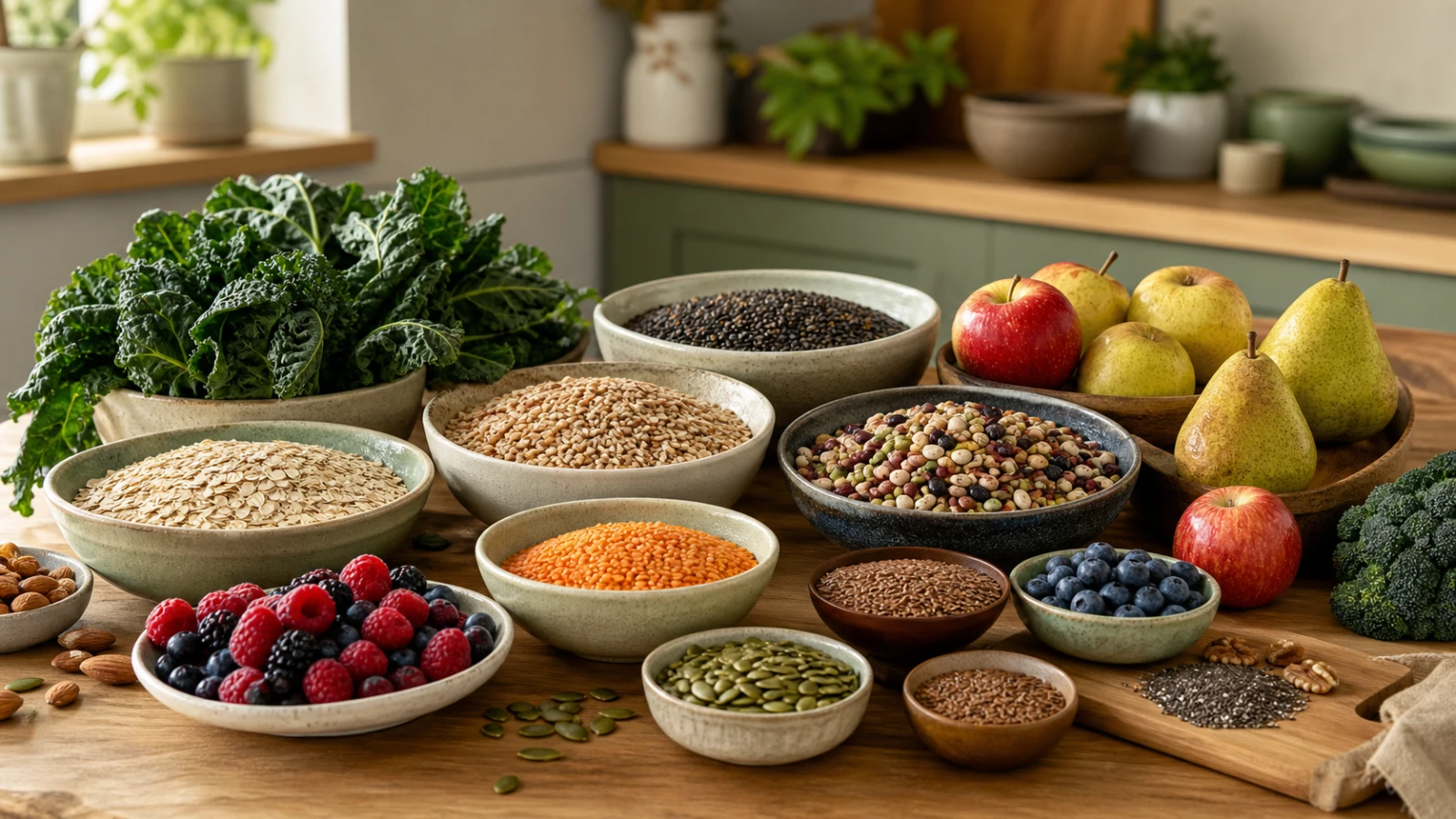
Dietary Fiber, the Gut, and Metabolic Health: A Short Guide to LDL, Post-Meal Glucose, Microbes, and Fullness
A short guide to dietary fiber, the gut, and metabolic health, covering how soluble and viscous fiber is linked to lower LDL cholesterol, gentler post-meal glucose, short-chain fatty acids from gut microbes, and greater fullness, with the population-level effect sizes, the limits, who should be careful, and how to start adding fiber gradually with water, while treating every number as guidance to adjust with a doctor or dietitian.
Read article
Caffeine and Health: What It Is, How Much Is Reasonable, and Who Should Be Careful
A short guide to caffeine and health, covering how caffeine works, where it hides, the amount often cited as reasonable for most healthy adults, why too much or too late disrupts sleep and causes jitteriness, who should have less or none, and how to start looking after yourself, while treating every number as guidance a doctor tailors to you.
Read article
Celiac Disease: What It Is, How It Is Diagnosed, Why You Must Be Tested Before Quitting Gluten, and How to Manage It
A short guide to celiac disease, covering what it is, what gluten does to the small intestine, how wide the symptoms can be, how it is diagnosed, why testing must happen while you are still eating gluten, and how to start looking after yourself.
Read articleVerifiable
References for this article
- 1 Chey WD et al. ACG Clinical Guideline: Treatment of Helicobacter pylori Infection (Am J Gastroenterol 2017, PMID 28071659) pubmed.ncbi.nlm.nih.gov
- 2 StatPearls (NCBI Bookshelf NBK544250): Gastritis ncbi.nlm.nih.gov
Reviewed by Health Coach: A888