
Dry Eye Disease: Why Your Eyes Feel Gritty and Burn After Screens, and Sometimes Water Too
Dry eye disease is extremely common in an age when we use our eyes on screens almost all day. It comes from too few tears or poor quality tears that evaporate too fast. This article explains what dry eye really is, what it feels like, what triggers it, how it is diagnosed, and how it can genuinely be managed alongside an eye doctor.

At the end of a day spent staring at a screen, your eyes feel gritty, as if there were tiny grains of sand in them. They burn, they look red, and your vision blurs in spells that clear again when you blink hard. Stranger still, some people find their eyes water on their own, no crying involved, even though the eyes feel dry. These can all be signs of dry eye disease, which is remarkably common now that so many of us use our eyes on screens for most of the day.
Dry eye disease is a condition where the surface of the eye does not stay adequately lubricated. This article walks you through it one layer at a time: what dry eye really is, why some people have too few tears while others have tears that evaporate too fast, what it feels like, what triggers it, how it is diagnosed, and what you can start doing for yourself today. The reassuring news first: most dry eye can be improved, and understanding how it works is the first step that makes that care land where it should.
What Dry Eye Is, and Why It Is Not Just Too Few Tears
Many people assume dry eye simply means not enough tears. The reality is more layered than that. The surface of your eye is coated by a thin tear film that is not only water. It has an outer oil layer that slows evaporation, a watery middle layer, and a mucus layer that helps the tears cling to the eye surface. All three have to work together for the surface to stay moist and comfortable.
The international TFOS DEWS II framework describes dry eye as a condition of the eye surface driven by a loss of balance in the tear film, and it is multifactorial by nature. Two main mechanisms tend to appear, often together. The first is too few tears, where the glands do not make enough. The second is tears that evaporate too fast, which is very common and usually linked to a problem with the oil glands along the eyelid margins, known as the meibomian glands. When those glands work poorly, the oil layer that should coat the tears is deficient, so tears evaporate quickly and the eye feels dry even when the amount of tears is normal.
Understanding that dry eye is not just one thing helps explain why care has to address the underlying cause, not only add moisture with artificial tears.
What It Feels Like, Including the Watering That Confuses People
The symptoms of dry eye are more varied than many expect. Common ones include a gritty feeling as if something were in the eye, burning, stinging, redness, and vision that blurs in spells, especially while reading or looking at a screen for a long time. That fluctuating blur often clears briefly when you blink, because blinking spreads a fresh layer of tears across the eye surface. Many people also become more sensitive to light.
Here is the part that confuses people: dry eye can actually make the eyes water. It sounds contradictory, but there is a reason. When the surface is dry and irritated, the body triggers the tear glands to release a burst of tears to compensate, known as reflex tearing. But that burst comes suddenly and does not coat the surface evenly, so the eye stays dry even while it waters. For this reason, watery eyes do not rule out dry eye at all.
What Causes Dry Eye: Risk Factors and Triggers
Dry eye usually comes from several factors adding up. Common ones include:
- Aging: as we get older, tear production and tear quality tend to decline, so dry eye becomes more common with age.
- Screen use: when we stare at screens, we blink less often and less fully, which lets tears evaporate and the surface dry out.
- Contact lenses: these can disturb the tear film and add irritation.
- Environment: dry air, air conditioning, strong wind, or a fan blowing straight at the face all speed up tear evaporation.
- Certain medicines: some medications can reduce tear production as a side effect.
- Certain conditions: such as Sjogren syndrome, an immune condition that affects the glands making tears and saliva.
- Sex and life stage: dry eye is more common in women and in people who are post-menopausal, thought to be related to hormonal changes.
Many of these overlap. Someone who sits in front of a screen in an air-conditioned office all day while wearing contact lenses has several triggers at once.
How Dry Eye Is Diagnosed
Diagnosing dry eye should be done by an eye doctor or eye care specialist through a history of your symptoms and an eye exam. The international TFOS DEWS II framework sets up an assessment that looks at both the symptoms you feel and the signs found on exam, such as the quality and stability of the tear film, the amount of tears, and the state of the eye surface and eyelid margins, in order to tell whether it is the too-few-tears type, the fast-evaporation type, or both together.
Importantly, redness, irritation, or blurred vision do not always come from dry eye. Other conditions can cause similar symptoms, so a medical exam helps separate them out and makes care land where it should. This is why concluding on your own that it is dry eye, from an internet symptom search alone, is not enough.
How It Can Be Managed, Starting with Environment and Habits
Managing dry eye usually starts with adjusting your environment and habits first, because that works directly on the triggers and can be done in daily life.
Habits and environment. Give your eyes regular breaks from the screen. Try the 20-20-20 habit: every 20 minutes, look at something about 20 feet away for around 20 seconds, and make a point of blinking fully. Set your screen slightly below eye level so the eyelids cover more of the eye, and avoid air from an air conditioner or fan blowing straight at your face.
Artificial tears. Artificial tears add moisture and ease symptoms. For people who need to use them frequently, preservative-free versions are often recommended, because preservatives in some formulas can irritate the eye surface with frequent use.
Eyelid care. In people whose dry eye comes from oil-gland problems along the eyelid margins, warm compresses and gentle eyelid cleaning may help the oil glands work better, and are best done following a doctor’s guidance.
Medical options. If symptoms are more significant or do not improve with initial care, an eye doctor may consider anti-inflammatory prescription eye drops or other in-office procedures. Choosing prescription eye drops and doing procedures are decisions made by an eye doctor, depending on the type and severity of dry eye in each person. Do not use prescription eye drops on your own.
A point of caution: dry eye can make your eyes water, and redness-removing drops are not a treatment for dry eye.
Many people assume that watery eyes mean it cannot be dry eye, but dry eye can actually trigger reflex tearing, so watering does not rule it out. Another point to watch is redness-removing eye drops, the vasoconstrictor type that shrinks blood vessels. Using them frequently can make irritation worse over time, and they are not a treatment for dry eye. Sources: TFOS DEWS II (PMID 28736335), StatPearls.
When to See an Eye Doctor
Mild dry eye often improves with habit changes and artificial tears, but you should see an eye doctor if you notice these signs:
- Symptoms that do not improve, or get worse, despite initial care and artificial tears.
- Eye pain, marked redness, or a constant feeling that something is stuck in the eye.
- A change in vision, blurring that does not clear when you blink, or vision that keeps getting worse.
- Dry eye alongside other body symptoms, such as chronic dry mouth or a known immune condition.
Eye pain, significant redness, or a change in vision are things for an eye doctor to examine, not just a reason to keep adding more drops, because something else may be going on underneath.
What you can start doing today, while you look after yourself and wait for an appointment, is to take screen breaks with the 20-20-20 habit and blink fully while using screens, adjust your screen height and the direction of air from an air conditioner or fan so it does not blow at your face, try preservative-free artificial tears if you need to use them often, stay well hydrated, and see an eye doctor when symptoms persist or interfere with daily life. These small steps work directly on the triggers of dry eye and help your eyes feel more comfortable day to day.
This content is general information for health care, not advice that replaces seeing a doctor. Diagnosing and managing dry eye, including any decision about prescription eye drops and procedures, should always be done together with a human eye doctor or specialist.


Read next
More in this category

Weight Management and Obesity: A Short Guide to Regain, Behaviors, and Looking Beyond BMI
A short guide to weight management and obesity, covering why weight regain is common at the population level and not a personal failure, why to look beyond BMI to waist and body composition, which sustainable behaviors are linked to long term maintenance, who should be careful, when to see a doctor, and how to start, treating every number as population level knowledge rather than a personal target.
Read article
BPPV Vertigo: What It Is, How It Is Diagnosed, and How to Manage It
A short guide to BPPV, benign paroxysmal positional vertigo, the most common cause of vertigo. It covers what BPPV is, why a head movement can make the room spin, what the symptoms look like, how it is diagnosed and managed with clinician guided repositioning maneuvers, and the warning signs that call for urgent care.
Read article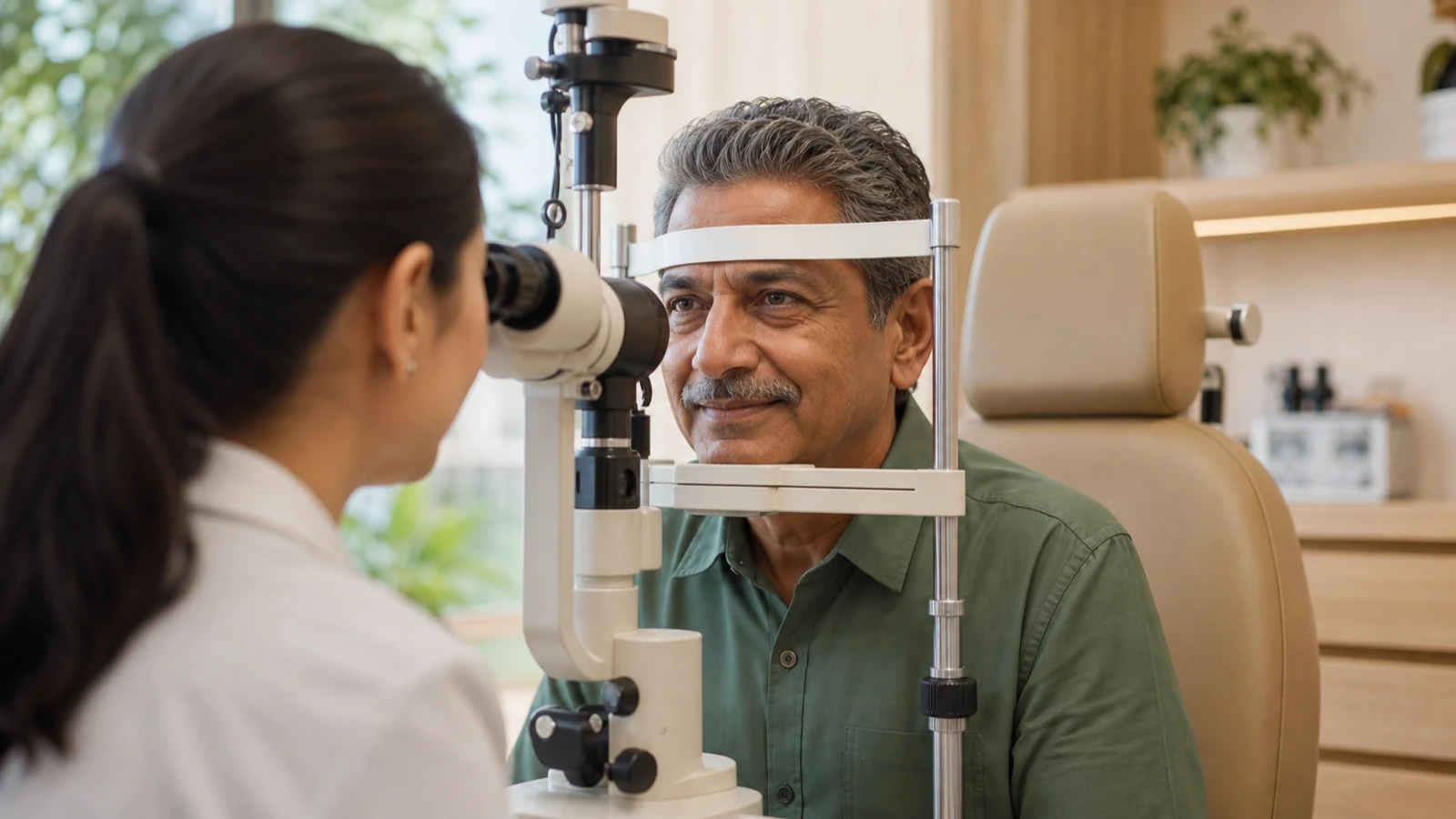
Cataracts: What They Are, How to Spot Them, and How They Are Treated
A short guide to cataracts, covering what a cataract is, how to spot the symptoms, what raises the risk, how it is diagnosed, and why surgery is the only proven treatment, decided together with an eye doctor.
Read articleVerifiable
References for this article
- 1 Craig JP et al. TFOS DEWS II Definition and Classification Report (The Ocular Surface 2017, PMID 28736335) pubmed.ncbi.nlm.nih.gov
- 2 StatPearls (NCBI Bookshelf NBK470411): Dry Eye Syndrome ncbi.nlm.nih.gov
- 3 National Eye Institute (NIH): Dry Eye nei.nih.gov
Reviewed by Health Coach: A888