
Creatine Beyond Muscle: A Short Summary on Kidneys, Hair Loss, and the Brain
A concise version of the creatine article, summarizing its effects on muscle, the brain, and older adults, and the truth about kidney and hair-loss fears the evidence does not support
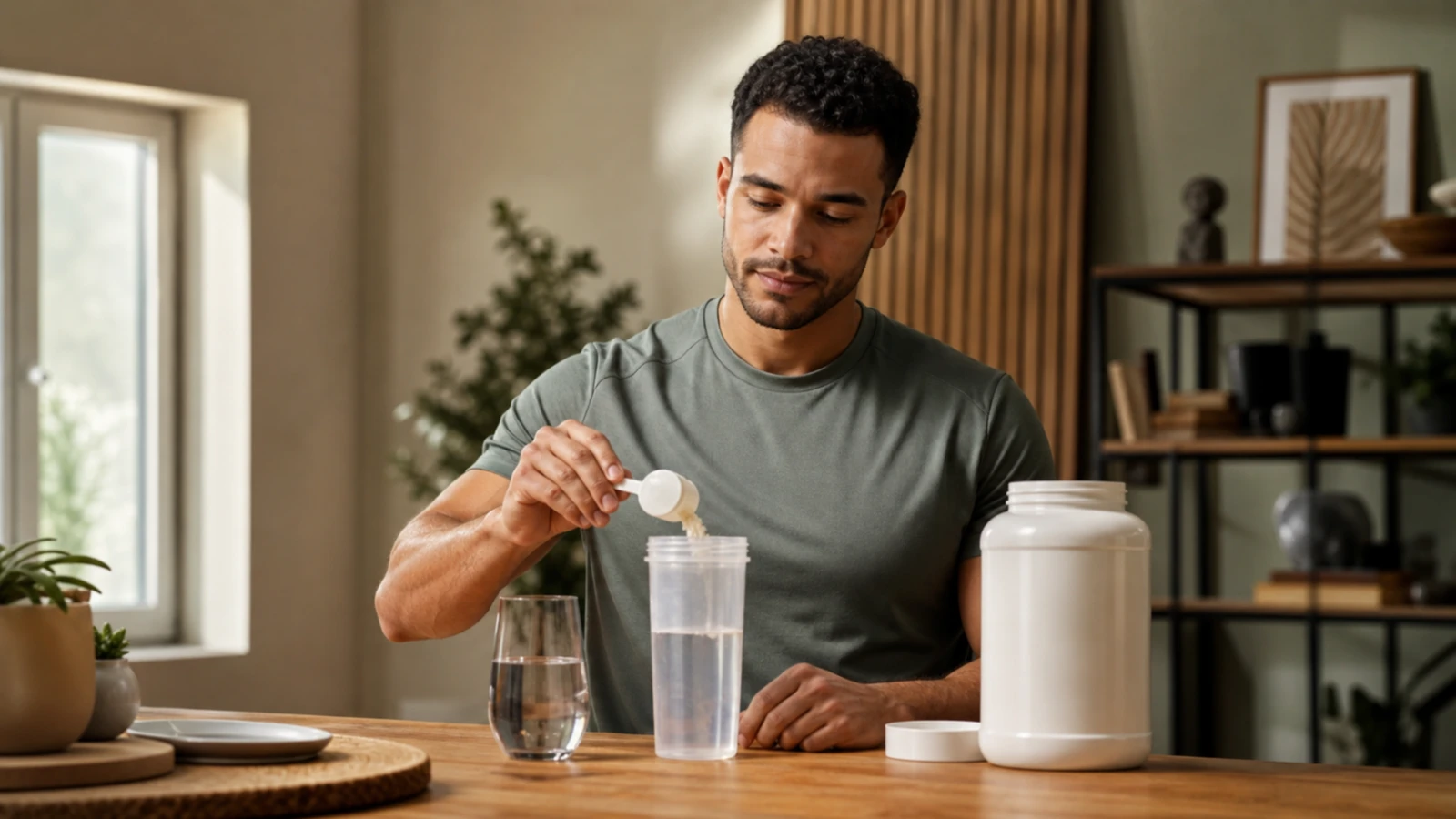
What You May Be Facing
Picture the day you get up from a chair and feel your legs are not as strong as they were, and carrying groceries into the house tires you faster than before. When you think about going back to lifting or exercising seriously, someone drops a word on you: creatine.
Then the voices in your head come fast. Is that not a bodybuilder thing? Will it wreck my kidneys? Will my hair fall out? And if I do not even want to get big, I just do not want to lose muscle at an age when it goes easily, do I still need it?
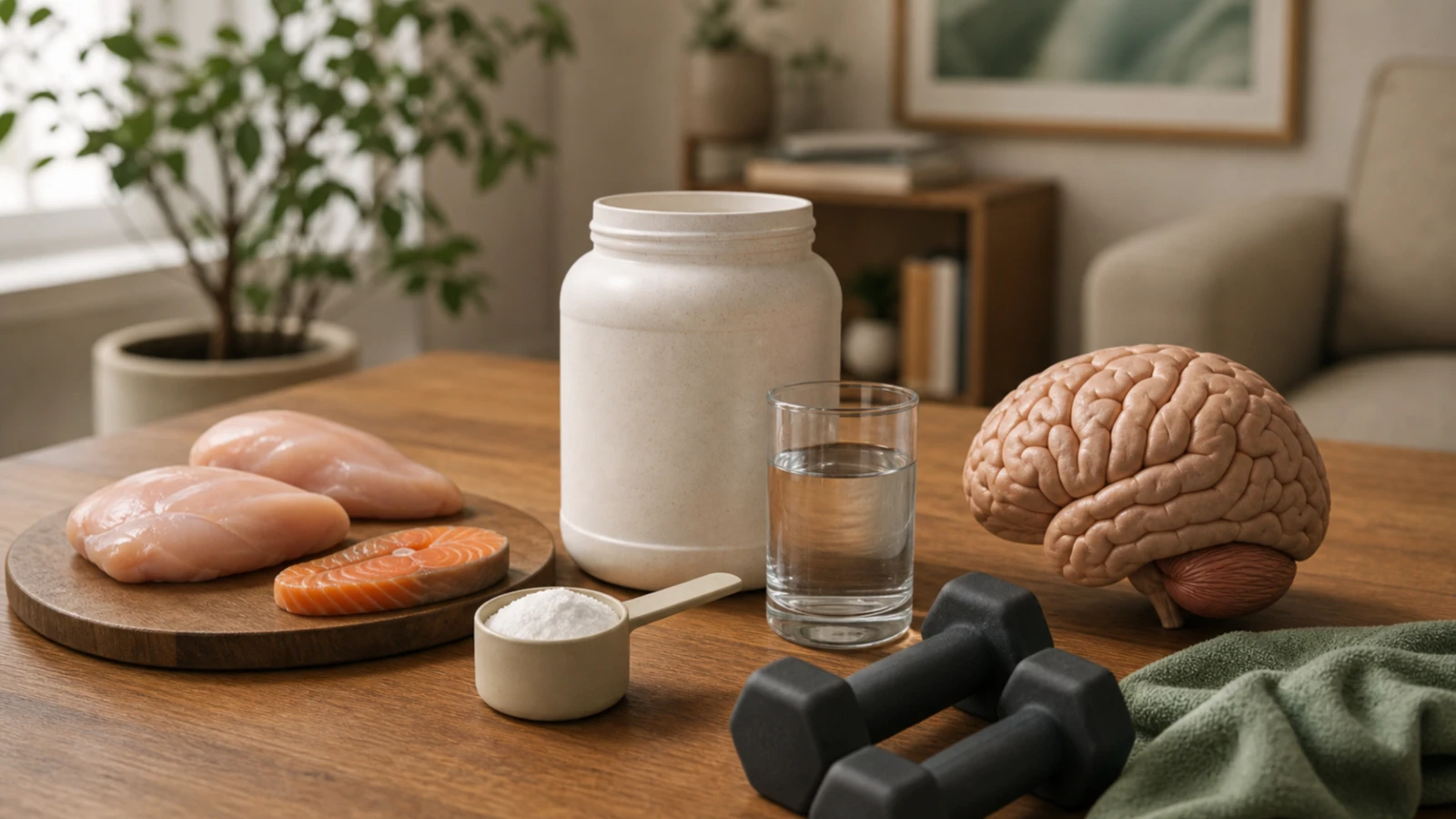
Let me tell you straight. Creatine is not a magic powder that changes your life, and most of the scary warnings passed around have no evidence behind them. Picture it as a small backup battery your body uses for cells that need fast energy, both muscle and brain. Your body makes some of it on its own, it is in meat, and supplementing just fills this store up more.
What People Believe, and What the Evidence Says
The strongest evidence is still the old one: muscle, strength, and lifting. Creatine monohydrate, the basic form with the most research, at 3 to 5 grams a day, builds strength and muscle mass when you lift, and it is one of the most heavily backed and safest supplements there is.
If you want to fill the store fast, there is a rapid way: 20 to 25 grams a day for about 5 to 7 days, then drop to 3 to 5 grams. But most people can skip that step. The other way is 3 to 5 grams a day from the start, taking it slow, which is easier on your stomach, and you end up at nearly the same destination.
On safety, the position of the International Society of Sports Nutrition states that both short-term and long-term use, up to 30 grams a day for as long as 5 years, is safe in healthy people from children to older adults. The only consistently seen side effect is a small weight gain, which is water moving into the muscle cells, not added fat, so you can start with an easy mind.
On the brain, let us be honest: the effect is real but not clear for everyone. In generally healthy people, the effect on thinking and memory is still small and inconsistent. A 2024 pooled analysis found a moderate effect on memory but no effect on executive thinking, so the European food safety authority in 2024 judged the evidence for helping the brain in healthy people to be weak. Do not expect it to fire up your head every day.
The clearest point is when the brain is pushed hard, like during sleep loss. A 2024 study gave a single dose of creatine during sleep deprivation and found processing speed improved by 24 to 29 percent compared with placebo. On depression, a 2012 study gave 52 women with depression 5 grams of creatine a day together with escitalopram, an antidepressant, and found depression scores improving from week 2. ⚠️ The caveat is that this study was done in women only and alongside medication, so it is not yet known whether men respond the same way, and it cannot replace depression treatment on its own.
Older Adults, Bones, and Women
For older adults, creatine only shows its effect when it goes with lifting. A pooled analysis found that creatine plus resistance training added lean muscle mass better than lifting alone, by around 1.4 kilograms, but creatine on its own in older adults who do not exercise gives almost nothing. Think of it simply as a helper for training that always has to come with effort.
On bones, a study in postmenopausal women who took creatine alongside exercise for 2 years found improved femoral neck bone structure, but bone density did not rise, and density is the more important marker for fracture risk, so you still cannot conclude it lowers fractures. There is a good signal, but not yet a guarantee.
⚠️ Another caveat is that women are still a badly under-researched group, especially near menopause where there is almost no work at all. If you are a woman and want to try it, start it alongside resistance training.
Fears About Kidneys, Hair Loss, and Cramps
On kidneys, more than 25 review articles in healthy people found no kidney decline. The rise in blood creatinine after you start reflects more creatine cycling through, not kidney damage, because the kidney filtration rate does not change. ⚠️ But if you already have kidney disease, consult a doctor first, because this work was done in people with healthy kidneys, and if you get a blood test, tell your doctor you are taking creatine.
On hair loss, this fear comes from a single 2009 study in 20 rugby players that found DHT hormone rising. The key point is that the study only measured the hormone, not hair loss at all, and no one has ever replicated it. The 2021 review still concluded there is no change in testosterone or DHT. The jump from one hormone to a conclusion that hair will fall out has no evidence to back it.
On cramps and dehydration, many review articles found no sign that creatine raises cramps or disturbs temperature control. The easy picture is that creatine carries water into the muscle cells, it does not pull water out of your body. What you can do is drink enough water as usual, and that is enough.
Start Tomorrow, One Step First
If you already lift and want to keep muscle at an age when it goes easily, creatine monohydrate at 3 to 5 grams a day is the option with the most evidence and the lowest cost. Take it at any time of day, no need to rush a loading dose, and remember creatine works alongside your exercise, it does not replace it.
As for fancy, pricey forms like HCl or buffered, there is still no evidence they beat the monohydrate with 25 years of confirmation behind it, so you save money by choosing the basic form.
Tomorrow, if you really want to start, do just two things. One, pick plain creatine monohydrate. Two, take 3 to 5 grams on a day you lift or a day that suits you, then get back to doing the basic effort movements consistently. That alone is a small step that cares for your muscle over the long run.
This summary is for understanding, not medical advice, and should be reviewed by a qualified professional before being applied in practice. The full version contains the complete rationale and research
Summary complete
This was the key-points summary
Want to understand why, and the research behind it? Read the full version.
Read the full reasoning and researchRead next
More in this category
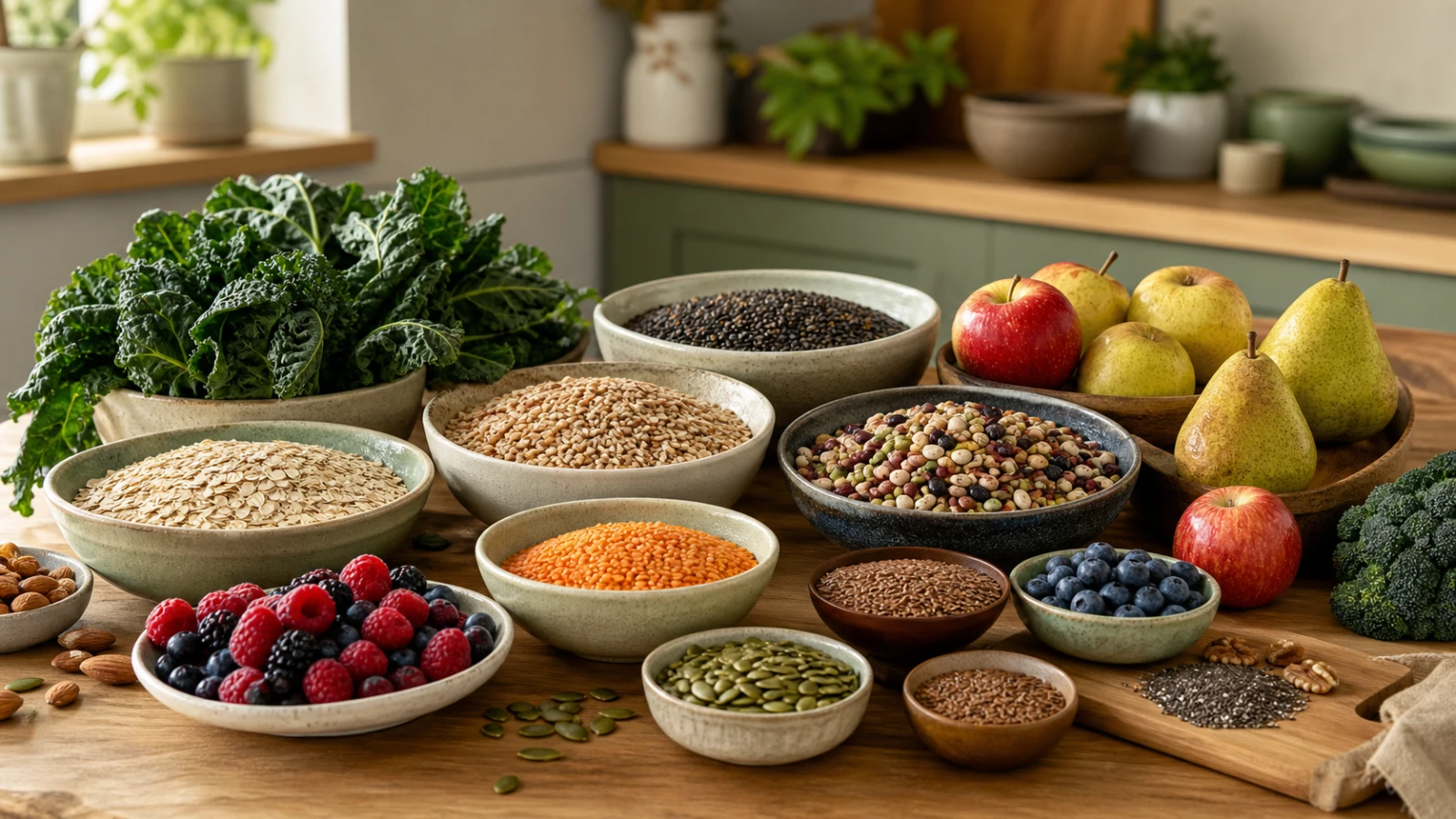
Dietary Fiber, the Gut, and Metabolic Health: A Short Guide to LDL, Post-Meal Glucose, Microbes, and Fullness
A short guide to dietary fiber, the gut, and metabolic health, covering how soluble and viscous fiber is linked to lower LDL cholesterol, gentler post-meal glucose, short-chain fatty acids from gut microbes, and greater fullness, with the population-level effect sizes, the limits, who should be careful, and how to start adding fiber gradually with water, while treating every number as guidance to adjust with a doctor or dietitian.
Read article
Caffeine and Health: What It Is, How Much Is Reasonable, and Who Should Be Careful
A short guide to caffeine and health, covering how caffeine works, where it hides, the amount often cited as reasonable for most healthy adults, why too much or too late disrupts sleep and causes jitteriness, who should have less or none, and how to start looking after yourself, while treating every number as guidance a doctor tailors to you.
Read article
Celiac Disease: What It Is, How It Is Diagnosed, Why You Must Be Tested Before Quitting Gluten, and How to Manage It
A short guide to celiac disease, covering what it is, what gluten does to the small intestine, how wide the symptoms can be, how it is diagnosed, why testing must happen while you are still eating gluten, and how to start looking after yourself.
Read articleVerifiable
References for this article
- 1 ISSN position stand on creatine - Kreider et al., J Int Soc Sports Nutr (2017, PMID 28615996) pubmed.ncbi.nlm.nih.gov
- 2 Common questions & misconceptions about creatine supplementation (review) - Antonio et al., J Int Soc Sports Nutr (2021, PMID 33557850) pubmed.ncbi.nlm.nih.gov
- 3 Creatine and cognition during sleep deprivation - Scientific Reports (2024, PMID 38418482) pubmed.ncbi.nlm.nih.gov
- 4 Creatine as adjunct in depression - Lyoo et al. (2012, PMID 22864465) pubmed.ncbi.nlm.nih.gov
Reviewed by Health Coach: A888