
HRV on Watches and Rings: How to Understand Sleep and Recovery Data
Learn how to read HRV, deep sleep, and recovery numbers on wearables, what those numbers come from, where normal ranges sit, and where they are still not diagnostic tools, for adults 40+
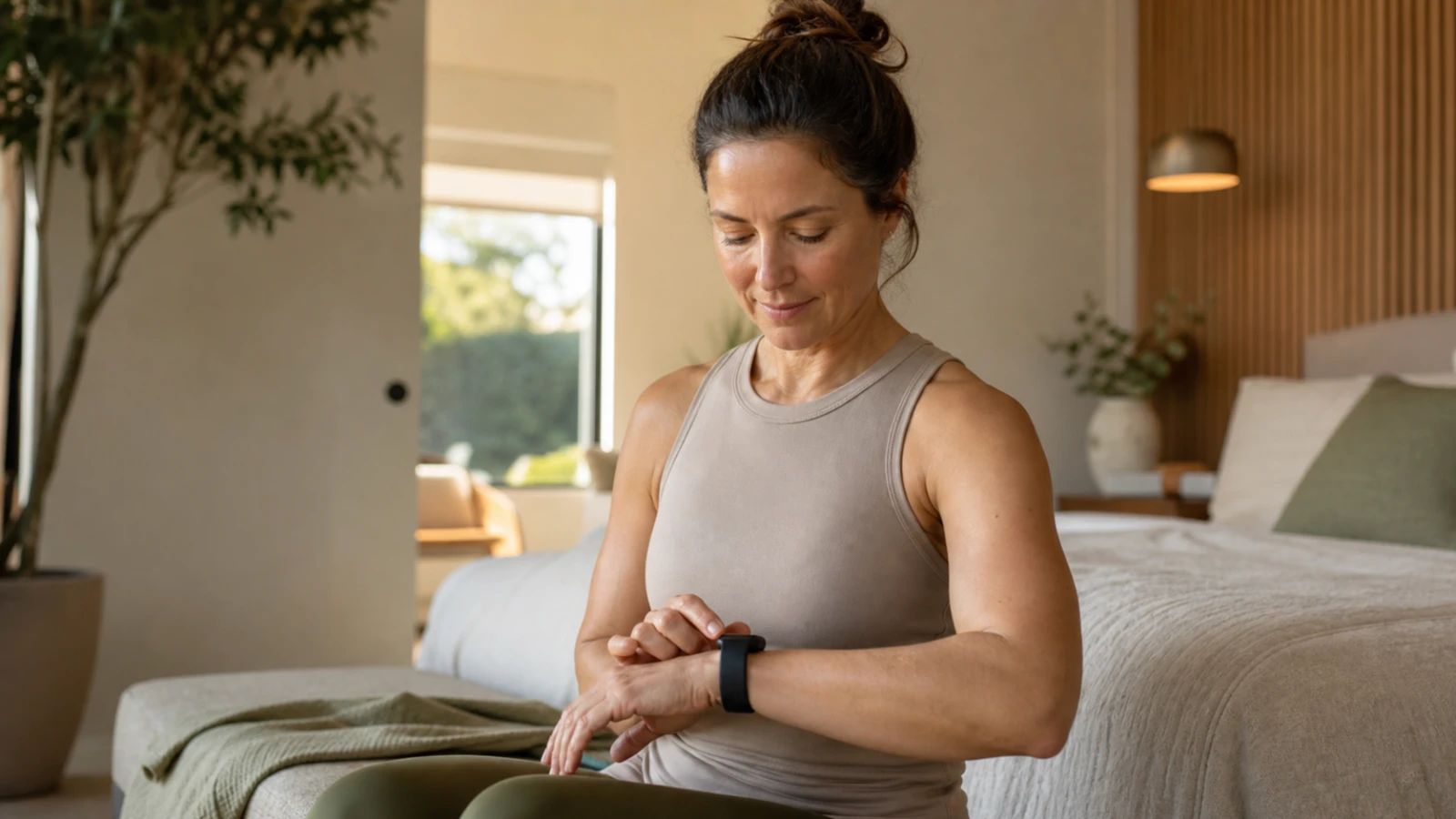
One morning, you wake up and check the ring or watch on your wrist. It says that last night your HRV dropped from 55 to 38, deep sleep was only 40 minutes, and your recovery score is red, even though you feel as if you slept through the night. If you are over 40, the question in your mind is this: do these numbers mean your body is really doing poorly, or are they just data from a gadget that you do not need to care about?
The deeper goal behind a good-looking number is having enough energy to work, recovering in time for the next day, and taking care of your body so it can keep going for many more decades. Learning how to read the numbers on your watch helps you listen to your body more clearly, without becoming overly alarmed and without believing the device too much.
Before we begin, let us set one principle clearly. Wearables such as Apple Watch, Oura, and Whoop are consumer devices for tracking health trends. They are not tools for diagnosing disease. The values they show are signals to monitor. If they stay abnormal over time, that is a signal to see a doctor, not a diagnosis by itself.
What HRV Is, and How Watches Measure It
HRV (Heart Rate Variability) is the variability in the time interval between each heartbeat, measured in milliseconds
The human heart does not beat exactly like a metronome. In healthy people, the spacing between beats stretches and shortens slightly all the time. This flexibility is HRV. The more flexible it is, the better, because it means the nervous system can adapt smoothly.
The standard tool in hospitals uses ECG to capture the heart’s electrical activity directly. Wearables use a technique called PPG, which shines light through the skin and measures blood flow at the wrist or finger. Research comparing PPG with ECG has found that the values are highly consistent, so they can be used interchangeably in a consumer context. This is why rings or watches that cost from a few thousand to tens of thousands can measure HRV close to lab-grade equipment.
The index that almost every watch brand chooses to use is RMSSD, because it can be measured over a short period and reflects the resting side of the nervous system well. There is a technical caution here, which we will discuss in the next section.
Why HRV Rises or Falls: The Autonomic Nervous System Behind It
The body has two sides of the autonomic nervous system constantly balancing each other. One side accelerates, and the other side relaxes. HRV is a mirror reflecting which side is leading right now.
| Side | When it works | Effect on HRV |
|---|---|---|
| Sympathetic (accelerating) | Stress, exertion, alertness | HRV decreases |
| Parasympathetic (relaxing, through the vagus nerve) | Rest, recovery, repair | HRV increases |
High HRV therefore means the resting side is leading and the body is in self-repair mode. Low HRV means the accelerating side is leading and the body is still alert or stressed. In the morning after a good night’s sleep with nothing disturbing you, the value is often higher. In the morning after a night of drinking, staying up late, or being sick, it often drops.
There is one point where research has refined our understanding. Some components of HRV were once believed to reflect only the accelerating side, but in reality they are a mixture of both sides. Still, the broad principle that higher HRV means the resting side is leading remains correct and useful for reading daily values.
Where Normal HRV Sits, and Why You Should Not Compare It With Other People
A database of several hundred thousand Whoop users gives a rough picture of average values by age and sex.
| Group | HRV value (approximate RMSSD, ms) |
|---|---|
| Average male | 65 |
| Average female | 62 |
| Age 20-25 years | 55-105 |
| Age 45 years | 35-60 (average around 48) |
| Age 60-65 years | 25-45 |
HRV naturally declines with age, starting in the late 20s. So if you are 45 and see your value somewhere around the 40s, that is within a commonly seen range. It is not automatically alarming.
The most important principle in reading HRV is that your own trend matters more than comparison with other people. HRV is highly individual. A value of 40 may be perfectly normal for one person, while 40 may be unusually low for another. Looking at whether your own baseline is moving up or down over weeks or months is therefore more meaningful than the raw number for a single day. Do not compare your number with friends in a group chat and become anxious.
There is a limitation to know here. A review of 57 studies concluded that there is still no universally accepted standard normal HRV value, because measurement duration, the type of metric used, and different devices all produce different numbers. The table above should therefore be used as a rough reference frame, not a standard for judging your health.
What Chronically Low HRV Says About Long-Term Health
Persistently low HRV, meaning low for weeks or months, not a temporary drop after hard exercise or one short night of sleep, is linked to the risk of several diseases. This has been supported by large meta-analyses and studies that followed large groups of people over time.
- Heart disease Low HRV is associated with stroke, sudden cardiac death, and death after myocardial infarction
- High blood pressure The Framingham Heart Study, which followed more than 2,000 people, found that low HRV was associated with developing high blood pressure later, especially in men
- Type 2 diabetes Patients have clearly lower HRV than the general population
- Depression Low HRV is a marker found in people with depression, and depression itself also increases the risk of cardiac death
- All-cause mortality A meta-analysis of 32 studies involving more than 38,000 people found that low HRV predicted mortality across all ages, sexes, and continents
At this point, do not become anxious about this morning’s number. These associations are about chronically low HRV at the population level. They are not individual diagnoses. Clinical HRV measurement itself still does not have one single standard, and some studies have found that when other variables are adjusted for, HRV’s predictive value decreases. A watch value is therefore a signal for monitoring and self-care. If your value stays unusually low along with other symptoms, such as getting tired easily, palpitations, or chronic insomnia, that is a sign to get checked by a doctor, not to let the watch decide for you.
Why Your HRV Drops: 5 Main Causes
Every cause below has a physiological mechanism supported by research. Once you know the causes, you can read your own drops with more understanding and know what to adjust.
- Stress causes the body to release cortisol and adrenaline, which temporarily suppress vagus nerve function. HRV therefore drops. On nights when your head cannot stop thinking about work, the value often falls
- Exercising too hard without enough recovery After heavy exertion, HRV drops and needs at least 48 hours to return. If it does not return, that is a signal that you are overtraining and not resting enough
- Not enough sleep Meta-analyses have found that sleep deprivation suppresses HRV and disrupts autonomic balance. After a night of sleeping 4-5 hours, the morning value often drops
- Alcohol suppresses the resting side and stimulates the accelerating side, keeping HRV suppressed for 24-48 hours after moderate to heavy drinking. This is why the morning after social drinking often shows red, even after alcohol has left the bloodstream
- Inflammation or infection Vagal tone and inflammation in the body have a two-way relationship: low HRV increases inflammation, and inflammation further suppresses HRV. Sometimes the value drops before you realize you are about to become unwell
Deep Sleep and Reading Sleep Staging
Before entering this section, let us be direct. The sleep content and device-accuracy content below rely on consensus sources such as Cleveland Clinic and Sleep Foundation, which are credible, but they have not yet been cross-checked against 2 independent sources to the same degree as the HRV content above. Use them for basic understanding, and they are more appropriate for tracking trends than for relying on nightly numbers.
One sleep cycle lasts about 90-110 minutes and repeats several times per night. It is divided into 4 stages.
| Stage | Approximate proportion | What happens |
|---|---|---|
| N1 | Around 5% | Drowsy sleep, transition phase |
| N2 | Around 50% | Light sleep |
| N3 (deep sleep) | 13-25% | Deep sleep, the body releases growth hormone |
| REM | 20-25% | Dreaming, memory consolidation |
Deep sleep at around 13-25% of total sleep time equals about 60-120 minutes per night for someone who sleeps 7-9 hours. This stage is important because the body releases the most growth hormone of the day to repair muscles and bones, and the brain clears out waste. For people 40+, whose deep sleep already declines with age, seeing this number low is not unusual. Look at whether it has dropped abnormally from your own baseline.
Some people sleep enough hours but wake up unrefreshed. This is called non-restorative sleep. It can have many causes, such as the nervous system still being too activated, brief micro-awakenings from sleep apnea, alcohol suppressing deep sleep, and a room that is too hot, preventing core body temperature from dropping in rhythm with sleep. If you wake up exhausted every morning despite getting enough sleep, you should talk with a doctor about sleep quality.
Accuracy of Rings and Watches: Watch Trends, Do Not Cling to Nightly Numbers
This section is also in the group of consensus content that has not yet been cross-checked against 2 sources in the original draft. Use it to understand the limits of the devices.
Newer Oura Ring models combine several types of data, including movement, blood flow, skin temperature, and breathing. The reported accuracy figure is about 79% for sleep-stage classification compared with PSG, which is the standard sleep test in a lab. For distinguishing sleep from wakefulness, accuracy is higher than 95%.
The number 79% may not sound high, but when two experts reading the same PSG result agree only 80-85% of the time, the ring is getting close to a level where even humans do not read results exactly the same way. The practical meaning is that device sleep staging has a fair amount of error. It is useful for looking at week-to-week trends, but do not cling too tightly to the deep sleep number from any single night until it creates stress.
HRV, Recovery, and Fitness
This section is based on sports science work and guidance from Whoop, which also has not yet been cross-checked against 2 sources in the original draft.
How quickly HRV recovers after exercise is one reflection of cardiovascular fitness. Fitter people recover HRV faster after training, while people with lower fitness recover more slowly and remain suppressed longer, which indicates accumulated fatigue.
The concept called HRV-guided training uses morning HRV to decide the intensity of that day. If HRV drops, train lightly or rest. If it is normal, harder training is possible. Several studies have found that this approach improves fitness better than a fixed program. For people 40+ who want to exercise sustainably, this principle helps you listen to your body instead of forcing through.
Accumulated fatigue from overtraining shows up as HRV staying low across days, along with a slightly higher resting heart rate even after resting. If you see this pattern, the answer is to rest more, not to force more training.
A Caution Point: RMSSD and Breathing
In the source research, there was one claim whose verification was unclear: the statement that RMSSD, the value used by Oura, Whoop, and Apple Watch, directly reflects vagal tone and is independent of breathing. The reality is more complex than that.
The correct part is that RMSSD does reflect the resting side well, and all three device brands measure this value with high accuracy.
The part that needs wording correction is the claim that it is independent of breathing. That statement is too strong. A 2022 study found that breathing depth does affect RMSSD. The more accurate wording is that RMSSD is affected by breathing less than other types of metrics, but it is not unaffected.
What this means for you is that the HRV value your watch measures is also influenced by your breathing. On nights when your breathing changes, such as having a cold with a blocked nose or sleeping in a position that makes breathing less comfortable, the value may be distorted. This is another reason to watch trends over several days rather than relying on one night’s value.
The First Step You Can Take Tonight
If you already have a ring or watch, start with just one change. Stop checking daily HRV and judging yourself by this morning’s number. Instead, look at the 7-day trend. If your baseline line is gradually moving up, it means your sleep, rest, and stress management are moving in the right direction. If it gradually declines for several weeks, review the 5 causes above, and if it drops along with abnormal symptoms, talk with a doctor.
The number on your wrist is only a tool that helps you listen to your body more clearly. The people who make decisions about your health are still always you and your doctor.

Read next
More in this category

Napping: A Short Guide to Experimental Benefits, Long or Frequent Napping, and When to Seek Evaluation
A short guide to experimental evidence for short-term alertness and memory benefits, why sleep inertia varies, why cardiovascular and mortality associations do not establish cause, and when increasing or excessive daytime sleepiness warrants broad evaluation.
Read article
Sleep, Metabolism, and Weight: Short-Term Insulin Sensitivity Evidence and Long-Term Weight Associations
A short guide distinguishing experimental evidence that sleep restriction can reduce insulin sensitivity in the short term from long-term observational associations with weight and metabolic risk, with study limitations, symptoms that warrant evaluation, and medication and sleep-aid safety boundaries.
Read article
Restless Legs Syndrome: What It Is, How to Recognize It, and How to Manage It
A short guide to Restless Legs Syndrome, also called Willis-Ekbom disease, covering what it is, the four hallmark features that help you recognize it, why it happens, how iron fits in, and how it is diagnosed and managed with your doctor.
Read articleVerifiable
References for this article
- 1 Harvard Health: Heart rate variability, a new way to track well-being health.harvard.edu
- 2 Cleveland Clinic: Heart Rate Variability (HRV) my.clevelandclinic.org
- 3 WHOOP: What is a good HRV whoop.com
- 4 Framingham Heart Study: reduced HRV and risk of hypertension (PubMed 9719057) pubmed.ncbi.nlm.nih.gov
- 5 Shaffer & Ginsberg 2017: An Overview of HRV Metrics and Norms (PMC5624990) pmc.ncbi.nlm.nih.gov
Reviewed by Health Coach: A888