
Skin Cancer and Melanoma: What It Is, the ABCDE Warning Signs, Who Is at Risk, and How to Prevent It
A short guide to skin cancer and melanoma, covering the types of skin cancer, why melanoma is the most dangerous, the ABCDE warning signs and the ugly duckling sign, who is at higher risk including people with darker skin, and how prevention and early detection help.
What You May Be Wondering About
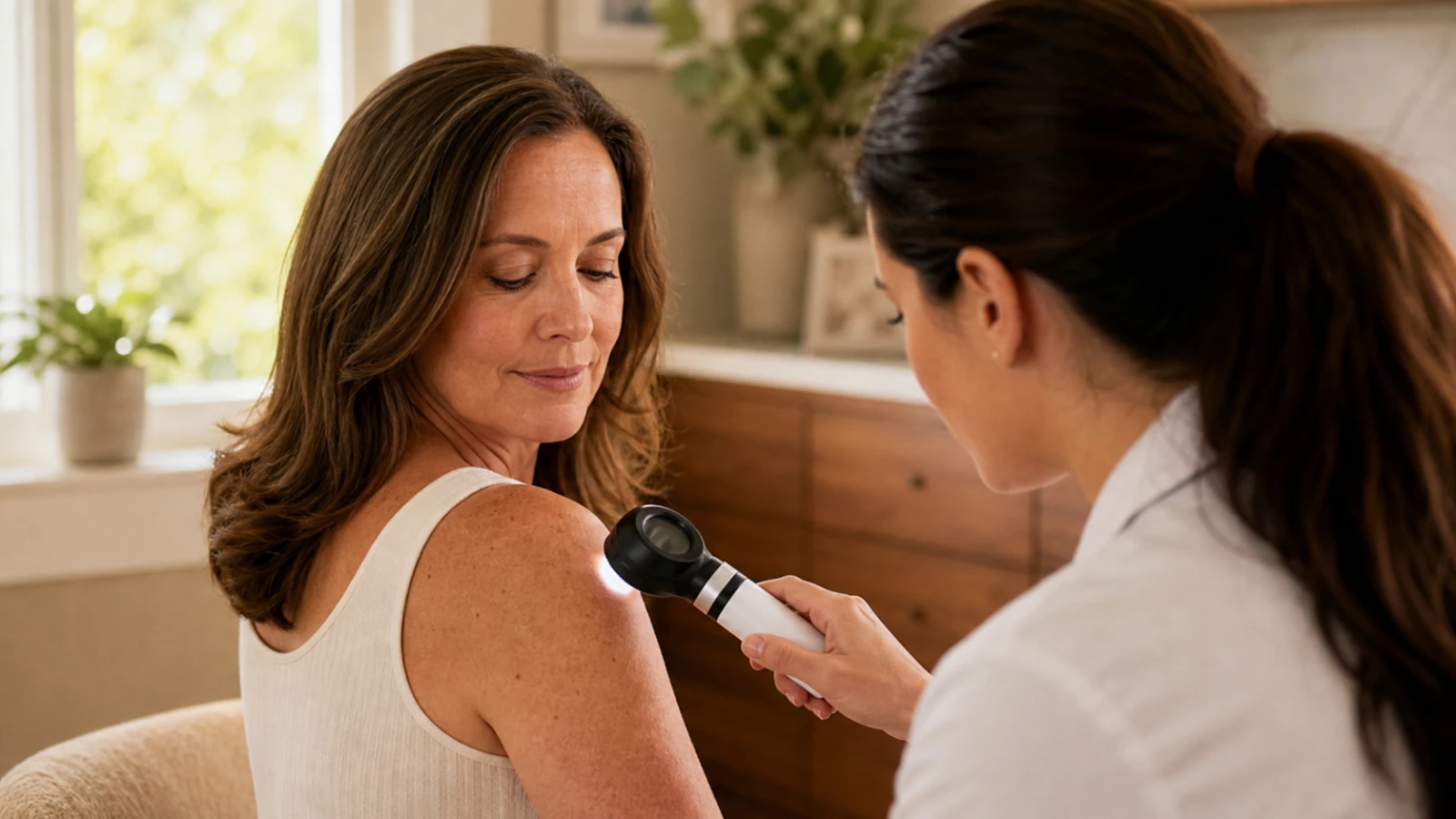
Have you ever looked at a mole and wondered whether it has changed? A spot that used to look smooth now has an uneven edge, patchy color, or has slowly grown. Maybe you have a small sore that just will not heal. That kind of wondering should not be brushed aside, because your skin is an organ you can check yourself every day, and noticing is a powerful tool for looking after yourself.
Skin cancer is the most common cancer in people. The good news is that most of it is not life threatening, and many types can be caught early with nothing more than your own eyes. The goal here is not to make you anxious about every mole, but to help you know when to pay attention and when to see a doctor.
The Types of Skin Cancer, and Why Melanoma Warrants Care
Skin cancer is not just one thing. The two most common types are basal cell carcinoma and squamous cell carcinoma. Both are very common, usually appear on skin that gets regular sun, and are generally less dangerous because they tend not to spread far, though they still need a doctor’s care.
Melanoma is less common but the most dangerous, because it can spread to other organs. It arises from the skin’s pigment producing cells, so it often looks like a mole. The encouraging part is that melanoma found while still shallow in the skin tends to have far better outcomes. Time matters: the sooner you notice something and see a doctor, the greater the chance of dealing with it before it spreads.
The ABCDE Warning Signs
The easy way to remember which moles are worth checking is ABCDE: A is for Asymmetry, when the two halves do not match; B is for Border, when edges are jagged or blurred; C is for Color, when more than one color is mixed in a single mole; D is for Diameter, a larger size, often around 6 millimeters used as a rough marker; and E is for Evolving, a mole changing in size, shape, or color, or with new symptoms such as itching, bleeding, or crusting. The E is often considered the most important. There is also the ugly duckling sign: a mole that stands out from the rest on your body is the one to have a doctor look at.
Who Is at Higher Risk, and a Misconception to Watch For
The clearest risk factor is UV radiation, from sunlight and tanning beds, especially a history of severe sunburns. Others include fair skin that burns easily, many or atypical moles, a family history of melanoma, and a suppressed immune system. But an important point that is often misunderstood: skin cancer is not only a fair skin disease. People with darker skin get melanoma too, often in unexpected places such as the palms, soles, and under the nails, and it tends to be found later. Skin cancer also does not always look like a textbook mole, so any new or non-healing spot deserves a check.
Diagnosis, Treatment, and Prevention
Diagnosing and treating skin cancer is a doctor’s job, not something to attempt at home. A skin doctor examines the skin carefully, and if a spot is suspicious, a biopsy, examining the tissue under a microscope, is the only way to confirm. Treatment depends on the type and stage of the disease; for melanoma, international guidelines (Swetter et al, 2019) set out treatment according to how far it has progressed. Trying to pick, cut, or remove a mole yourself is discouraged.
Prevention works because UV exposure is something you can reduce. Seek shade during peak sun, wear covering clothing and a hat, apply enough sunscreen, and avoid tanning beds. Together with checking your own skin periodically, this matters because early detection links directly to better outcomes.
Start Today, and When to See a Doctor
Learn the ABCDE rule and the ugly duckling sign by heart, check your own skin periodically including areas that rarely see the sun, make sun protection a habit, and see a dermatologist for any changing mole, suspicious new spot, or sore that will not heal. Getting it checked does not mean you have cancer; it lets an expert confirm, so if it is nothing you get peace of mind, and if it is something it is caught early. Watching it yourself alone, or trying to remove a mole yourself, is not a safe option.
This content is general information for health care, not advice that replaces seeing a doctor. Diagnosing and managing skin cancer should always be done together with a doctor.
This summary is for understanding, not medical advice, and should be reviewed by a professional before being applied in real life. The full version includes complete reasoning and research.


Summary complete
This was the key-points summary
Want to understand why, and the research behind it? Read the full version.
Read the full reasoning and researchRead next
More in this category

Asthma: What It Feels Like, How It Is Diagnosed, and How to Manage It Safely
A short guide to asthma as chronic airway inflammation, with key symptoms such as wheeze, night cough, chest tightness, and breathlessness; diagnosis with clinical assessment and spirometry; modern controller treatment principles; inhaler technique; written action plans; trigger reduction; and emergency warning signs.
Read article
Parkinson's Disease: What It Is, How to Recognize It, and How It Is Managed
A short guide to Parkinson's disease: how dopamine-related neurodegeneration can cause resting tremor, slowness, stiffness, balance problems, and non-motor symptoms such as constipation, sleep behavior changes, loss of smell, and depression, plus when to see a doctor and how treatment and lifestyle care fit together.
Read article
Long COVID: A Short Guide to Fatigue, Brain Fog, Palpitations, and Pacing
A short guide to Long COVID, or PASC, covering what the research finds, common symptoms such as fatigue, brain fog, and palpitations on standing, why pushing through exercise may make people with post-exertional malaise (PEM) worse, the pacing approach studied to manage symptoms, and the warning signs that need a doctor, all as health education rather than a diagnosis, with no promise of a cure.
Read articleVerifiable
References for this article
- 1 Swetter SM et al. Guidelines of care for the management of primary cutaneous melanoma (J Am Acad Dermatol 2019, PMID 30392755) pubmed.ncbi.nlm.nih.gov
- 2 StatPearls (NCBI Bookshelf NBK470409): Malignant Melanoma ncbi.nlm.nih.gov
Reviewed by Health Coach: A888