
Rosacea: What It Is, Why It Is Not Acne, What Triggers It, and How to Manage It
A short guide to rosacea, a common chronic inflammatory skin condition of the central face that is often mistaken for acne. It covers how rosacea shows up, what triggers flares, why it is not about hygiene and is not contagious, how it is diagnosed, and how to start looking after yourself.
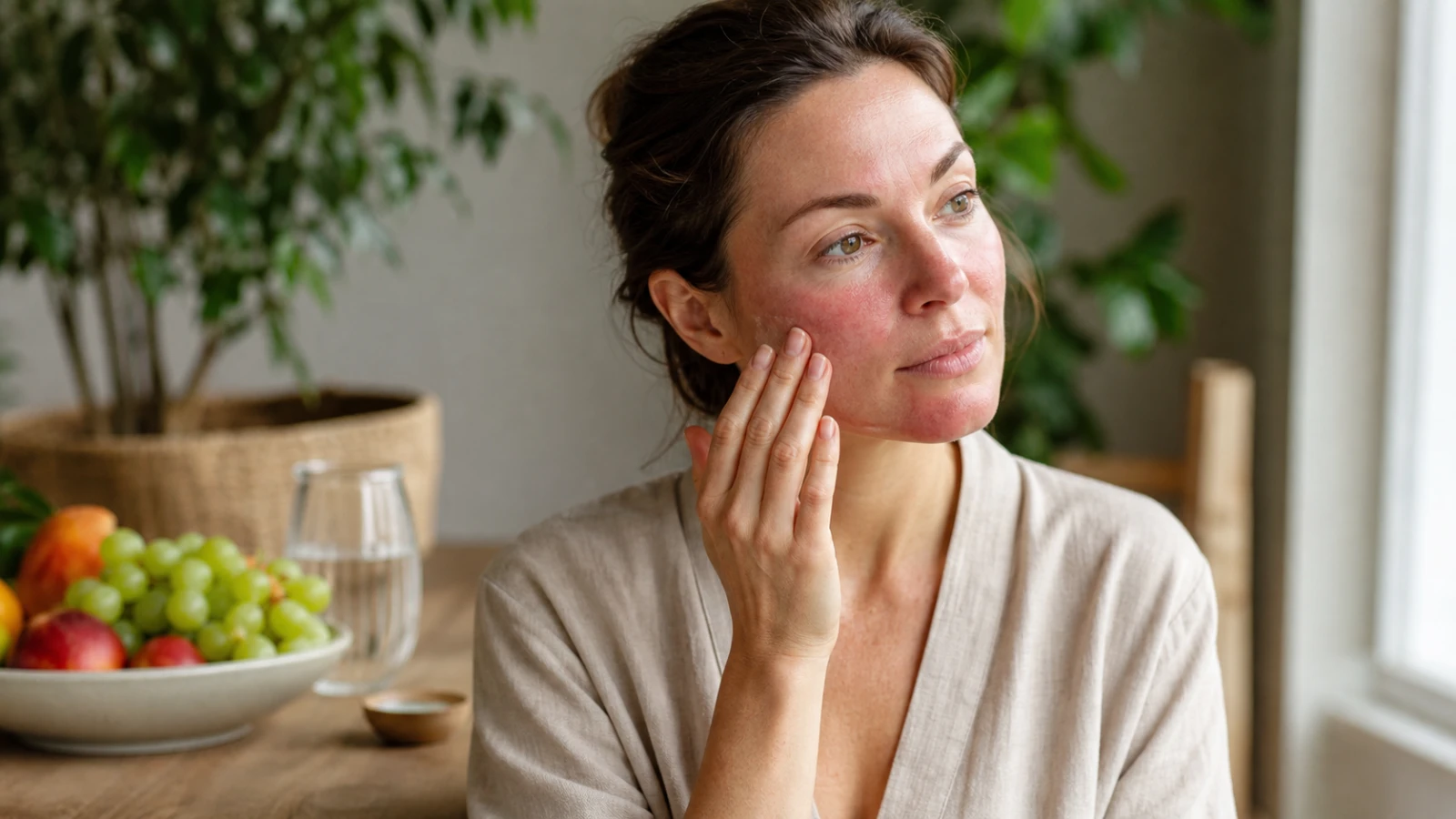
What You May Be Living With
Your cheeks and nose stay flushed a lot of the time, and sometimes they flare up when the weather is hot, when you drink something hot, eat spicy food, or feel stressed. Small red bumps that look like acne appear across the center of your face. Maybe you have tried treating it like acne, and it never improved or it got worse. If this sounds familiar, what you have may not be acne. It may be a skin condition called rosacea.
Rosacea is a common chronic inflammatory skin condition that mainly affects the central face: the cheeks, nose, forehead, and chin. The good news is it can be controlled, and understanding how it works helps that care land where it should.
What People Get Wrong, and What Is Actually True
Many people think rosacea is a kind of acne, or simply being someone who flushes easily. In reality it has its own mechanism and care path, distinct from ordinary acne. Even though it has red bumps and pustules that can look like acne, the skin usually has a background of chronic redness or flushing, and it usually lacks the blackheads and whiteheads of typical acne. Telling them apart matters, because some ways of treating acne are not suitable for rosacea.
Rosacea can show up in several ways: flushing and persistent redness, fine visible blood vessels on the cheeks or around the nose, and acne like bumps and pustules. Some people, more often men, develop thickening of the skin on the nose, and many people have eye involvement too, such as gritty, dry, or burning eyes, or a feeling that something is in the eye, which is always worth mentioning to your doctor.
What Triggers a Flare
Rosacea tends to flare in episodes tied to triggers. Common ones include sun exposure, heat, hot drinks, spicy food, alcohol, stress, and some skincare products that irritate the skin. Triggers are not the same for everyone, so observing and noting what your skin flares after helps you find your own triggers and avoid them where it counts.
It Is Not About Hygiene, and It Is Not Contagious
The cause of rosacea is not fully understood. Research suggests it likely involves several factors together: the immune system, the blood vessels of the skin, and possibly a tiny mite called Demodex. What is worth stating clearly is that rosacea is not caused by poor hygiene, and it is not contagious. The mistaken belief that it is about cleanliness leads some people to scrub their face harder, when in fact harsh scrubbing tends to make it worse.
How It Is Diagnosed
Rosacea is a clinical diagnosis. A dermatologist diagnoses it from the appearance of the skin, where it appears, and the history of flares, together with ruling out other conditions that look similar, such as acne or an allergic rash. There is no blood test that confirms it directly. That is why it should be diagnosed by a dermatologist rather than concluded from symptoms alone, because caring for rosacea is not the same as caring for acne, and the wrong approach can make it worse.
It Can Be Managed, but the Goal Is Control, Not a Cure
The 2019 systematic review looks at rosacea care chosen according to each person’s dominant features. The basic foundation you can do yourself is avoiding your personal triggers, using gentle skincare, washing your face with a light touch, avoiding scrubbing and strong active ingredients, and using sun protection every day. For treatment chosen by feature, a doctor may consider topical agents, oral medicines, or laser and light therapy for the visible blood vessels and redness. All of these must be chosen and monitored together with a dermatologist. Do not self prescribe.
A point to keep in mind: rosacea is often mistaken for acne or a simple flush, but treating it like acne, with harsh scrubs or strong actives, can make it worse. And because there is no permanent cure, management is about controlling flares, so be cautious of any product that promises to cure rosacea for good.
Start Today, One Step First
While you wait for an appointment, observe and note what your symptoms flare after, such as sun, heat, hot drinks, spicy food, alcohol, or stress. This small log helps a doctor see your skin’s pattern clearly and helps you start avoiding your personal triggers sooner. Another step you can take right away is to switch to gentle skincare and use sun protection every day, because that is the foundation of care that genuinely reduces flares. And if you have eye symptoms, be sure to mention them to your doctor.
This content is general information for health care, not advice that replaces seeing a doctor. Diagnosing and managing rosacea should always be done together with a dermatologist.
This summary is for understanding, not medical advice, and should be reviewed by a professional before being applied in real life. The full version includes complete reasoning and research.
Summary complete
This was the key-points summary
Want to understand why, and the research behind it? Read the full version.
Read the full reasoning and researchRead next
More in this category
Asthma: What It Feels Like, How It Is Diagnosed, and How to Manage It Safely
A short guide to asthma as chronic airway inflammation, with key symptoms such as wheeze, night cough, chest tightness, and breathlessness; diagnosis with clinical assessment and spirometry; modern controller treatment principles; inhaler technique; written action plans; trigger reduction; and emergency warning signs.
Read article
Parkinson's Disease: What It Is, How to Recognize It, and How It Is Managed
A short guide to Parkinson's disease: how dopamine-related neurodegeneration can cause resting tremor, slowness, stiffness, balance problems, and non-motor symptoms such as constipation, sleep behavior changes, loss of smell, and depression, plus when to see a doctor and how treatment and lifestyle care fit together.
Read article
Long COVID: A Short Guide to Fatigue, Brain Fog, Palpitations, and Pacing
A short guide to Long COVID, or PASC, covering what the research finds, common symptoms such as fatigue, brain fog, and palpitations on standing, why pushing through exercise may make people with post-exertional malaise (PEM) worse, the pacing approach studied to manage symptoms, and the warning signs that need a doctor, all as health education rather than a diagnosis, with no promise of a cure.
Read articleVerifiable
References for this article
- 1 van Zuuren EJ et al. Interventions for rosacea based on the phenotype approach: an updated systematic review (Br J Dermatol 2019, PMID 30585305) pubmed.ncbi.nlm.nih.gov
- 2 StatPearls (NCBI Bookshelf NBK557574): Rosacea ncbi.nlm.nih.gov
Reviewed by Health Coach: A888