
Quality Carbs: Choosing Types, Pairings, and Cooking Methods for Stable Blood Sugar
A summary of Quality Carbs, outlining how to select carbohydrates based on food pairings, cooking methods, and gut tolerance, with simple first steps for those aged 40+.

After turning forty, you might eat the same plate of rice and curry for lunch, only to feel so drowsy in the afternoon that your work slows down. Yet, when you return home, you still want the energy to talk with your children and grandchildren, walk through the market, and take care of yourself without being a burden. The carbs in that meal should therefore be viewed through the lens of food pairings, cooking methods, and your gut, rather than the label on the packaging.
Rather than just the type of starch, quality carbs are determined by two factors: what you pair them with and how they are prepared. Carbs are also found in beans, grains, fruits, pumpkins, potatoes, and many types of vegetables. When choosing, ask these two questions first.
The source research uses a simple rule: do not eat “naked carbs,” meaning plain carbs with no protein or fat to slow them down. A relatable example: eating two cookies with sweet coffee usually spikes blood sugar very quickly. If you switch to a smaller cookie paired with unsweetened Greek yogurt, blood sugar levels typically rise more slowly.
Quality Carbs: Slowing Absorption with Pairings and Cooking
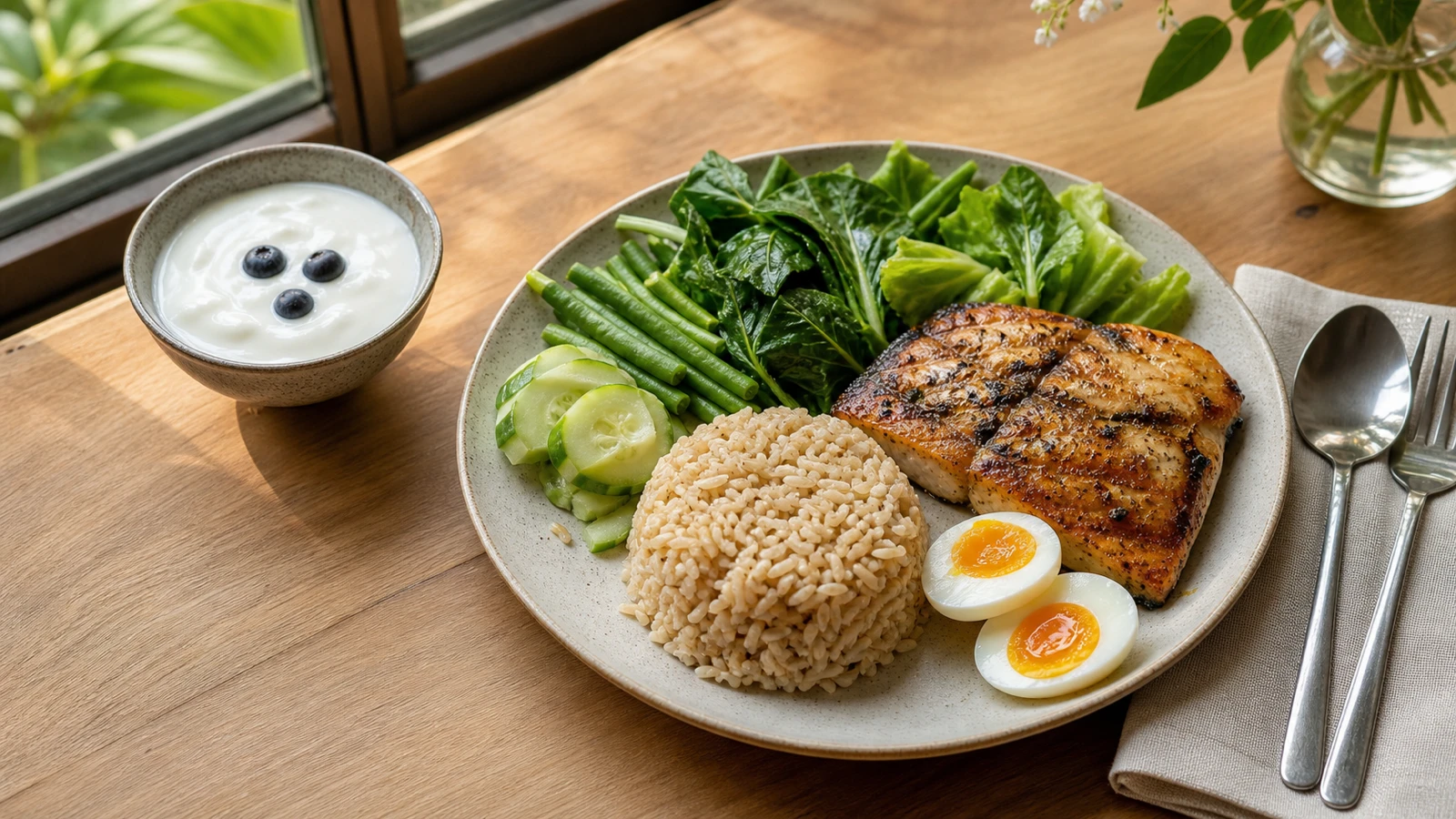
Protein, fat, and fiber help slow stomach emptying, allowing carbs to enter the bloodstream gradually. Post-meal blood sugar levels may be more stable, even though total carb intake still needs to be monitored. A clear example is a plate with half a portion of steamed rice, one boiled egg, grilled fish, and blanched vegetables. The body absorbs carbs from the rice much slower than it would from eating plain rice with fish sauce.
| Carb Type | Typical Result | How to Adjust |
|---|---|---|
| Plain carbs (e.g., plain rice, white bread, cookies) | Blood sugar spikes quickly, quick hunger | Add protein, fat, and fiber |
| Carbs paired with protein (e.g., rice with egg, fish, tofu) | Full longer, slower blood sugar rise | Control rice portion size |
| Well-prepared carbs (e.g., soaked and boiled beans, fermented foods) | Easier to digest, reduces some anti-nutrients | Soak, boil, or ferment before eating |
Another thing to know about is lectins and anti-nutrients like phytates and oxalates. Plants produce these substances for self-defense, and they are found in abundance in beans, grains, seeds, and certain nightshade plants. For healthy individuals, normal amounts from cooked foods are typically manageable. However, if you have a sensitive gut, autoimmune conditions, joint pain, migraines, or bloated easily, these substances could be triggers worth observing.
⚠️ caveat: lectins should not be viewed as everyone’s enemy. Human evidence is still conditional, and many plant-based foods provide healthy fiber, vitamins, and phytochemicals. The goal is to prepare food well and observe your body’s response.
Thai kitchens have long had methods for reducing anti-nutrients: soak beans or grains for at least 8 hours and discard the first water. Boil them thoroughly, especially red kidney beans, black beans, and mung beans, until they are soft. Fermenting them into tempeh, fermented soybean paste, thua nao, or clean pickles helps microbes digest some of these substances before they enter the gut. If you want to eat mung beans boiled with sugar, soak the beans first, boil them until tender, reduce the sugar, and eat them after a main meal instead of on an empty stomach.
The word “organic” does not automatically mean low lectin. Organic brown rice still contains anti-nutrients, and organic beans that are not soaked and fully cooked can still cause bloating. Look at the preparation rather than the label. For oatmeal, if you feel bloated after eating it, try soaking it overnight, cooking it thoroughly, and pairing it with an egg or unsweetened yogurt, instead of just pouring hot water over it and eating it quickly in the morning.
People who follow an animal-based diet may reduce lectin intake because animal products do not contain lectins, but they must be careful not to lack vegetables, fruits, and fiber. If you choose a middle ground, such as eating fish, eggs, leafy greens, low-sugar fruits, and well-prepared beans, it is generally more flexible.
3 Principles for Choosing Quality Carbs
- Eat carbs after vegetables, protein, and fat whenever possible.
- Choose well-prepared carbs that have been soaked, boiled, fermented, or fully cooked.
- Keep a food journal for 2 weeks, noting bloating, acne, joint pain, post-meal drowsiness, and your blood sugar readings if you are measuring them.
A carb that works well for one person might make another bloated or hungry quickly. You do not have to eliminate all carbs; simply choose the types, pairings, and cooking methods that work best for your body.
Start today with just one meal. Save your carbs for after vegetables, protein, and fat, and then note how your bloating, post-meal drowsiness, or blood sugar levels change.
This summary is for informational purposes only, not medical advice. You should consult a specialist before practical application. The full version contains the complete reasoning and research.

Summary complete
This was the key-points summary
Want to understand why, and the research behind it? Read the full version.
Read the full reasoning and researchRead next
More in this category
Dietary Fiber, the Gut, and Metabolic Health: A Short Guide to LDL, Post-Meal Glucose, Microbes, and Fullness
A short guide to dietary fiber, the gut, and metabolic health, covering how soluble and viscous fiber is linked to lower LDL cholesterol, gentler post-meal glucose, short-chain fatty acids from gut microbes, and greater fullness, with the population-level effect sizes, the limits, who should be careful, and how to start adding fiber gradually with water, while treating every number as guidance to adjust with a doctor or dietitian.
Read article
Caffeine and Health: What It Is, How Much Is Reasonable, and Who Should Be Careful
A short guide to caffeine and health, covering how caffeine works, where it hides, the amount often cited as reasonable for most healthy adults, why too much or too late disrupts sleep and causes jitteriness, who should have less or none, and how to start looking after yourself, while treating every number as guidance a doctor tailors to you.
Read article
Celiac Disease: What It Is, How It Is Diagnosed, Why You Must Be Tested Before Quitting Gluten, and How to Manage It
A short guide to celiac disease, covering what it is, what gluten does to the small intestine, how wide the symptoms can be, how it is diagnosed, why testing must happen while you are still eating gluten, and how to start looking after yourself.
Read articleVerifiable
References for this article
- 1 Food order and postprandial glucose in type 2 diabetes pubmed.ncbi.nlm.nih.gov
- 2 Harvard Nutrition Source: Anti-nutrients nutritionsource.hsph.harvard.edu
Reviewed by Health Coach: A888