

At breakfast in your forties and beyond, you may eat eggs as you do every morning and never feel that you are short on protein. But if you measured your muscle mass at age 40 and compared it with age 50, the number often drops by 3 to 8 percent per decade, even if you eat the same way and exercise the same amount. This decline is called sarcopenia, and protein is one of the main factors that can slow it down.
In real life, muscle is the strength that helps you get up from the floor, climb stairs, carry your grandchildren, and remain independent longer. Protein is therefore not just a bodybuilding issue. It is for anyone who wants to stay strong and self-reliant as life gets longer.
What Protein Does in Your Body
Protein’s role is broader than building muscle. Every cell needs it. Amino acids from protein are the repair materials for muscle, skin, and bone. They are raw materials for enzymes and hormones such as insulin, antibodies that fight germs, and hemoglobin that carries oxygen in the blood.
Protein also keeps you full longer than carbohydrate or fat because the body uses up to 25 to 30 percent of the calories consumed to digest it.
After age 40, the body begins to respond less to protein. Researchers call this anabolic resistance. Muscles pull fewer amino acids into rebuilding with each meal. You therefore need more protein per meal, distributed across all meals.
⚠️ Caveat: sarcopenia is caused by multiple factors at the same time, including protein, exercise, hormones, and chronic inflammation. Protein alone is not the complete answer.
The Right Amount: Practical Numbers You Can Use
The general guideline is 1.0 to 2.2 grams per 1 kilogram of lean body mass (Lean Body Mass). If you weigh 65 kilograms and have around 25 percent body fat, your lean body mass will be about 49 kilograms. You therefore need 49 to 107 grams of protein per day.
| Protein source | Amount | Approximate protein |
|---|---|---|
| Chicken egg | 1 egg | 6 grams |
| Boiled chicken breast | 100 grams | 31 grams |
| Firm tofu | 100 grams | 8 grams |
Two eggs in the morning provide only 12 grams of protein. If you want 30 grams per meal, add half a piece of chicken breast or one more mackerel. Two slices of toast with coffee with milk provide only 5 to 8 grams of protein. The missing gap is something the body has to pull from muscle instead.
If you are vegetarian or want to reduce meat, soy is a complete protein with all 9 essential amino acids. Tofu, black beans, and soy milk across one day can help you reach your protein target. ⚠️ Caveat: some brands of processed boxed soy milk have lower amino acids due to the manufacturing process. Choose products that clearly state the protein amount.
The Key Is Distribution, Not the Total
The body can use around 25 to 35 grams of protein per meal to fully stimulate muscle building. Any excess in that meal is converted into glucose or fat instead. Research has found that distributing protein at 20 to 35 grams per meal stimulates total daily muscle synthesis about 25 percent more than concentrating it all in a single meal.
There are 3 practical rules to follow.
- Eat protein at every main meal Breakfast, lunch, and dinner, at least 20 grams per meal
- Choose fresh protein over powder Protein powder is absorbed quickly and strongly stimulates insulin. It is suitable only on heavy training days, taken 45 to 90 minutes afterward. ⚠️ Do not rely on it as your main source every day.
- Exercise alongside it Exercise increases protein-use efficiency the most. Stimulated muscles pull amino acids into repair first, so the excess is reduced.
Protein sources also differ in fat content and insulin stimulation. High-fat groups such as cheese or pork belly keep you full longer and suit breakfast and lunch. Very low-fat groups such as shrimp, shellfish, and crab stimulate insulin the most, suit dinner, and should be eaten with attention to portion size. The goal is to eat from several groups and rotate protein sources within one day.
Who Needs to Be Especially Careful
Too much protein is a burden on the kidneys of people who already have kidney disease. People with kidney disease or abnormal kidney values should talk with a doctor about the amount of protein that is appropriate for them before increasing intake. Do not treat the general numbers in this article as a promise.
Your goal is muscle strong enough to help you remain independent longer, not eating as much protein as possible. At your next meal, first look at your plate and ask whether it contains at least 20 grams of protein. If not, add eggs, fish, tofu, or lean meat according to what is available. This is today’s small step toward preserving the muscle you want to use in the years when you want to stay strong.
This summary is for understanding, not medical advice, and should be reviewed by a qualified professional before being applied in practice. The full version contains the complete rationale and research


Summary complete
This was the key-points summary
Want to understand why, and the research behind it? Read the full version.
Read the full reasoning and researchRead next
More in this category
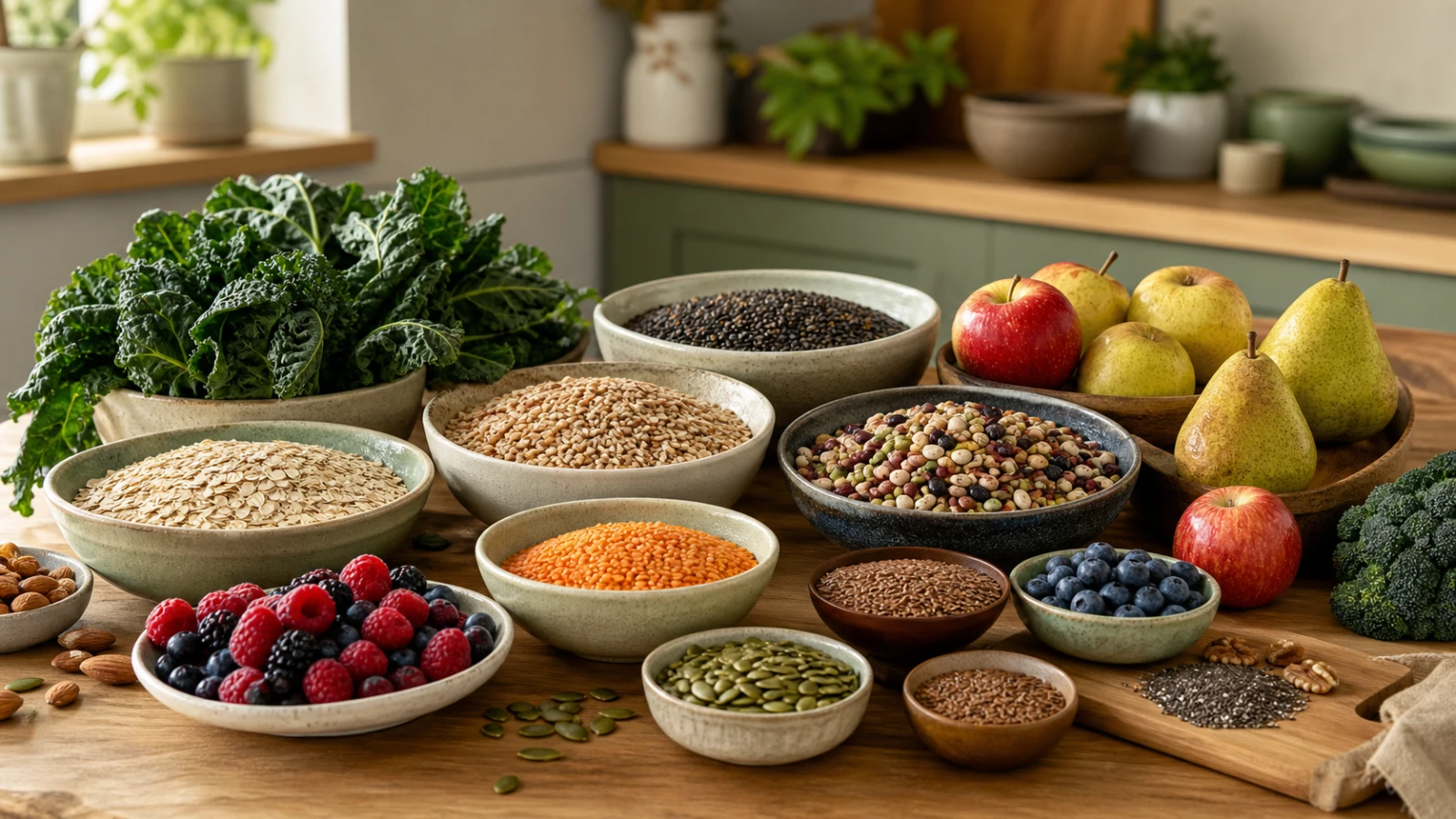
Dietary Fiber, the Gut, and Metabolic Health: A Short Guide to LDL, Post-Meal Glucose, Microbes, and Fullness
A short guide to dietary fiber, the gut, and metabolic health, covering how soluble and viscous fiber is linked to lower LDL cholesterol, gentler post-meal glucose, short-chain fatty acids from gut microbes, and greater fullness, with the population-level effect sizes, the limits, who should be careful, and how to start adding fiber gradually with water, while treating every number as guidance to adjust with a doctor or dietitian.
Read article
Caffeine and Health: What It Is, How Much Is Reasonable, and Who Should Be Careful
A short guide to caffeine and health, covering how caffeine works, where it hides, the amount often cited as reasonable for most healthy adults, why too much or too late disrupts sleep and causes jitteriness, who should have less or none, and how to start looking after yourself, while treating every number as guidance a doctor tailors to you.
Read article
Celiac Disease: What It Is, How It Is Diagnosed, Why You Must Be Tested Before Quitting Gluten, and How to Manage It
A short guide to celiac disease, covering what it is, what gluten does to the small intestine, how wide the symptoms can be, how it is diagnosed, why testing must happen while you are still eating gluten, and how to start looking after yourself.
Read articleVerifiable
References for this article
- 1 How much protein can the body use in a single meal for muscle-building? - Journal of the International Society of Sports Nutrition (2018) link.springer.com
- 2 Leucine threshold and muscle protein synthesis - Frontiers in Nutrition (2024) pmc.ncbi.nlm.nih.gov
- 3 Protein distribution across meals and muscle synthesis - PMC pmc.ncbi.nlm.nih.gov
Reviewed by Health Coach: A888