
Osteoporosis and Bone Health After 40: Why Calcium Alone Is Not the Whole Plan
Bone health after 40 requires looking at hormones, fracture risk, Thai FRAX evidence, and the limits of calcium and vitamin D rather than relying on supplements alone
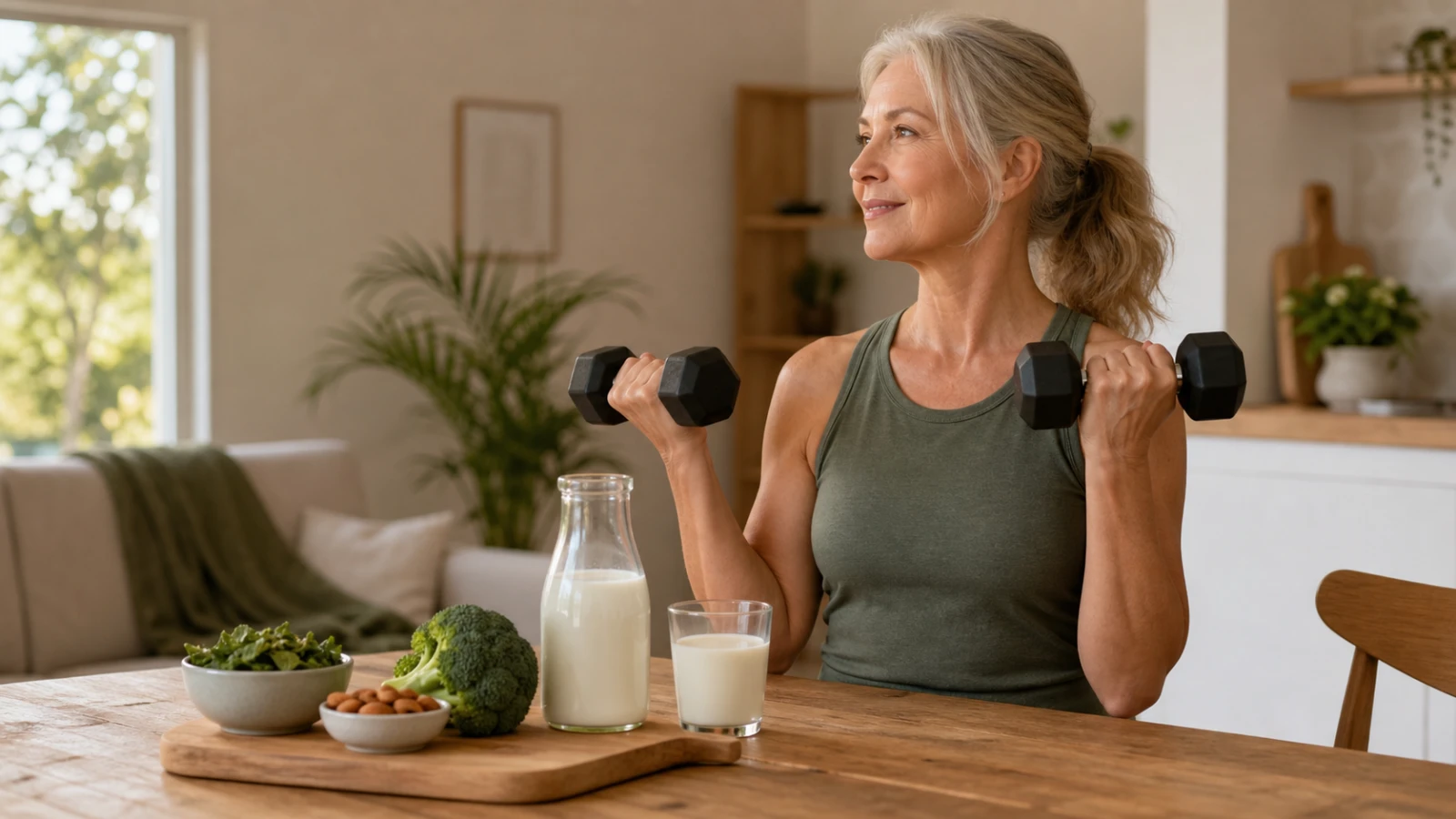
After age forty, bone health should not be reduced to the phrase “take calcium,” especially for women after menopause. Estrogen depletion after menopause accelerates bone resorption, bone mineral density can decline more quickly, and susceptibility to fragility fractures rises.
Here we read bone health without overclaiming: what the evidence supports more clearly, what remains limited, and when a doctor should help assess risk instead of leaving the decision to supplements alone.
Three-Line Summary
- After menopause, estrogen depletion accelerates bone resorption, lowering bone mineral density and increasing susceptibility to fragility fractures.
- The Thai FRAX tool helps estimate 10-year fracture probability, and Thai research has proposed a hip fracture probability screening cut-off of 1.5 for older Thai adults.
- Calcium combined with vitamin D may modestly increase pelvic bone mineral density, but evidence that it independently reduces clinical fractures in community-dwelling adults without baseline deficiencies is weak and conflicting.
Why Osteoporosis Becomes More Important After Menopause
The key finding in this research bundle is postmenopausal estrogen depletion. When estrogen declines after menopause, bone resorption accelerates. When resorption outpaces rebuilding, bone mineral density declines more quickly and bone fragility increases.
In real life, the major concern is not only the bone density number. It is a fragility fracture, meaning a fracture from a level of force that would not normally break bone easily, such as a minor fall in someone whose bone is already fragile.
⚠️ Caveat: This evidence bundle mainly concerns postmenopausal women and older Thai adults. It should not be stretched into a universal individual assessment for every sex, age, or medical context.
How Thai FRAX Helps Estimate 10-Year Risk
FRAX is a tool that estimates 10-year fracture probability. This bundle includes two Thai studies on FRAX use in Thai contexts: one in older Thai adults and one in postmenopausal Thai women.
The cautious practical point is that a 2025 Thai study proposed a hip fracture probability cut-off of 1.5 as a screening threshold in older Thai adults, reporting high sensitivity for identifying osteoporosis.
This means FRAX is not the final decision. It helps identify who should receive more serious follow-up assessment, especially when age or menopausal status moves risk higher.
⚠️ Caveat: The 1.5 cut-off comes from screening work in older Thai adults. It is not a universal number for everyone, and it is not an instruction to start or stop medication on your own.
Calcium and Vitamin D: Some Marker Benefit, Not a Standalone Answer
Systematic review and meta-analysis evidence in the reference set suggests that combined calcium and vitamin D supplementation may modestly increase pelvic bone mineral density.
The important point is that a small improvement in bone density is not the same as clear proof that real-world fractures are reduced. In community-dwelling adults without baseline calcium or vitamin D deficiency, evidence for independently reducing clinical fracture risk remains weak and conflicting.
So calcium and vitamin D may be part of bone health care for some people, but they should not be presented as a reliable fracture shield for everyone.
If Risk Is High, Guidelines Do Not Rely on Supplements Alone
The Endocrine Society guideline update for postmenopausal women states that women stratified at high or very high fracture risk should receive advanced pharmacological therapies according to risk level rather than relying solely on calcium and vitamin D.
This does not mean everyone needs medication, and it does not mean supplements have no place. It means that when risk is high enough, decisions should be based on medical assessment, not on adding supplements and assuming the plan is complete.
If you have had an easy fracture, are postmenopausal, or have been told you are at high osteoporosis risk, consult a doctor to assess your risk and suitable options.
Reading the Evidence Without Overclaiming
| Issue | What the research bundle says | Confidence for readers |
|---|---|---|
| Postmenopausal mechanism | Estrogen depletion accelerates bone resorption and lowers bone mineral density | Relatively strong |
| Thai FRAX | Estimates 10-year fracture risk, with Thai studies proposing screening thresholds | Moderate, context-dependent |
| Calcium + vitamin D | Modestly increases pelvic bone mineral density | Moderate for this marker |
| Fracture reduction from supplements | Evidence is weak and conflicting in community-dwelling adults without baseline deficiencies | Limited |
| High-risk patients | Guidelines recommend pharmacological therapy according to fracture risk | Relatively strong within the guideline context |
The overall evidence for this topic should be read as moderate: postmenopausal bone biology and guideline-based care for high-risk patients are clearer, while claims that calcium and vitamin D alone prevent fractures in the general community require caution.
Who Should Talk With a Doctor Before Deciding
Talk with a doctor or qualified professional before making decisions on your own if you are in any of these groups:
- Postmenopausal women concerned about osteoporosis or previously told they have low bone mass
- Older adults concerned about hip fracture risk or fracture risk after falls
- People who have fractured easily or have a risk assessment approaching a high-risk category
- People already using medication or receiving osteoporosis treatment advice, who should consult a doctor before changing, stopping, or starting any medication
The goal is not to make everyone afraid of osteoporosis. It is to match action to real risk and available evidence. If risk is high, supplements alone may not be enough, and a doctor should help plan the next step from the assessment.
This article is for general understanding, not personal medical advice. Testing, risk assessment, and medication decisions should be made with the doctor or qualified professional who knows your situation.


Read next
More in this category

Asthma: What It Feels Like, How It Is Diagnosed, and How to Manage It Safely
A short guide to asthma as chronic airway inflammation, with key symptoms such as wheeze, night cough, chest tightness, and breathlessness; diagnosis with clinical assessment and spirometry; modern controller treatment principles; inhaler technique; written action plans; trigger reduction; and emergency warning signs.
Read article
Parkinson's Disease: What It Is, How to Recognize It, and How It Is Managed
A short guide to Parkinson's disease: how dopamine-related neurodegeneration can cause resting tremor, slowness, stiffness, balance problems, and non-motor symptoms such as constipation, sleep behavior changes, loss of smell, and depression, plus when to see a doctor and how treatment and lifestyle care fit together.
Read article
Long COVID: A Short Guide to Fatigue, Brain Fog, Palpitations, and Pacing
A short guide to Long COVID, or PASC, covering what the research finds, common symptoms such as fatigue, brain fog, and palpitations on standing, why pushing through exercise may make people with post-exertional malaise (PEM) worse, the pacing approach studied to manage symptoms, and the warning signs that need a doctor, all as health education rather than a diagnosis, with no promise of a cure.
Read articleVerifiable
References for this article
- 1 A new cut-off value of FRAX tools as an osteoporosis screening tool for Thai geriatric population - Asavamongkolkul et al., Scientific Reports (2025, PMID 39987166) pubmed.ncbi.nlm.nih.gov
- 2 An optimal intervention threshold of FRAX in postmenopausal Thai women - Sribenjalak et al., Archives of Osteoporosis (2022, PMID 35072805) pubmed.ncbi.nlm.nih.gov
- 3 Pharmacological Management of Osteoporosis in Postmenopausal Women: An Endocrine Society Guideline Update - Eastell et al., The Journal of Clinical Endocrinology & Metabolism (2020, PMID 32068863) pubmed.ncbi.nlm.nih.gov
- 4 Calcium, vitamin D, or combined supplementation to prevent fractures and falls: systematic review and meta-analysis - Massé et al., The BMJ (2026, PMID 42161415) pubmed.ncbi.nlm.nih.gov
- 5 A systematic review and meta-analysis of vitamin D and calcium in preventing osteoporotic fractures - Albani et al., Clinical Rheumatology (2020, PMID 32447604) pubmed.ncbi.nlm.nih.gov
Reviewed by Health Coach: A888