
Morning Sunlight and the Circadian Rhythm: A Short Version for People with Insomnia
A short version of Morning Sunlight and the Circadian Rhythm, summarizing how to use morning light for deeper sleep, avoid blue light at night, and understand key cautions for people 40+

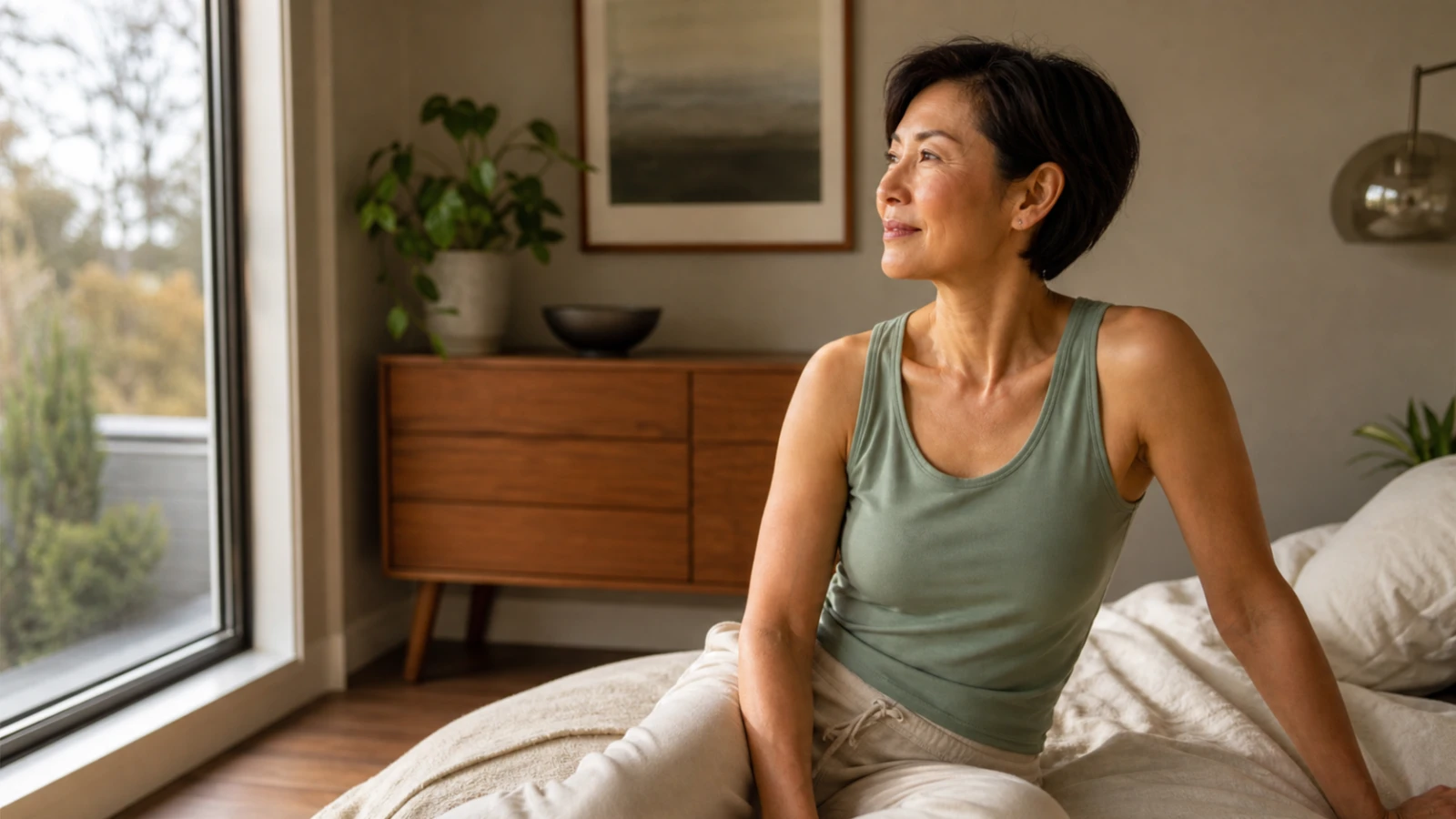
You wake up in the morning after getting a full night’s sleep, but your head still feels foggy. It may be afternoon before you truly feel alert. Then at night, your eyes are wide open, and you toss and turn for a long time before falling asleep. Many people 40+ live with this cycle until it feels as if each day never has enough energy. The goal is to sleep soundly at night and wake up with enough strength to live your life. A starting point that is often overlooked is morning sunlight.
The body has a central clock called the circadian rhythm, which sets the 24-hour timing of hormones, hunger, and sleepiness. This clock is set by the light your eyes receive. The most important signal is bright light in the morning. When light enters the eyes, the body understands that a new day has begun, so it stops releasing melatonin, the sleep hormone, and it also sets the timing for melatonin to return on schedule that same evening. The quality of nighttime sleep therefore begins to be set from the first light you see in the morning.
As age increases, the body releases less melatonin, and the clock’s rhythm is more easily shifted. People 40+ therefore find it harder to fall asleep and wake during the night more often. A clear light signal in the morning is like sharpening the clock.
Make morning light actually work
The effective method is simple and costs nothing. The heart of it is brightness and consistent timing.
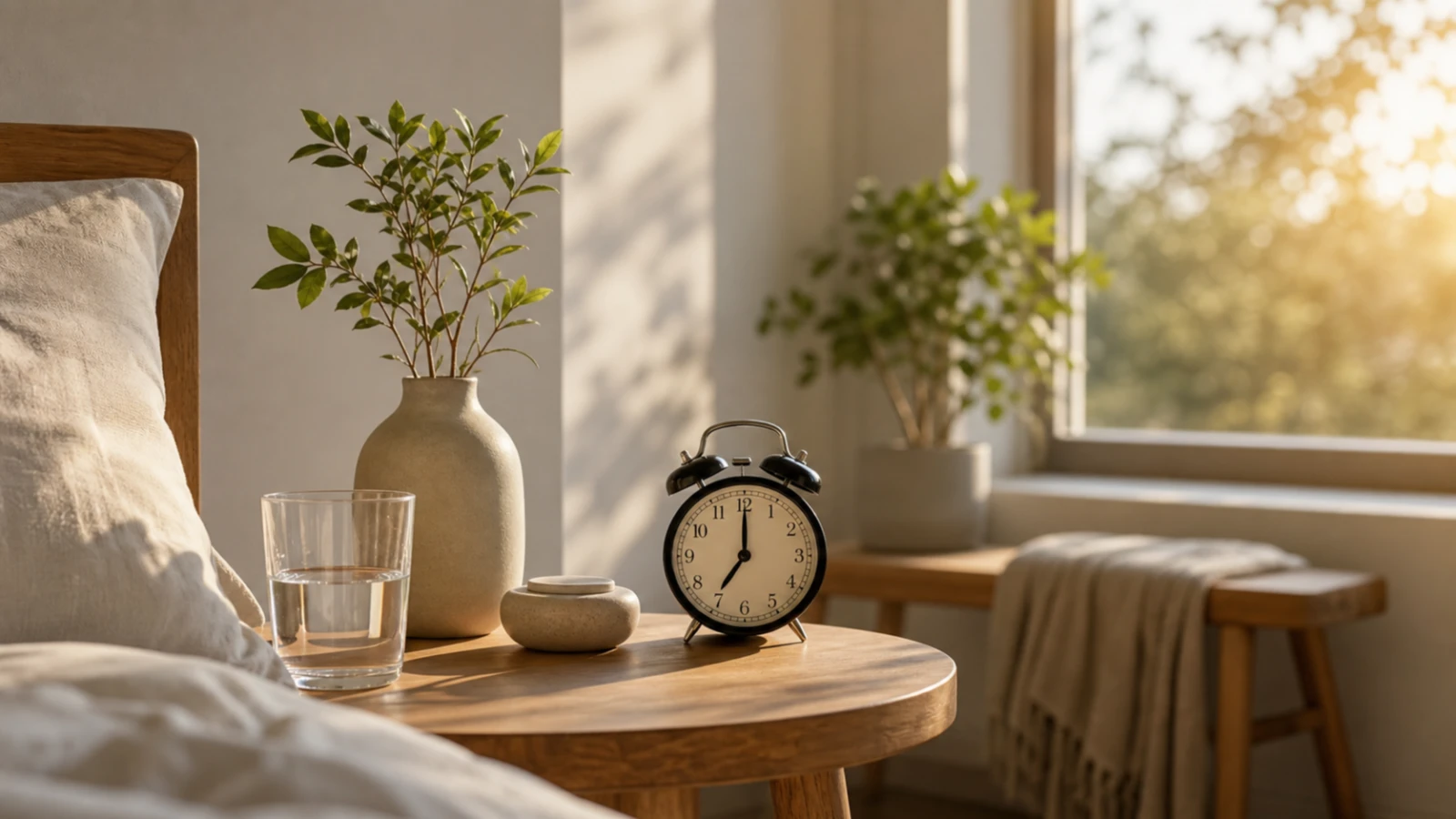
- Go outdoors for light within the first hour after waking for about 10 to 20 minutes. You can stand in the sun on a balcony, walk around the house, or drink coffee by a window. Outdoor light is many times brighter than indoor lighting, even on an overcast day.
- Do it at the same time every day, including days off, because the biological clock likes consistency.
- If you cannot go outside, open the curtains and make the lights as bright as possible in the morning.
You do not have to stare at the sun, and you do not have to stay in the sun until your skin stings. It is enough for your eyes and body to be exposed to outdoor light that is bright enough.
Blue light at night is the disruptor
Phone screens and LED lights emit a large amount of blue light. When the eyes receive blue light at night, the body mistakenly understands that it is still daytime, so it suppresses melatonin. The result is that it becomes harder to fall asleep, sleep is less deep, and the clock shifts later. The solution is to reduce light and avoid screens 1 to 2 hours before bedtime, turn on night mode if you need to use them, and keep the phone out of reach.
Sunlight also affects blood vessels. Research from University of Edinburgh found that UVA rays cause the skin to release nitric oxide, which helps blood vessels relax and blood pressure decrease slightly. This is a direct effect of light and is not related to vitamin D. If you have high blood pressure, follow your physician’s treatment as the main priority. Morning sunlight is a good routine, but it is not a replacement for medication.
Cautions you need to know
- Morning light and vitamin D The UVB rays that create vitamin D are strongest from late morning to afternoon, around 10 a.m. to 2 p.m., not early morning. As for linking vitamin D with slowing aging, the evidence comes from vitamin D in supplement form, not direct sun exposure.
- Blue light and heart disease and sex hormones The strong evidence is that it suppresses melatonin and disrupts sleep. Claims that it directly damages the heart or lowers testosterone have not yet been proven in human research. There are only indirect effects through worse sleep.
- Sleeping before midnight is always better Consistency, total sleep duration, and alignment with each person’s clock matter more than a fixed midnight line. People have genetically different chronotypes.
- Light and breathing cure cancer This is a story about a specific individual case with other factors mixed in. There is no supporting medical evidence. Do not use it instead of medical treatment from a physician.
Tomorrow, when you wake up, open the curtains or go outside for about 10 minutes of outdoor light before picking up your phone. That alone is a way to set your biological clock for the new day. When morning light becomes a rhythm the body is familiar with, sleepiness at night will gradually return on schedule.
This summary is information for understanding only, not medical advice, and should be reviewed by a qualified professional before being put into practice. The full version includes the complete rationale and research
Summary complete
This was the key-points summary
Want to understand why, and the research behind it? Read the full version.
Read the full reasoning and researchRead next
More in this category
Napping: A Short Guide to Experimental Benefits, Long or Frequent Napping, and When to Seek Evaluation
A short guide to experimental evidence for short-term alertness and memory benefits, why sleep inertia varies, why cardiovascular and mortality associations do not establish cause, and when increasing or excessive daytime sleepiness warrants broad evaluation.
Read article
Sleep, Metabolism, and Weight: Short-Term Insulin Sensitivity Evidence and Long-Term Weight Associations
A short guide distinguishing experimental evidence that sleep restriction can reduce insulin sensitivity in the short term from long-term observational associations with weight and metabolic risk, with study limitations, symptoms that warrant evaluation, and medication and sleep-aid safety boundaries.
Read article
Restless Legs Syndrome: What It Is, How to Recognize It, and How to Manage It
A short guide to Restless Legs Syndrome, also called Willis-Ekbom disease, covering what it is, the four hallmark features that help you recognize it, why it happens, how iron fits in, and how it is diagnosed and managed with your doctor.
Read articleVerifiable
References for this article
- 1 NIH National Institute of General Medical Sciences : Circadian Rhythms nigms.nih.gov
- 2 Sleep Foundation : Blue Light Effects sleepfoundation.org
- 3 University of Edinburgh Research : Sunlight and Blood Pressure ed.ac.uk
Reviewed by Health Coach: A888