
After age forty, you may find yourself standing in front of a rice-and-curry stall at noon, choosing plain rice with boiled vegetables because you are afraid of fat. Then that afternoon, you end up hungry, mentally tired, and craving sweet coffee, even though your intention was to take care of your heart so it stays strong enough for you to watch your children and grandchildren grow and remain independent for a long time.
Fat is a raw material for hormones, cell membranes, the brain, nerves, and vitamins A, D, E, K, which require fat for absorption. If you reduce fat so much that your meals are left with only rice and boiled vegetables, your body may become hungry sooner, your brain may feel tired, your skin may become dry, and your hormones may fluctuate more easily.
Healthy Fats: Choose Wisely Rather Than Fear Fat
LDL is a lipoprotein that transports fat and cholesterol to cells. The risk often comes from oxidized LDL together with inflammation, high blood sugar, smoking, blood pressure, and visceral fat.
Think of a delivery truck. The truck’s job is to transport goods to their destination. The problem happens when damaged goods are delivered on inflamed roads and the cleanup system breaks down. LDL should therefore be interpreted together with triglyceride, HDL, blood sugar, blood pressure, and your health history.
⚠️ caveat: Very low LDL must be interpreted carefully. Some studies have found an association between LDL below 70 mg/dL and a higher risk of bleeding in the brain. Interpretation must be done with a physician, especially for people who have heart disease or are taking lipid-lowering medication.
| Type of fat | Examples | How to use it appropriately |
|---|---|---|
| Saturated fat | Real butter, ghee, coconut oil, animal fat | Use in moderation. Choose high-quality sources. |
| Monounsaturated fat | Olive oil, avocado, macadamia nuts | Suitable as a main choice for everyday meals. |
| Polyunsaturated fat | Fish, seeds, some nuts | Emphasize omega 3. Reduce seed oils that have been repeatedly heated. |
| Trans fat | Margarine, industrial baked goods, repeatedly fried foods | Avoid as much as possible. |
Saturated fat comes in several types and should not all be lumped together. Palmitic acid from industrial fats and processed foods is often a group to be careful with, while stearic acid from some natural sources can have different effects.
If you stir-fry vegetables with oil that has been reused for frying many times, a rancid smell is a sign that the fat is starting to degrade. Fat exposed to repeated heating can produce more oxidation compounds. Choose fresh oil, cook over medium heat, and discard repeatedly used frying oil.
Extra virgin olive oil is suitable for low to medium heat cooking and for drizzling over food after cooking. Studies have found that oil stability must be considered beyond smoke point alone. Antioxidants and fatty acid composition have a strong effect.
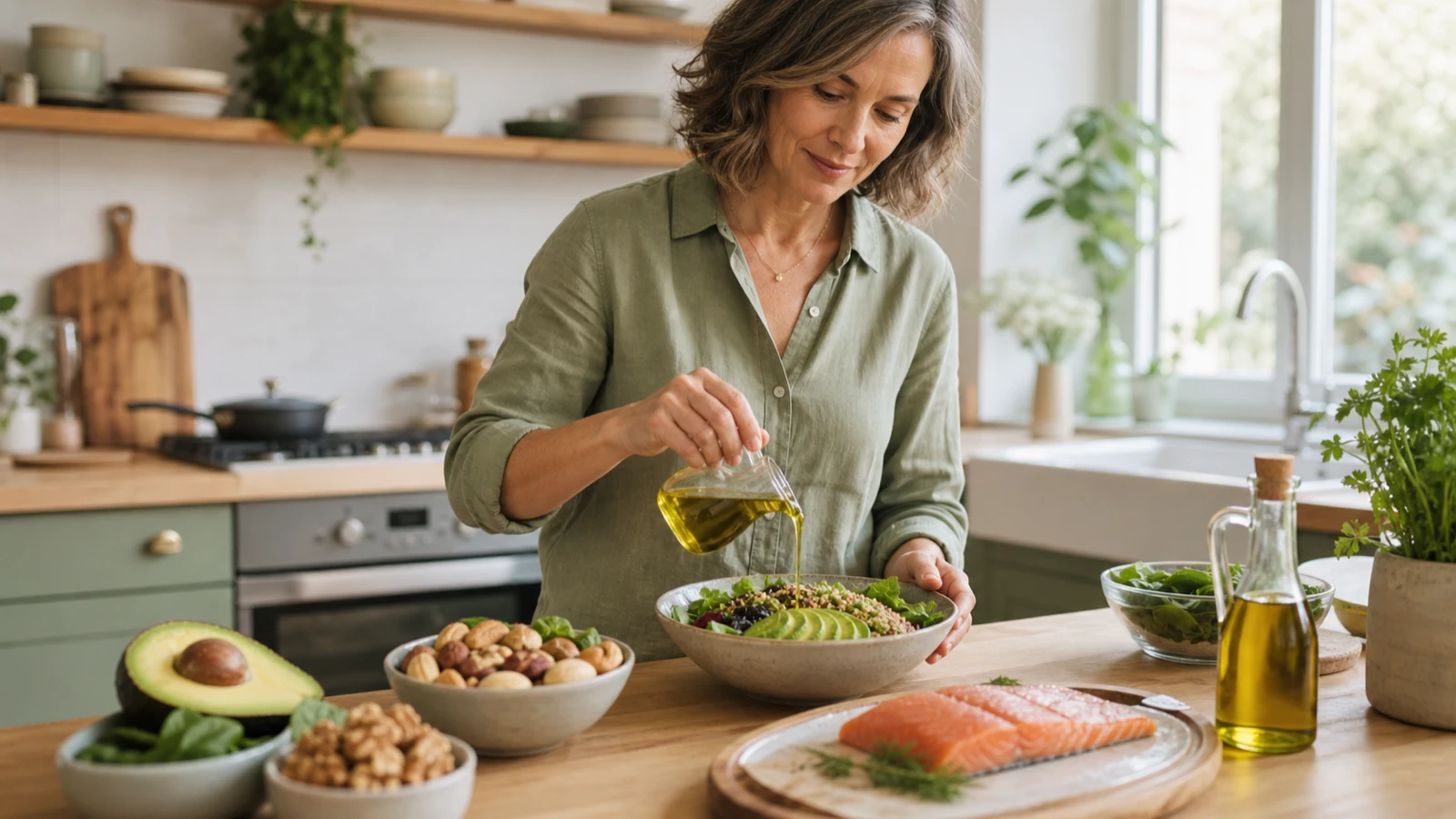
An example meal that makes healthy fats easy to picture: two eggs, blanched vegetables, one teaspoon of olive oil drizzled on top, and half a mackerel. This meal contains protein, fat, and minerals, more than plain rice porridge with only fish sauce.
With Thai som tam, if you add freshly roasted peanuts and eat it with a boiled egg, the sugar from the dressing will be absorbed more slowly than before because protein and fat help slow absorption.
People who want to lose weight often cut fat first, even though very low-fat meals make them hungry sooner and lead them back to snacks in the afternoon. Try reducing rice by half and adding eggs, fish, or avocado in an appropriate amount. You will notice steadier satiety.
Ketogenic diet, fasting, GKI, or using metabolism to support cancer care still require caution. The principle from the original source is that some cell types use high glucose, but applying this to cancer must be under a medical team. Do not use it in place of standard treatment.
3 principles for choosing fats in real life:
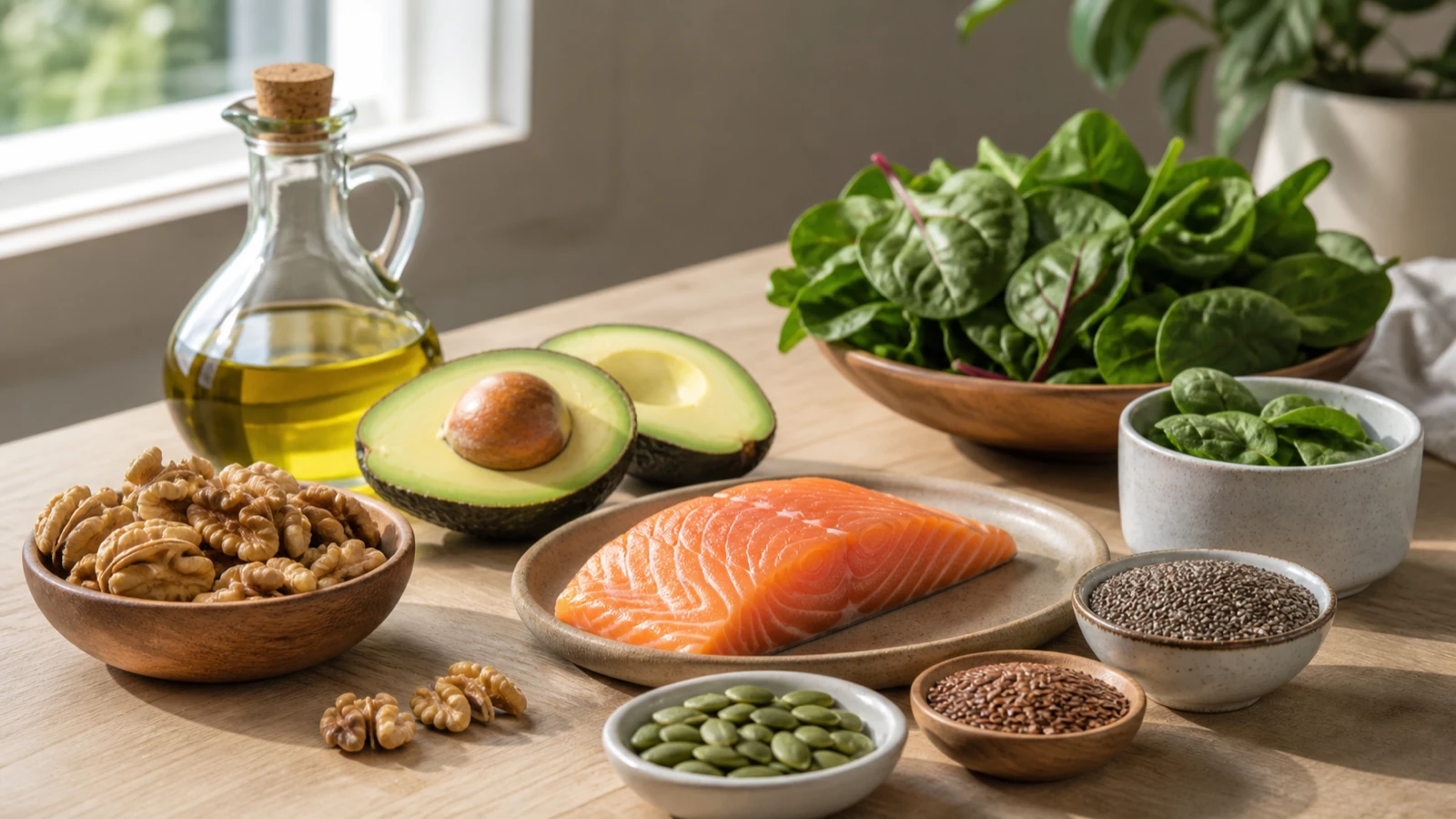
- Choose fats from real foods, such as fish, eggs, nuts, avocado, olive oil, and high-quality ghee
- Reduce industrial fats, especially repeatedly fried foods, baked goods, and seed oils frequently exposed to high heat
- Read lipid values together with the overall health picture. Do not judge from LDL alone
You can start small today: at your next meal, choose one fat from real food, such as fish, eggs, nuts, avocado, olive oil, or high-quality ghee, and pair it with enough sleep, exercise, steady blood sugar, and stress that does not linger all day.

Read next
More in this category
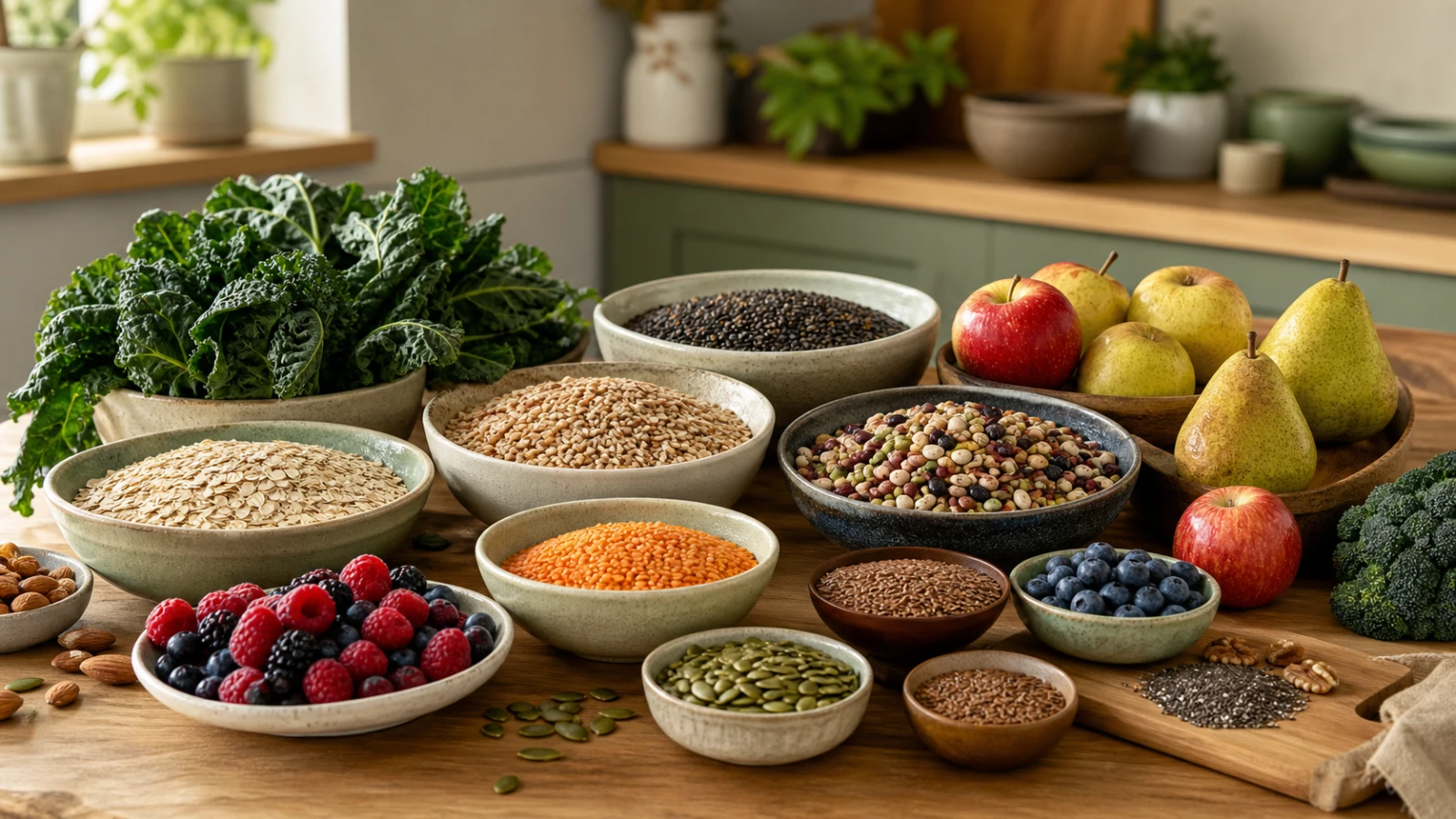
Dietary Fiber, the Gut, and Metabolic Health: A Short Guide to LDL, Post-Meal Glucose, Microbes, and Fullness
A short guide to dietary fiber, the gut, and metabolic health, covering how soluble and viscous fiber is linked to lower LDL cholesterol, gentler post-meal glucose, short-chain fatty acids from gut microbes, and greater fullness, with the population-level effect sizes, the limits, who should be careful, and how to start adding fiber gradually with water, while treating every number as guidance to adjust with a doctor or dietitian.
Read article
Caffeine and Health: What It Is, How Much Is Reasonable, and Who Should Be Careful
A short guide to caffeine and health, covering how caffeine works, where it hides, the amount often cited as reasonable for most healthy adults, why too much or too late disrupts sleep and causes jitteriness, who should have less or none, and how to start looking after yourself, while treating every number as guidance a doctor tailors to you.
Read article
Celiac Disease: What It Is, How It Is Diagnosed, Why You Must Be Tested Before Quitting Gluten, and How to Manage It
A short guide to celiac disease, covering what it is, what gluten does to the small intestine, how wide the symptoms can be, how it is diagnosed, why testing must happen while you are still eating gluten, and how to start looking after yourself.
Read articleVerifiable
References for this article
- 1 Low LDL cholesterol and intracerebral hemorrhage risk pubmed.ncbi.nlm.nih.gov
- 2 Evaluation of commercial oils during heating ncbi.nlm.nih.gov
- 3 Omega-6 and omega-3 essential fatty acid ratio pubmed.ncbi.nlm.nih.gov
Reviewed by Health Coach: A888