
Fatty Liver Disease MASLD: A Short Summary Before You Understand and Manage It
A concise version covering what fatty liver disease MASLD is, who is at risk, how it is reversible early, and which claims large trials do not support

The Day the Doctor Says Your Liver Has Fat
Your doctor says your liver has fat buildup, and you are confused because you barely drink. So why did this happen? The answer is in the disease’s new name. The good news is that it can be reversed in its early stage, because the liver repairs itself well if you address the root cause in time.
MASLD (metabolic dysfunction-associated steatotic liver disease) is liver fat that comes with metabolic abnormalities such as insulin resistance, abdominal fat, diabetes, and high blood pressure, and is not mainly caused by alcohol.
Why the Name Changed, and Who Is at Risk
In 2023 the AASLD and EASL renamed this disease from NAFLD to MASLD through a Delphi consensus (PMID 37363821). The old name was defined by “not drinking alcohol,” which only said what the disease is not. The new name puts the real cause right in the name: metabolic dysfunction. Diagnosis therefore looks at insulin resistance, waist circumference, diabetes, blood pressure, and blood lipids, not just at alcohol.
MASLD affects roughly one in three adults worldwide, and about 19 to 23 percent of Thai people, rising to 35 to 44 percent in those with diabetes or central obesity. Most people who have liver fat alone (simple steatosis) do not progress to cirrhosis if the root cause is managed.
How It Is Reversible Early
Weight loss is the most powerful medicine, and it works in steps: the more you lose, the deeper the liver recovers. Losing 5 percent or more reduces liver fat, 7 percent or more reduces inflammation, and 10 percent or more improves fibrosis. Vilar-Gomez 2015 (PMID 25865049), using liver biopsies, found that people who lost 10 percent or more had NASH resolution in 90 percent of cases, so a target of 7 to 10 percent is the most worthwhile range.
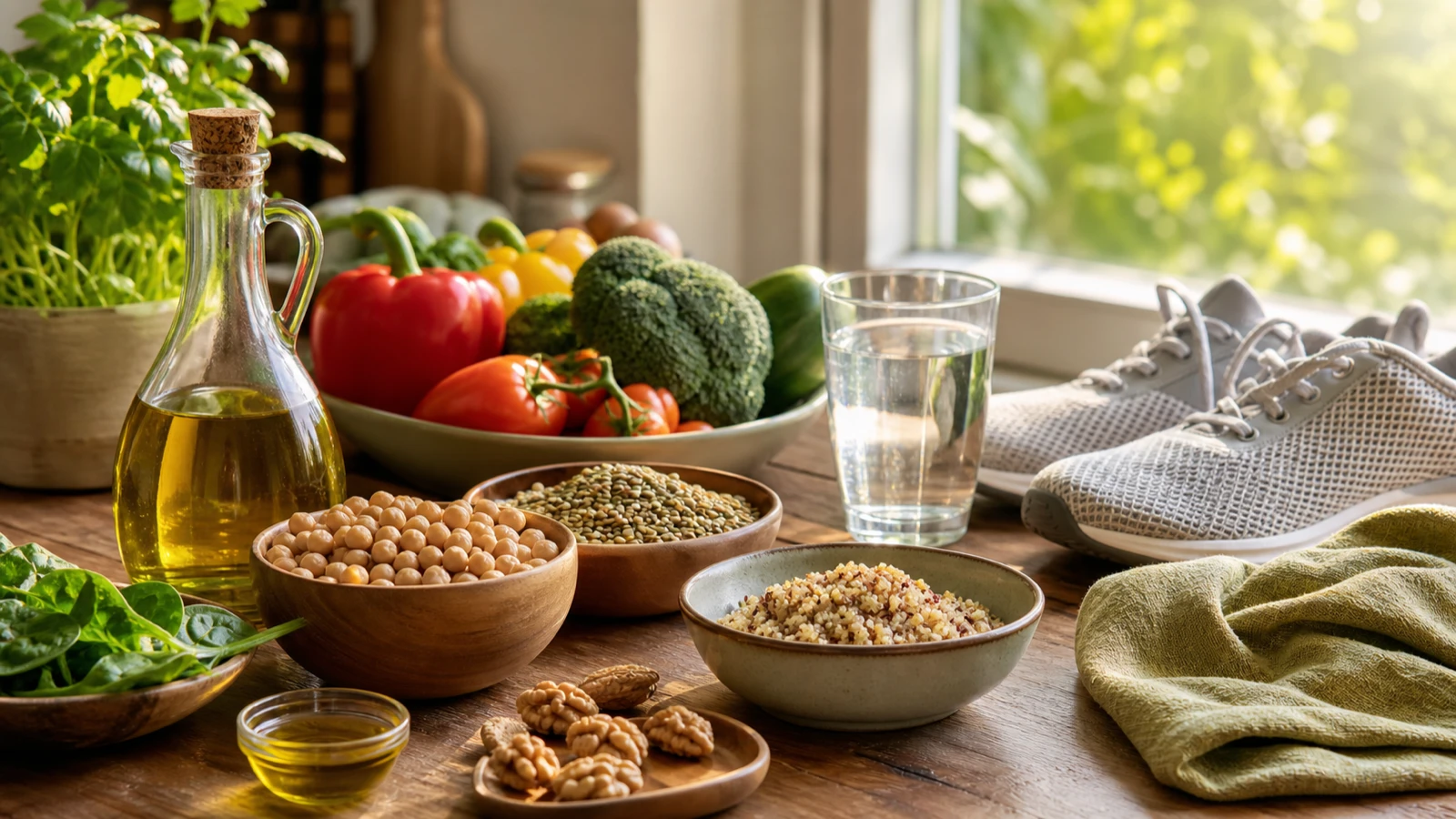
A Mediterranean diet of vegetables, fruit, fish, olive oil, and whole grains improves liver fat and insulin sensitivity. Both aerobic and weight training work about equally, and exercise helps even without weight loss: moderate aerobic activity of 150 to 240 minutes per week lowers liver fat by about 2 to 4 percent. Coffee above 3 cups per day is associated with less fibrosis in people who already have the disease, while sugary drinks raise risk in a stepwise way.
New Drugs for MASH With Fibrosis
In the past two years two drugs passed FDA review. Resmetirom received accelerated approval in March 2024 as the first drug for MASH with F2 to F3 fibrosis (PMID 38324483). Semaglutide followed in 2025; in the ESSENCE trial it produced MASH resolution in 62.9 percent compared with 34.3 percent on placebo (PMID 40305708). Both are accelerated approvals based on surrogate endpoints and should be used under a specialist’s care.
Beliefs the Big Evidence Does Not Support
- Vitamin E reverses fibrosis In the PIVENS trial vitamin E improved inflammation and ballooning, but not fibrosis; the benefit is limited to NASH features.
- Pioglitazone is a recommended targeted drug The 2024 guidance still cannot recommend it, due to a lack of large Phase III evidence for reversing fibrosis.
- Omega-3 lowers liver fat directly It helps the metabolic side, but many studies find no effect on liver fat measured by MRI.
- Thin people do not get fatty liver Lean MASLD occurs in people with normal BMI, and outcomes can be worse.
- Milk thistle or liver detox treats it Randomized trials find no benefit over placebo, and “liver detox” has no supporting evidence.
One more thing to know: liver cancer (HCC) in MASLD can occur even without cirrhosis. About 35 to 50 percent of HCC patients who have MASLD do not have cirrhosis.
A Small Step You Can Take
If your waist is above the threshold, or you have diabetes, high blood pressure, or abnormal blood lipids, talk with your doctor about testing for liver fat and assessing fibrosis risk. In its early stage this disease is reversible, and the most powerful medicine is 7 to 10 percent weight loss, a Mediterranean diet, and regular movement.
This summary is for understanding, not medical advice, and you should consult a doctor before deciding to test or treat. The full version contains the complete rationale and research.

Summary complete
This was the key-points summary
Want to understand why, and the research behind it? Read the full version.
Read the full reasoning and researchRead next
More in this category
Asthma: What It Feels Like, How It Is Diagnosed, and How to Manage It Safely
A short guide to asthma as chronic airway inflammation, with key symptoms such as wheeze, night cough, chest tightness, and breathlessness; diagnosis with clinical assessment and spirometry; modern controller treatment principles; inhaler technique; written action plans; trigger reduction; and emergency warning signs.
Read article
Parkinson's Disease: What It Is, How to Recognize It, and How It Is Managed
A short guide to Parkinson's disease: how dopamine-related neurodegeneration can cause resting tremor, slowness, stiffness, balance problems, and non-motor symptoms such as constipation, sleep behavior changes, loss of smell, and depression, plus when to see a doctor and how treatment and lifestyle care fit together.
Read article
Long COVID: A Short Guide to Fatigue, Brain Fog, Palpitations, and Pacing
A short guide to Long COVID, or PASC, covering what the research finds, common symptoms such as fatigue, brain fog, and palpitations on standing, why pushing through exercise may make people with post-exertional malaise (PEM) worse, the pacing approach studied to manage symptoms, and the warning signs that need a doctor, all as health education rather than a diagnosis, with no promise of a cure.
Read articleVerifiable
References for this article
- 1 Multisociety Delphi consensus on new fatty liver disease nomenclature - Hepatology (2023, PMID 37363821) pubmed.ncbi.nlm.nih.gov
- 2 Weight loss through lifestyle modification and histologic response in NASH - Gastroenterology (Vilar-Gomez 2015, PMID 25865049) pubmed.ncbi.nlm.nih.gov
- 3 A Phase 3 Trial of Resmetirom in NASH with Liver Fibrosis (MAESTRO-NASH) - NEJM (PMID 38324483) pubmed.ncbi.nlm.nih.gov
- 4 Semaglutide in noncirrhotic MASH (ESSENCE interim) - NEJM (PMID 40305708) pubmed.ncbi.nlm.nih.gov
- 5 Pioglitazone, Vitamin E, or Placebo for NASH (PIVENS) - NEJM (DOI 10.1056/NEJMoa0907929) doi.org
Reviewed by Health Coach: A888