
Dietary Fiber, the Gut, and Metabolic Health: What the Evidence Shows on LDL, Post-Meal Glucose, Microbes, and Fullness
Fiber does more than help with regularity. A large body of research suggests certain fibers, especially the soluble and viscous kinds, are linked to lower LDL cholesterol, gentler post-meal glucose, short-chain fatty acids made by gut microbes, and greater fullness. This article summarizes the evidence and the population-level effect sizes, along with the limits, who should be careful, and warning signs to see a doctor, while treating every number as guidance to adjust with a doctor or dietitian rather than a personal prescription.
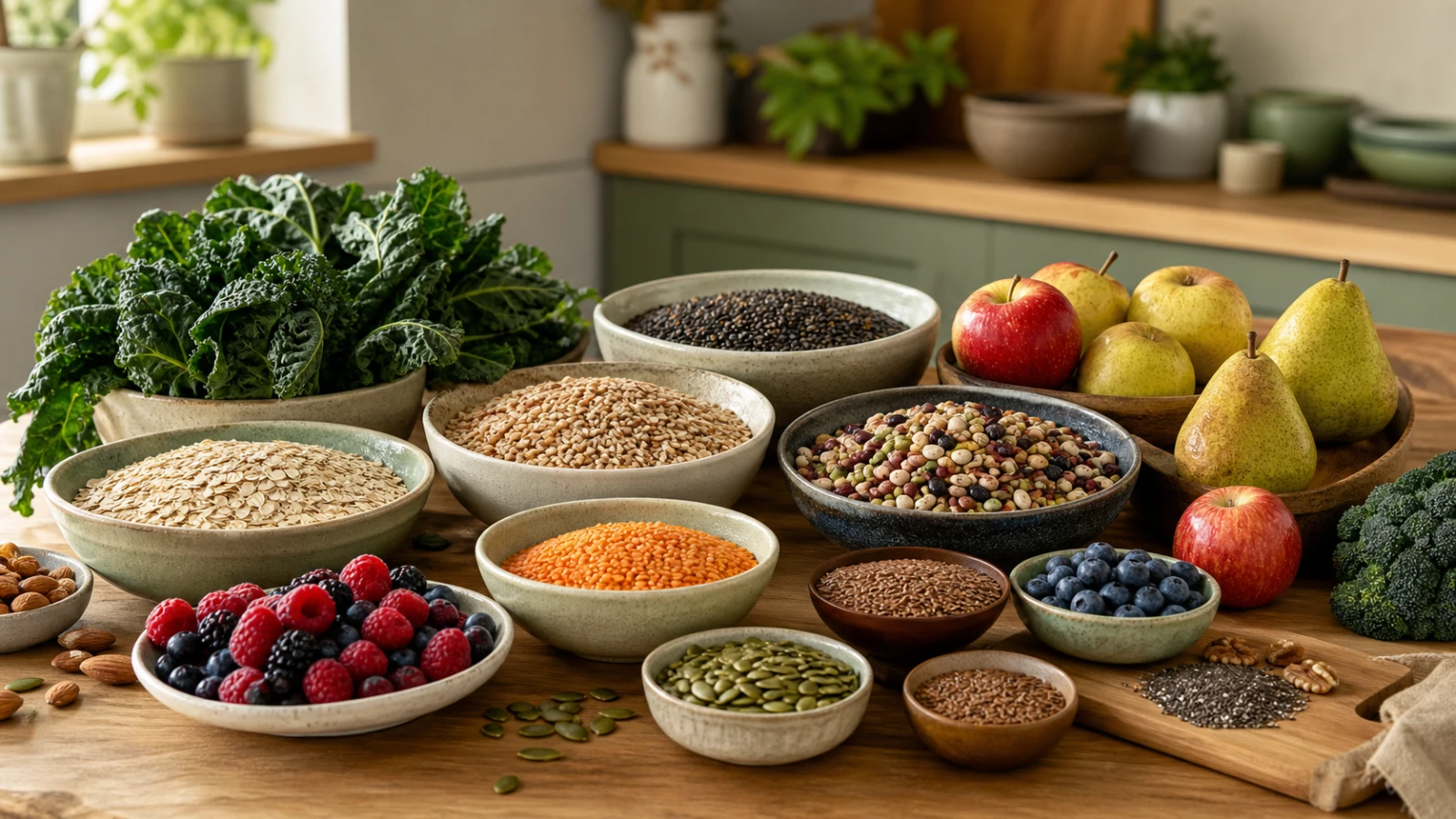
Most people know fiber as something that helps with regularity, but a large body of research suggests that certain fibers, especially the soluble and viscous kinds, do more than that. They play a role in cholesterol, post-meal blood sugar, the microbes in your gut, and how full you feel. This article walks you through what the evidence shows, and how large the numbers people quote actually are.
One thing to say up front: this is a summary of evidence for understanding, not personal advice. Every figure you read here is a population-level result from research, not a promise that you will see the same effect yourself. Decisions about food, medication, or supplements that suit you should always be made together with a doctor or dietitian.
What Fiber Is, and Why the Type Matters
Fiber falls broadly into two groups: soluble and insoluble. The group with the clearest metabolic effects in research is soluble fiber that is viscous, meaning it thickens, such as beta-glucan from oats and barley, psyllium, guar gum, and konjac. That thickness is the key, because it slows digestion and absorption in the gut.
A systematic review that compared fibers directly found that viscous fiber lowers blood lipids significantly more than less viscous fiber from cereal sources. This is why the type of fiber matters and not only the total amount you eat. Different fibers are also fermented differently by gut microbes and affect the body in different ways.
At the population level, a large evidence review found that eating roughly 25 to 29 grams of fiber a day or more is associated with better health outcomes. Keep in mind that this figure describes a population trend. It is not a target this article is telling you to hit personally.
Viscous Fiber and LDL Cholesterol
When many randomized trials are pooled, soluble fiber supplementation lowers LDL cholesterol by a moderate amount. One dose-response meta-analysis reported that LDL fell on average by about 8 mg/dL (roughly 0.2 mmol/L) compared with placebo, over the short to medium term in the groups studied.
Psyllium is a well-documented example. Reviews found that psyllium significantly lowers LDL along with other lipid markers such as non-HDL cholesterol and apolipoprotein B. Beta-glucan from oats and barley at around 3 grams a day is likewise associated with lower LDL.
A meta-analysis specific to oat beta-glucan, at a median dose of about 3.5 grams a day, found LDL fell by about 0.19 mmol/L (roughly 7 mg/dL, with a 95% confidence interval of about 0.14 to 0.23) and non-HDL by about 0.20 mmol/L. This effect is moderate and depends on the amount and the viscosity. It is one mechanism by which whole grains are linked to lower heart disease risk.
The important point is that an LDL effect of this size is an add-on, not a replacement for a lipid-lowering medication or the treatment a doctor prescribes. If you take a lipid-lowering medication, any change to your diet should be made in consultation with your doctor.
Post-Meal Glucose and Blood Sugar Control
The mechanism by which viscous fiber helps with blood sugar is that it thickens the contents of the gut, slowing the digestion and absorption of carbohydrate so that post-meal glucose rises more slowly and smoothly. The more viscous the fiber, the more clearly it tends to blunt the rise in glucose and insulin after a meal.
In people with type 2 diabetes, supplementing viscous fiber is associated with moderate reductions in HbA1c and fasting glucose. A review from an independent research group found that viscous fiber at an average dose of about 13 grams a day lowered HbA1c by around 0.5% (a range of roughly 0.47 to 0.58% depending on the analysis), along with lower fasting glucose over the short to medium term.
It has to be stressed that these numbers come from populations who already have the disease, in a research context. They are not advice for general readers to start supplementing fiber on their own to manage blood sugar, and they are not a reason to adjust or stop diabetes medication by yourself. Fiber’s effect is an add-on, not a replacement for the diabetes care a doctor manages.
Gut Microbes and Short-Chain Fatty Acids (SCFA)
Fermentable fiber acts as a prebiotic, meaning it feeds the microbes in your gut. When those microbes ferment it, they produce short-chain fatty acids (SCFA) such as acetate, propionate, and butyrate, which are intermediates linked to gut and metabolic health. A systematic review in healthy adults found that fiber increases SCFA production and shifts the makeup of the microbiota, with the size of the effect varying by fiber type and how it is measured.
SCFA have been proposed to play a role in blood sugar control, appetite regulation, and the integrity of the gut lining. But the link to health outcomes in people is still developing evidence, not a settled conclusion about cause. Some studies have actually found that higher stool SCFA is associated with being overweight or with inflammation, which shows the direction of cause and effect is still unclear. This section is best read with caution.
Fullness and How Much You Eat
Viscous fiber tends to increase the feeling of fullness and reduce appetite more than less viscous fiber. The mechanism is that the fiber absorbs water and swells, and slows the emptying of food from the stomach, so you feel full longer.
One review found that, among the studies that compared them, more viscous fiber reduced appetite noticeably more often, in about 59% of studies compared with about 14% for less viscous fiber. Even so, the effect on how much energy people actually ate and on overall body weight was small and inconsistent.
In practice this means fiber may help you feel fuller, but you should not expect fiber alone to produce clear weight loss. It is one piece of the larger picture of how you eat and live.
Fiber, Mortality, and Heart Disease Over the Long Term
Studies that follow populations over time have found that people who eat more fiber have a lower risk of dying from any cause and from heart disease. A review pooling many observational studies reported that the highest fiber intake group, compared with the lowest, was associated with about 23% lower all-cause mortality (HR 0.77, 95% confidence interval 0.73 to 0.82) and about 26% lower cardiovascular mortality (HR 0.74). A separate, independent study looking at the dose relationship reported that risk fell with each additional 8 grams of fiber a day.
The point to be clear about is that this group of data is observational, so it can only show that two things occur together. It is not proof that fiber directly causes a longer life or a healthier heart. People who eat a lot of fiber often have other healthy habits as well, such as eating more vegetables and fruit, exercising, and smoking less. Those factors cannot be fully accounted for, which is why we say fiber is “associated with” these outcomes, not that it “causes” them.
Uncertainties Worth Knowing
To read the figures above with context, there are important limits to keep in mind.
The link between fiber and mortality or heart disease comes from observational studies with confounding factors, so it cannot establish cause directly. The role of SCFA in human metabolic health is likewise still developing evidence, and some of it conflicts.
The size of the effect on LDL and HbA1c varies by fiber type, viscosity, amount, duration, and population, with people who have diabetes and healthy people responding differently, so it has limited application to any one individual.
Most of the evidence on LDL and glucose comes from fiber supplements used in trials, which may not equal getting fiber from real food in daily life. And the effect on how much energy people eat and on overall weight is small and inconsistent.
Who Should Be Careful, and Warning Signs
Fiber is a good thing for most people, but some groups should talk to a doctor before adding a lot of fiber or starting a fiber supplement. These include people with certain gut conditions, such as IBS, an intestinal narrowing or blockage (stricture), or those recovering from gastrointestinal surgery; people with diabetes who take glucose-lowering medication, or anyone on a lipid-lowering medication, because a change in diet can affect blood results and drug doses; people who drink little water or have trouble chewing or swallowing; and older adults with slow bowel movement or long-standing constipation that has not been evaluated.
Signs to see a doctor immediately are severe abdominal pain and marked bloating along with vomiting, or being unable to pass stool or gas, which can signal a bowel obstruction. Other symptoms that warrant a doctor’s visit include blood in the stool, unintentional weight loss, a persistent change in bowel habits, or severe diarrhea and dehydration after adding fiber quickly.
A point of caution: the link between fiber and a longer, healthier life is an association found in observational data, not proof that fiber is the cause, and a fiber supplement is not a replacement for real food or for the treatment a doctor prescribes.
The figures showing the highest fiber intake group is associated with about 23% lower mortality and about 26% lower heart disease death come from population follow-up studies with confounding factors that cannot be fully controlled, so they should not be read as fiber treating or preventing disease on its own. The effects seen on LDL and HbA1c are moderate and an add-on, not a substitute for medication or the care a doctor prescribes. Sources: mortality meta-analysis (PMID 38011755) and oat beta-glucan and LDL (PMID 27724985).
What You Can Start Doing Today
What you can start doing is to adjust your diet gradually and pay attention to your body, without rushing to assign yourself a gram number.
- Gradually add foods with a variety of fiber, such as vegetables, whole fruit, whole grains, and beans and legumes, rather than leaning on a supplement alone, because real food provides a range of nutrients and fibers that a supplement does not fully cover.
- Increase fiber a little at a time and drink enough water. Adding fiber too fast often causes bloating and gas, so building up over days to weeks while drinking enough water helps ease those symptoms.
- Get to know the sources of viscous fiber, such as oats and beta-glucan, beans, and vegetables, which research links to effects on lipids and blood sugar. Treat this as general knowledge, not a personal prescription.
- Talk to a doctor or dietitian first if you have an underlying condition, such as diabetes, high cholesterol, or a gut disorder, or if you take medication, especially when digestive symptoms do not improve or get worse even after adjusting your intake gradually.
Use this article as knowledge to bring into a conversation with a professional, not as a substitute for your own individual assessment.
This content is an educational summary about prevention and long-term health, not a diagnosis, and not advice on treatment or the personal use of medications and supplements. The figures and research cited are at the population level. Decisions about food, medication, or the care of your individual health condition should always be made together with a human doctor or dietitian.


Read next
More in this category

Caffeine and Health: What It Is, How Much Is Reasonable, and Who Should Be Careful
A short guide to caffeine and health, covering how caffeine works, where it hides, the amount often cited as reasonable for most healthy adults, why too much or too late disrupts sleep and causes jitteriness, who should have less or none, and how to start looking after yourself, while treating every number as guidance a doctor tailors to you.
Read article
Celiac Disease: What It Is, How It Is Diagnosed, Why You Must Be Tested Before Quitting Gluten, and How to Manage It
A short guide to celiac disease, covering what it is, what gluten does to the small intestine, how wide the symptoms can be, how it is diagnosed, why testing must happen while you are still eating gluten, and how to start looking after yourself.
Read article
Chronic Constipation: What It Is, How It Is Diagnosed, and How to Manage It
A short guide to chronic constipation, covering what it is, why not going every day does not mean constipation, what causes it, how it is diagnosed, how to manage it starting with lifestyle, and when to see a doctor.
Read articleVerifiable
References for this article
- 1 Viscous vs non-viscous cereal fibre and lipid lowering: a systematic review and meta-analysis of RCTs (British Journal of Nutrition 2023, PMID 35929339) pubmed.ncbi.nlm.nih.gov
- 2 Effects of dietary fibers on short-chain fatty acids and gut microbiota in healthy adults: a systematic review (Nutrients 2022, PMID 35807739) pubmed.ncbi.nlm.nih.gov
- 3 Carbohydrate quality and human health: a series of systematic reviews and meta-analyses (The Lancet 2019, PMID 30638909) pubmed.ncbi.nlm.nih.gov
- 4 Soluble fiber supplementation and serum lipid profile: a systematic review and dose-response meta-analysis of RCTs (Advances in Nutrition 2023, PMID 36796439) pubmed.ncbi.nlm.nih.gov
- 5 Psyllium fiber and LDL, non-HDL cholesterol and apolipoprotein B: a systematic review and meta-analysis of RCTs (The American Journal of Clinical Nutrition 2018, PMID 30239559) pubmed.ncbi.nlm.nih.gov
- 6 Oat beta-glucan on LDL, non-HDL cholesterol and apoB for CVD risk reduction: a systematic review and meta-analysis of RCTs (British Journal of Nutrition 2016, PMID 27724985) pubmed.ncbi.nlm.nih.gov
- 7 Viscous soluble dietary fiber on glucose and lipid metabolism in type 2 diabetes: a systematic review and meta-analysis of RCTs (Frontiers in Nutrition 2023, PMID 37720378) pubmed.ncbi.nlm.nih.gov
- 8 Should viscous fiber supplements be considered in diabetes control? A systematic review and meta-analysis of RCTs (Diabetes Care 2019, PMID 30617143) pubmed.ncbi.nlm.nih.gov
- 9 Role of gut microbiota-generated short-chain fatty acids in metabolic and cardiovascular health (Current Nutrition Reports 2018, PMID 30264354) pubmed.ncbi.nlm.nih.gov
- 10 Effects of dietary fibre on subjective appetite, energy intake and body weight: a systematic review of RCTs (Obesity Reviews 2011, PMID 21676152) pubmed.ncbi.nlm.nih.gov
- 11 Soluble dietary fibre supplementation on energy intake and perceived satiety in healthy adults: a systematic review and meta-analysis of RCTs (Foods 2019, PMID 30621363) pubmed.ncbi.nlm.nih.gov
- 12 Dietary fiber intake and all-cause and cause-specific mortality: an updated systematic review and meta-analysis of prospective cohort studies (Clinical Nutrition 2024, PMID 38011755) pubmed.ncbi.nlm.nih.gov
Reviewed by Health Coach: A888